
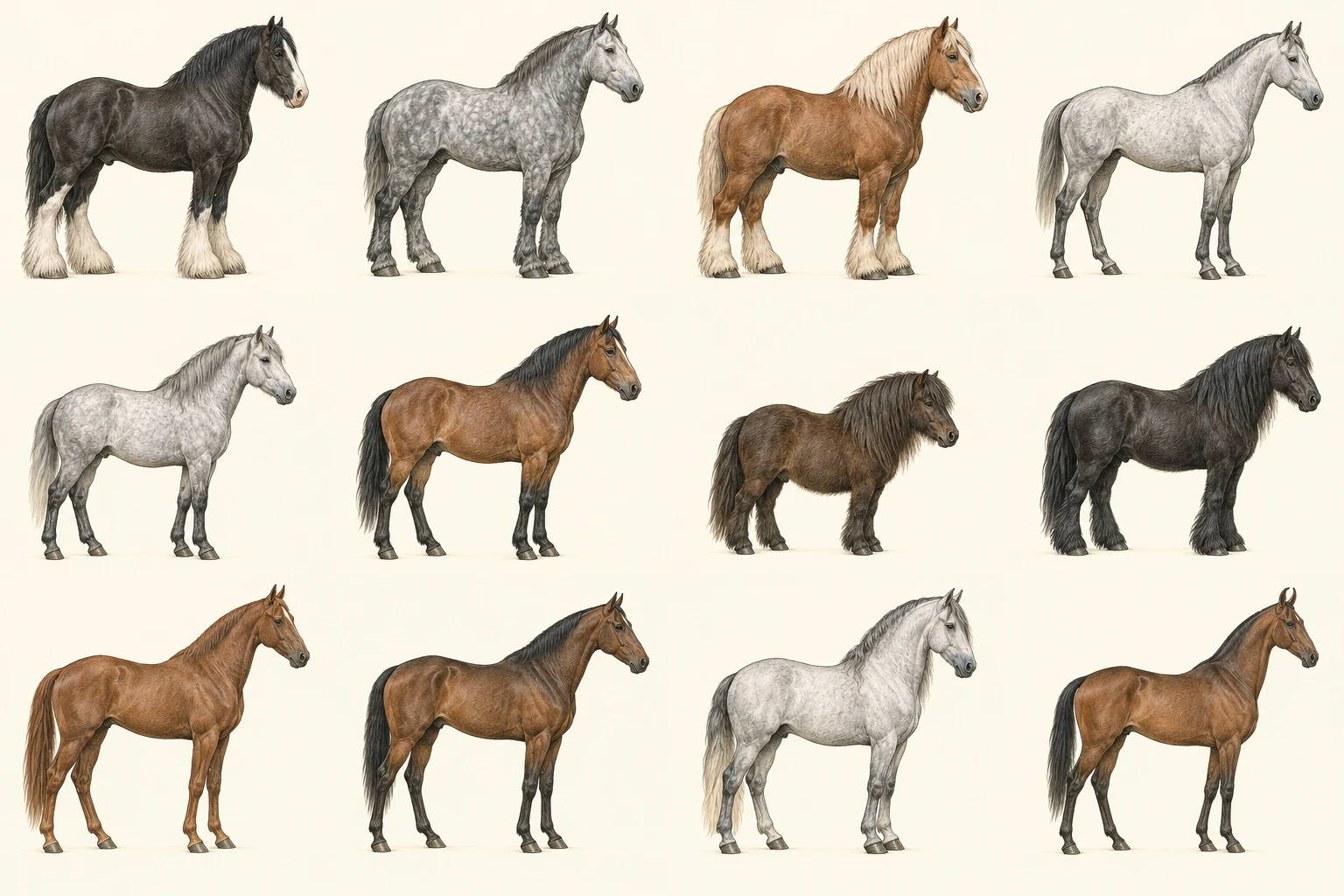
At a glance
Connemara Pony quick facts
- Origin
- Connemara, County Galway, Ireland
- Height
- 128–148 cm in the CPBS breed standard
- Coat
- Grey and a wide range of permitted solid, diluted and roan colours
- Best known for
- Versatile riding, jumping and an athletic native-pony type
Connemara and the studbook’s development
The Connemara Pony Breeders' Society identifies the breed's home west of Lough Corrib, along County Galway's Atlantic side. The society and studbook were founded in 1923, with the first book published in 1926. Those records offer a clearer foundation than romantic stories that assign every Connemara trait to one legendary shipwreck.
The society's historical programme records carefully introduced outside blood before the studbook closed in 1964. A modern purebred identity therefore rests on recorded ancestry within the present system, not on the idea that the breed never experienced any influence. Historical development and current registration rules should be understood separately.
Height, colour and recognisable structure
The CPBS standard specifies 128 to 148 cm and describes a compact, balanced pony with good body depth, strong loins and athletic ability. The published programme permits many colours, including grey, black, bay, brown, chestnut, dilution colours and roans. A grey illustration is one familiar example rather than the only legitimate appearance.
For study, compare the pony's body depth, neck connection and relationship between back and quarters. For a purchase, verify the individual height and any measurement required by your competition system. Breed height standards and competition pony-measurement rules are related questions, but they are not necessarily identical procedures.
Riding and sporting expectations
Athletic ability is an explicit part of the breed standard. That makes the Connemara interesting to riders looking for a pony across several activities, but suitability still depends on the individual's established education. A talented young pony and an experienced schoolmaster require different levels of rider support.
Ask what the pony has done recently and in which settings it performs confidently. For jumping, distinguish an attractive free-jumping clip from ridden experience with a developing rider. For leisure use, discuss riding outside the arena, separation from other horses and the pony's response to changes in its routine.
Children, adults and individual matching
The Connemara's useful scale can appeal to both younger riders and some adults, but pony size is not a universal answer to rider suitability. Consider the particular pony's body, fitness, tack and the rider's balance. Seek a professional assessment of the actual combination rather than relying on a breed-wide carrying claim.
An adult viewing a pony for a child should observe the seller or an appropriate experienced rider first. Look for clear, repeatable responses, not a brief quiet moment. Ask your child's instructor whether the pony's schooling matches the rider's current needs and the supervision available between lessons.
Common questions
How tall is a Connemara Pony?
The CPBS standard gives 128 to 148 cm. Check the individual’s measurement and the rules of any competition in which you intend to participate.
Are all Connemaras grey?
No. The society’s published programme recognises a broad range of permitted colours.
Is the Connemara studbook closed?
The CPBS programme states that the studbook closed to outside blood in 1964. Earlier history and current registration should be read separately.
Sources & further reading
We use breed registries, equestrian organisations and specialist reference sources. Registration rules and training standards can change; check the original source for the latest requirements.
Last editorial source check: . General educational information; work with a qualified instructor or veterinary professional for individual advice.