At a glance
Fell Pony quick facts
- Origin
- Cumbria and northern England
- Height
- Not over 14 hands / 142.2 cm in the Fell Pony Society standard
- Coat
- Black, brown, bay and grey; special registration provisions apply to other colours or markings
- Best known for
- Riding and driving with a compact working-pony body and flowing hair
Northern English heritage
The Fell Pony Society connects the breed to Cumbria and the historic counties of Cumberland and Westmorland. Its present organisation dates to 1922, following earlier pedigree recording. The working-pony tradition gives the breed a context beyond the glossy dark ponies often selected for promotional pictures.
Avoid turning general native-pony history into a claim about a fully documented modern breed in every ancient era. Recorded studbooks and the society's preservation purpose offer clearer anchors. When reading a pedigree advertisement, identify the actual registration rather than assuming that native appearance establishes purebred ancestry.
Recognising type and the height limit
The society's standard sets a maximum of 14 hands and identifies black, brown, bay and grey as standard colours. It describes a strong, deep body, useful bone and plentiful fine hair at the heels. Its rules include special registration provisions, so colour or excess markings should be checked against current documentation.
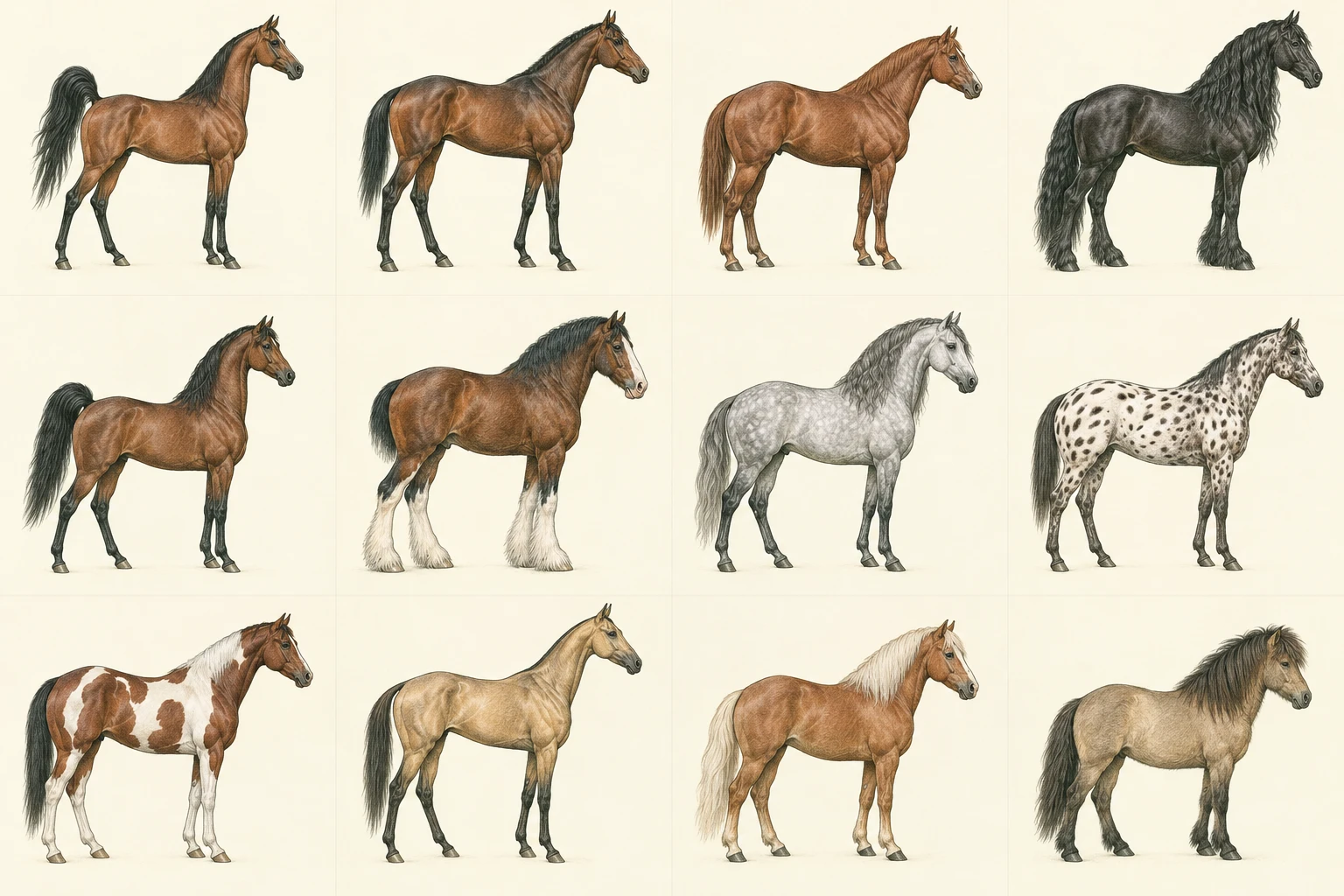
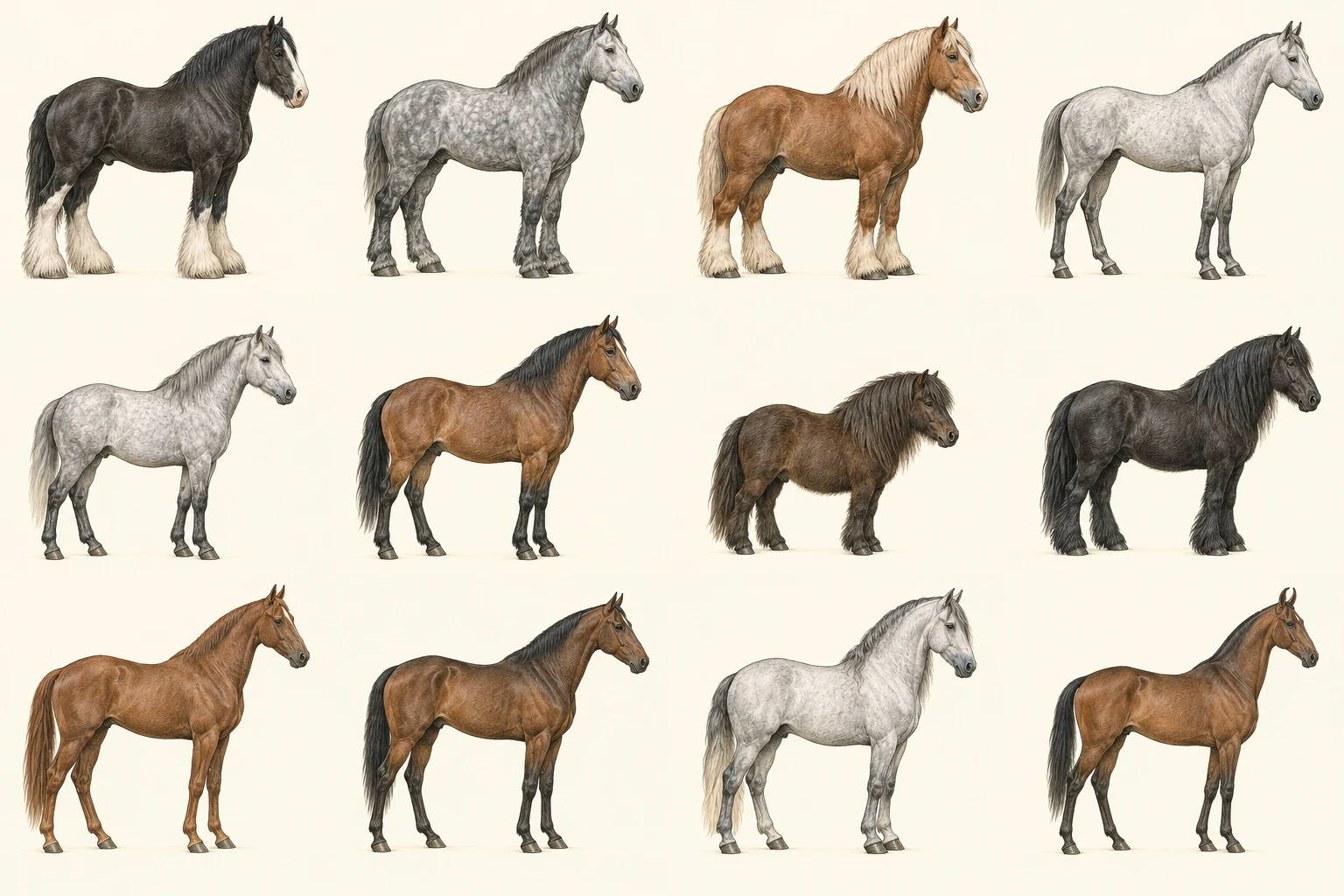
The side-view drawing helps reveal structure beneath long hair. Observe shoulder, back and quarters, and then watch a real pony move. A striking mane or dark coat is not enough to establish either the breed or riding suitability; those are separate assessments.
A distinct pony, not a small version of another breed
The Fell Pony Society explicitly objects to advertising Fells as mini Friesians. That comparison may be visually tempting because both can be dark and long-haired, but it erases separate histories and standards. Accurate breed names help buyers understand what is actually offered.
Use comparisons to learn, not to rename. A Fell and a Friesian can illustrate different scales and proportions; a Fell and a Connemara can illustrate different native-pony outlines. None of those comparisons creates an interchangeable pedigree or an automatic prediction of temperament.
Riding, driving and individual education
The society documents riding and driving through its showing handbook, activity awards and modern examples. Ask which activities the particular pony is established in. Driving a pair, working alone in harness and carrying a rider are distinct skills even when one pony eventually learns all of them.
For leisure riding, discuss mounting, riding away from companions and exposure to the situations on your planned routes. For a child or returning rider, involve an instructor in the assessment. A native breed's reputation for hardiness should not be used as proof that the animal needs little preparation for a new job.
Ownership, equipment and reliable records
Plan around the individual pony's body and present routine. Arrange saddle fitting for both pony and rider, and check bridle dimensions rather than selecting by a generic cob label. The mane, tail and feather need a practical care routine that works through ordinary turnout as well as show preparation.
Check the registered identity, the owner's transfer process and any activity award cited in the listing. Conservation grazing is another use encouraged by the society, but suitability for a property depends on its management and the particular pony. A good choice connects documented identity, demonstrated training and a realistic plan for day-to-day care.
Common questions
Is a Fell Pony a miniature Friesian?
No. The Fell Pony Society rejects that description. The Fell is a separate native English working-pony breed.
Are all Fell Ponies black?
No. The standard also includes brown, bay and grey. Check current society rules for other colours or markings.
How tall is a Fell Pony?
The breed standard sets a maximum of 14 hands, or 142.2 cm. Verify the individual’s measurement where height matters.
Sources & further reading
We use breed registries, equestrian organisations and specialist reference sources. Registration rules and training standards can change; check the original source for the latest requirements.
- Fell Pony Society: breed history, standard and terminology ↗fellponysociety.org
- Fell Pony Society: showing and competing ↗fellponysociety.org
- Fell Pony Society: activity awards ↗fellponysociety.org
- Fell Pony Society: conservation grazing ↗fellponysociety.org
Last editorial source check: . General educational information; work with a qualified instructor or veterinary professional for individual advice.