At a glance
Thoroughbred quick facts
- Origin
- Great Britain; developed through British mares and imported Eastern stallions
- Height
- Varies; pedigree registration is not a fixed height specification
- Coat
- Bay, dark bay or brown, chestnut, black, grey and other registry-recognised colours
- Best known for
- Flat racing, jump racing and second careers in equestrian sport
Origins and a performance-focused breed
The American Museum of Natural History explains the Thoroughbred's development through English mares and imported Arabian, Barb and Turkish horses. Selection for racing created a lighter, athletic riding horse and influenced many other breeds. In North America, The Jockey Club maintains Thoroughbred registration for the United States, Canada and Puerto Rico.
The word Thoroughbred should be used precisely. A purebred Morgan is a Morgan; a purebred Arabian is an Arabian. A horse with some Thoroughbred ancestry is a crossbred unless it meets the relevant Thoroughbred registry's requirements. This distinction matters when comparing pedigrees, competition eligibility and the identity stated in a sale advertisement.
Recognising the athletic outline
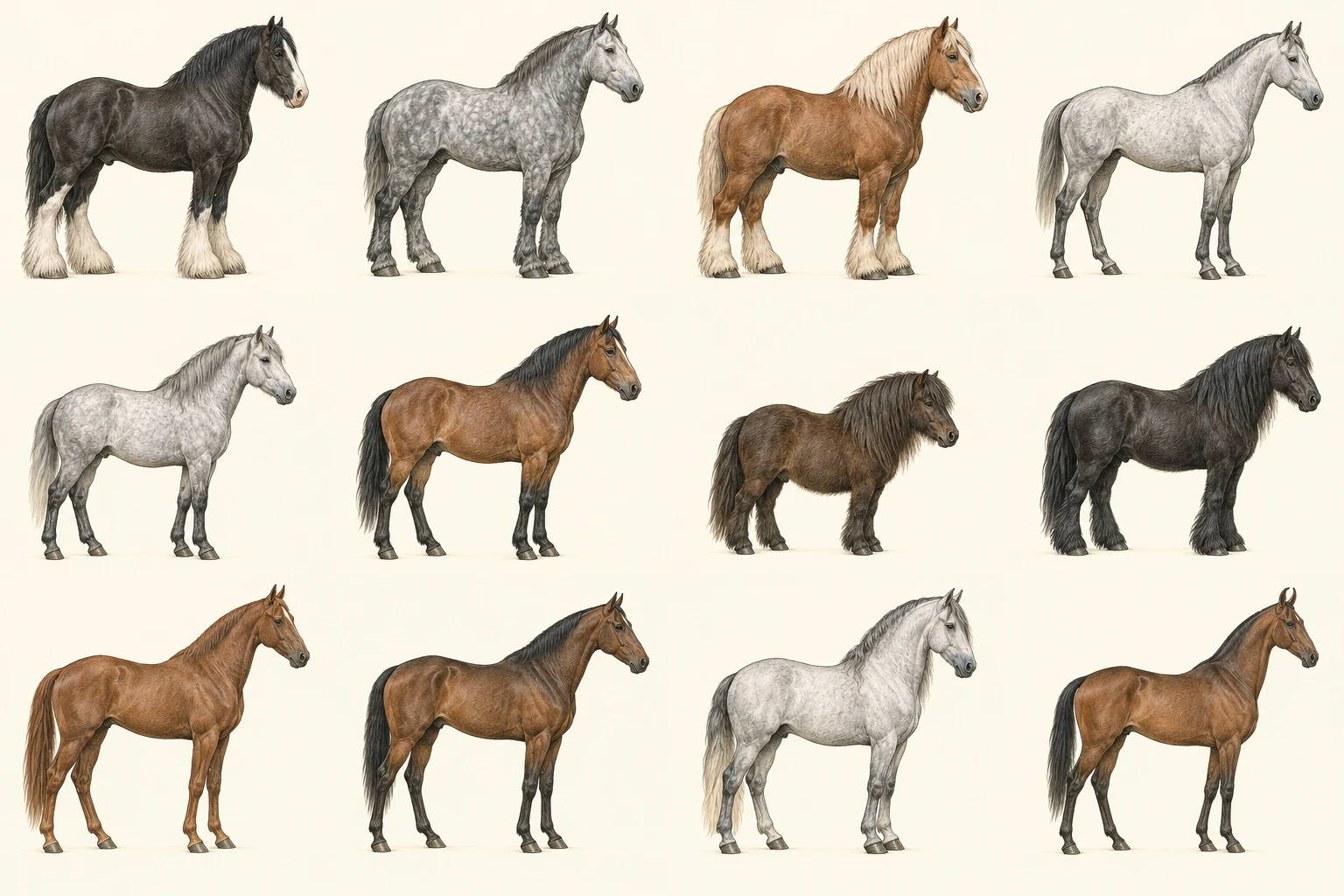
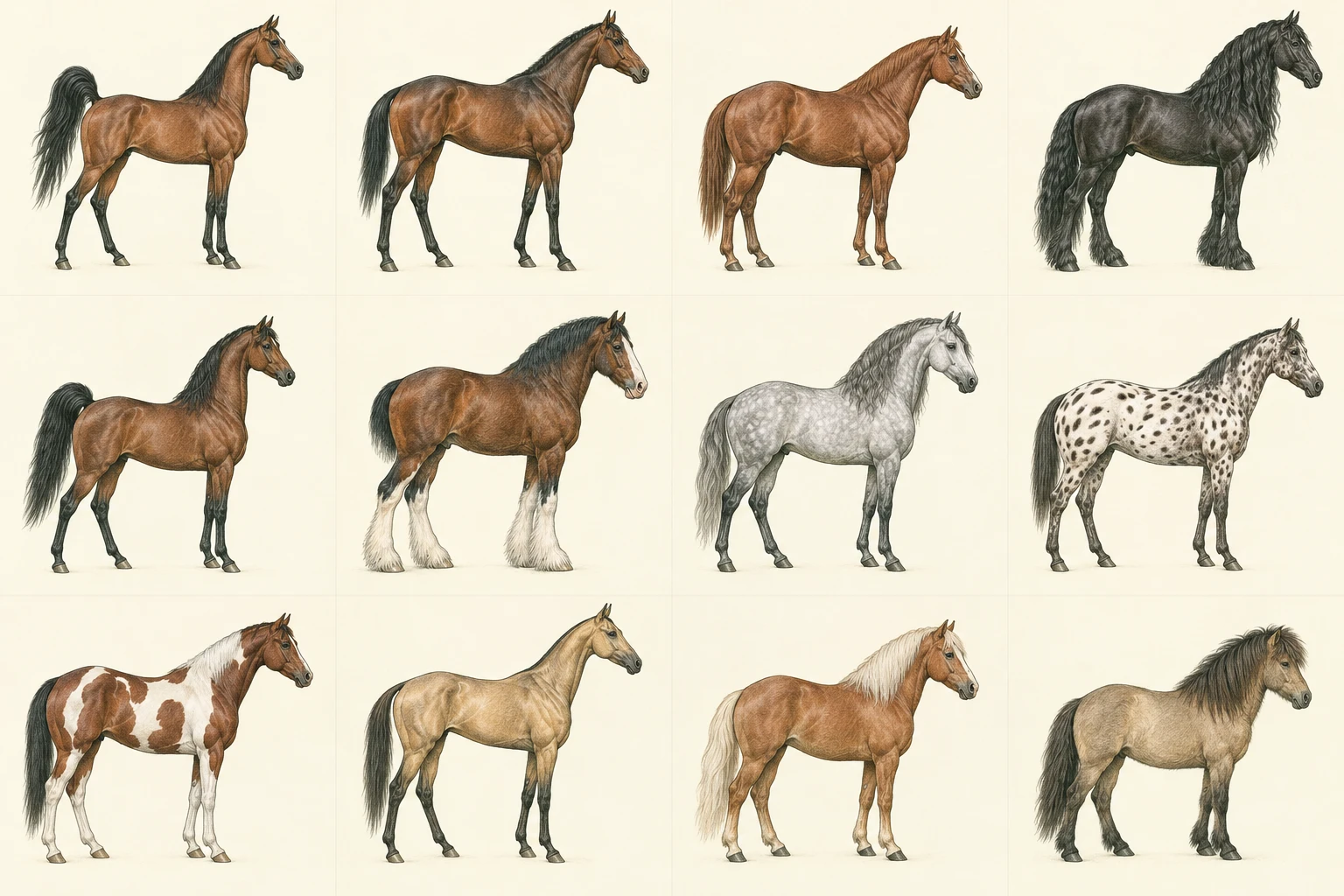
A Thoroughbred illustration commonly shows a comparatively long-legged, lean riding-horse outline. Individuals vary considerably in height, body depth, neck shape and bone. Racing pedigree does not produce one identical body type, and a horse prepared for racing can look different after a period of retraining or retirement.
Use a drawing to learn proportions, not to diagnose a live horse. Compare the shoulder, length of back, quarters and limb alignment, then see the animal in motion. Ask for an actual measurement rather than treating a photograph or a seller's estimate as reliable height information.
What an off-track horse already knows
Retraining of Racehorses describes a racehorse's experience of travel, group exercise, tack and a highly structured working routine. That is genuine training, but it differs from the signals and balance expected in general riding. A horse leaving a training yard is also changing its home, companions and daily pattern.
For a ridden transition, separate the tasks. Standing at a mounting block, working on smaller arena lines, accepting a new saddle and responding to a recreational rider's aids are distinct lessons. Avoid interpreting every unfamiliar response as disobedience. The useful question is whether the horse understands the request and is comfortable carrying it out.
Second careers and realistic expectations
The Jockey Club supports aftercare and Thoroughbred participation beyond racing. When evaluating a potential sport partner, ask about retraining already completed, current workload and the conditions of any recent competition. A racing record and an arena-schooling record answer different questions.
An experienced coach can help distinguish a horse that is confidently established in a second career from one that is just beginning. Neither label is a judgment of quality; it describes the level of support and time the next owner will need. A lower purchase price does not make a training project simpler.
Equipment, records and the viewing
Retraining of Racehorses highlights the need to revisit saddle fit as the horse's body changes during a new programme. Arrange fitting around the horse's present shape and reassess as work develops. Do not choose tack only because it worked on a different Thoroughbred or looks like equipment used at a racing stable.
At a viewing, ask for the horse's registered name, identification and history, then connect those documents with the animal you are seeing. Watch the seller handle and ride first. Include a demonstration relevant to your proposed use, and take notes so excitement about the breed does not replace an objective comparison between suitable candidates.
Common questions
Is a Thoroughbred the same as a purebred horse?
No. Thoroughbred names a particular registered pedigree breed. Purebred can describe an animal from many other breeds.
Can an ex-racehorse become a leisure horse?
Many do. The key is appropriate retraining and a match between the horse, rider and intended job; leaving racing does not automatically mean it is ready for a novice rider.
What does OTTB mean?
OTTB means off-track Thoroughbred: a Thoroughbred that has left racing. It describes a former occupation, not the horse’s present level of schooling.
Sources & further reading
We use breed registries, equestrian organisations and specialist reference sources. Registration rules and training standards can change; check the original source for the latest requirements.
- American Museum of Natural History: Thoroughbred ↗amnh.org
- The Jockey Club: registry and industry resources ↗jockeyclub.com
- Retraining of Racehorses: life of a racehorse ↗ror.org.uk
- Retraining of Racehorses: care and changing tack ↗ror.org.uk
Last editorial source check: . General educational information; work with a qualified instructor or veterinary professional for individual advice.