
At a glance
Arabian quick facts
- Origin
- Arabian Peninsula and surrounding Middle Eastern regions
- Height
- Usually 14.1–15.1 hands; individuals may be smaller or taller
- Coat
- Bay, chestnut, grey and black
- Best known for
- Endurance riding and a distinctive head, neck and tail carriage
History and the meaning of Arabian type
The Arabian Horse Association describes a history rooted in desert communities, where horses were valued for riding, travel and war. Exact ancient origins remain debated; a confident single date or birthplace would simplify a much longer story. The modern breed is best understood through documented pedigrees and the standards used by its registry, rather than through colourful legends about individual founding horses.
Type means the traits that make an Arabian recognisable as an Arabian. It is different from fitness, training or suitability for a rider. A horse can look strongly characteristic of the breed and still need substantial schooling; another can have a less dramatic profile and be a highly effective riding partner.
How to recognise an Arabian
The published standard describes a comparatively small head with a straight or slightly concave profile, wide-set eyes, an arched neck, a short back and a fairly level croup. Bay, chestnut, grey and black are recognised colours. The usual height range is 14.1 to 15.1 hands, with exceptions. High tail carriage is one useful visual clue, but photographs cannot establish pedigree.
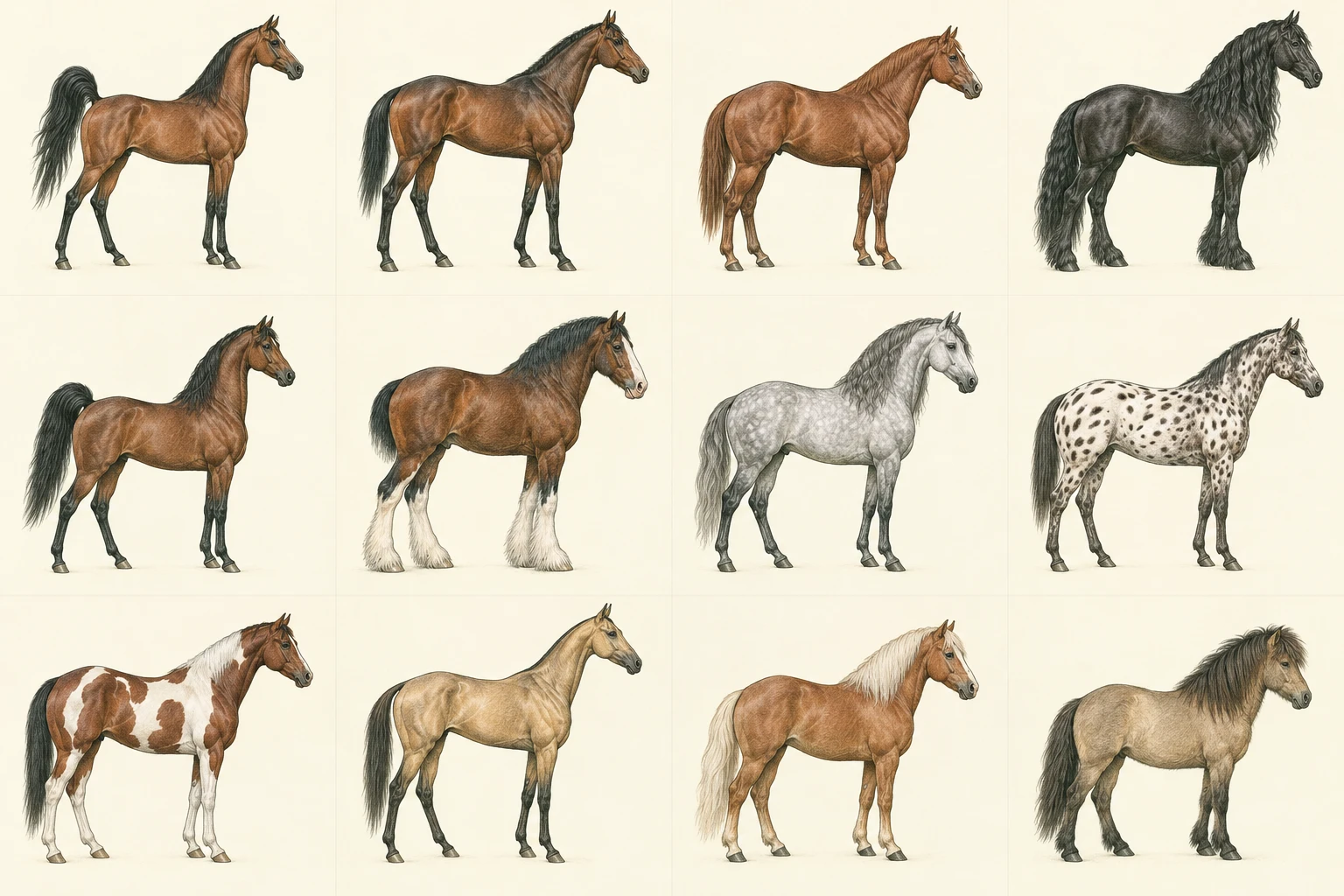
Look at the whole horse rather than concentrating on the face. A side-on drawing makes the relationship between neck, back and quarters easier to compare. When looking at a live animal, add front and rear views and watch movement. A decorative head is only one part of the riding horse in front of you.
Disciplines and the endurance connection
The association identifies endurance as a major Arabian strength and also describes English and Western participation. That versatility should lead to questions about a particular horse's experience. An endurance prospect, a show horse and a relaxed pleasure mount can have different training histories even when their pedigrees overlap.
For a distance-riding goal, ask how the horse behaves alone, with companions and after a break from work. For arena riding, ask about transitions, steering and consistent responses to familiar aids. Records and a calm demonstration are more useful than a seller's claim that every Arabian has unlimited stamina.
Temperament and rider compatibility
Breed descriptions often celebrate alertness and a close relationship with people. Those are broad descriptions, not a guarantee of a quiet beginner mount. Describe what you need in observable terms: standing for mounting, walking away from a group, coping with a busy arena and responding to a rider who is still learning.
Meet the horse in the environment where it normally lives. Watch routine handling before the ridden trial, and discuss your experience honestly with a coach. A strong match is built from the individual's training, confidence and behaviour as well as from your interest in the breed's heritage.
Ownership, equipment and useful questions
An Arabian's height does not tell you which saddle it needs. Compare the individual back, withers and available bearing area with the proposed saddle and arrange professional fitting. The same principle applies to a bridle: a refined head is a reason to check dimensions, not a reason to tighten a standard size until it appears neat.
Ask for the registered identity, age, recent workload and the owner's account of ordinary days as well as competition days. Distinguish a purebred Arabian from a registered Half-Arabian or Anglo-Arabian when reading an advertisement. Both can be valuable riding horses, but they represent different pedigree categories.
Common questions
Is every Arabian suitable for endurance riding?
The breed has a strong endurance tradition, but suitability depends on the individual horse, its preparation, soundness and training. Pedigree alone does not establish readiness for a particular ride.
Are Arabians ponies because some are under 14.2 hands?
Arabian is a breed identity. Its published height range includes horses below the common 14.2-hand pony threshold, so size alone does not change the registered breed.
Does every Arabian have a dished face?
The breed standard allows a straight profile and prefers a slightly concave one. A strongly dished face is not required to recognise Arabian type.
Sources & further reading
We use breed registries, equestrian organisations and specialist reference sources. Registration rules and training standards can change; check the original source for the latest requirements.
- Arabian Horse Association: breed standard and heritage ↗arabianhorses.org
- Arabian Horse Association: conformation standard ↗arabianhorses.org
- Arabian Horse Association: registration categories ↗arabianhorses.org
Last editorial source check: . General educational information; work with a qualified instructor or veterinary professional for individual advice.