
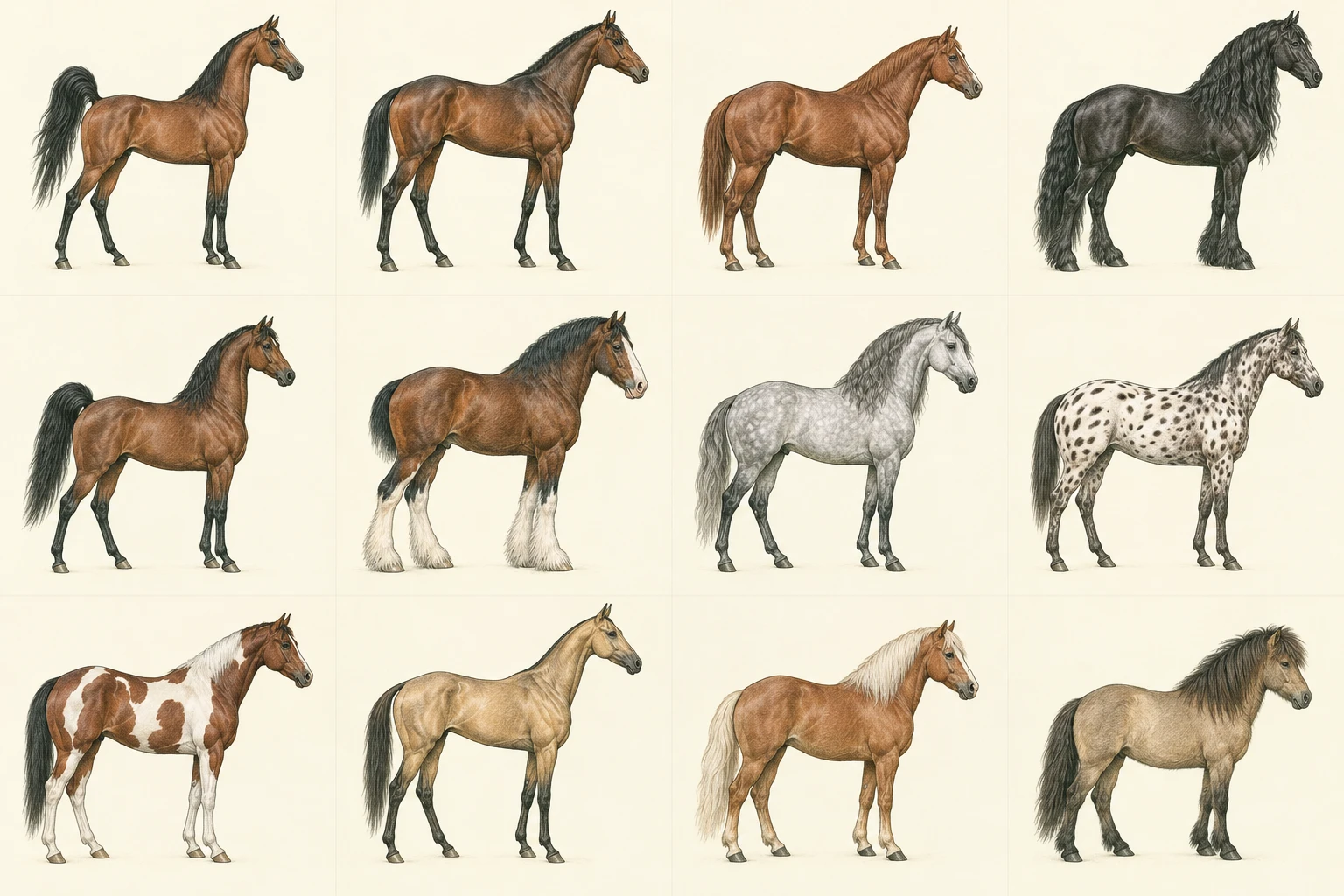
At a glance
Trakehner quick facts
- Origin
- East Prussia, from the main stud at Trakehnen, with the American Trakehner Association in North America
- Height
- The American Trakehner Association says today’s Trakehner stands generally between 16 and 17 hands.
- Coat
- Not a single required colour in the association profile reviewed here.
- Best known for
- A refined warmblood type, dressage movement, and an East Prussian stud founded in 1732
- Stud founded
- 1732 at Trakehnen in East Prussia, by Frederick William I, according to the ATA
- North America
- The American Trakehner Association says it was founded in 1974
- Height note
- ATA: generally between 16 and 17 hands today
Plain language
For kids
- Trakehners are sport horses named after a stud farm called Trakehnen, started in 1732.
- They are usually big riding horses. The American association says they are generally 16 to 17 hands.
- They were bred to be athletic and willing. Willing does not mean every Trakehner is a beginner’s horse.
The rest of this page is the longer guide for adults and keen readers.
A place, then a horse
The ATA’s breed profile ties the horse to one farm and one date: Trakehnen, 1732. That is more specific than most warmblood names, which point at a region and a modern association. The bloodlines, the association says, can be traced to that source. Ask a seller to show the tracing rather than to wave at the date.
The same profile says the early horse was stocky and that Thoroughbred and Arabian blood was introduced in the early 1800s to add size, nerve and endurance for cavalry work, with farm work in peacetime. Read that as breeding history from the association, not as a promise about a modern horse’s nerves.
What the ATA says the modern horse is like
The association says today’s Trakehner is generally 16 to 17 hands, with substance and bone and more refinement than people may expect in a warmblood. It praises a light, springy trot and a soft canter, and it says the breed also produces jumpers and event horses. It calls temperament a leading trait: keen, alert, intelligent, stable and willing.
Those are the association’s breed-character sentences. They are not a measurement of the horse in a sale video. ‘Anxious to please’ can, in a sensitive horse, look like anxiety if the riding is confusing. Have a coach interpret the horse, not the adjective.
Names the ATA itself mentions
The profile points to living sport horses, including Dalera BB TSF, described there as a multiple World, Olympic and European champion in dressage, and Tsetserleg TSF and Vandiver as horses that represented the United States at the Tokyo Olympics, with Tsetserleg also on a U.S. silver-medal team. Horsepedia is not adding medals the page did not state.
A champion relative is a conversation about pedigree. It is not a warranty. The famous-horses guide explains how to enjoy those stories without shopping as if you were buying the champion.
Refinement still needs a job and a routine
A lighter, more Thoroughbred-influenced warmblood can be sharper and faster-thinking than a heavier neighbour. That is a reason for clear riding and a quiet barn routine, not a reason for fear or for hype. The body-language guide helps riders notice the difference between curiosity and trouble.
Feet, teeth, forage and fitness still decide whether the elegant trot stays sound. Use the hoof and feeding guides. Do not add grain because the horse ‘looks like it should be fed like a racehorse’.
Papers, the Verband, and the horse
The ATA says it is the Verband-affiliated association for North American breeders. A horse can be registered in Germany, in North America, or not at all. ‘Trakehner type’ is not a registration. If both a German and an American paper are mentioned, ask which one is current.
For a family horse, ignore the 1732 date until you have answered the modern questions: age, training, health and whether this rider and this horse fit. The choosing guide walks through those questions without caring which century the stud was founded.
Common questions
Are Trakehners smaller than other warmbloods?
The American Trakehner Association says they are generally 16 to 17 hands, with refinement as well as bone. That is a general note, not a rule that every horse matches.
Did the breed start in 1732?
The ATA says the main stud at Trakehnen was established then by Frederick William I, and that the name comes from that farm. Horses in the region are older than the stud’s founding date.
Does a willing breed mean a beginner-safe horse?
No. The association’s temperament description is about the breed it aims to produce. One horse can be keen in a way a new rider cannot steer kindly.
Sources & further reading
We use breed registries, equestrian organisations and specialist reference sources. Registration rules and training standards can change; check the original source for the latest requirements.
- American Trakehner Association: the Trakehner horse (opens in a new tab)americantrakehner.com
- American Trakehner Association (opens in a new tab)americantrakehner.com
- Trakehner Verband (opens in a new tab)trakehner-verband.de
Last editorial source check: . General educational information; work with a qualified instructor or veterinary professional for individual advice.