At a glance
Akhal-Teke quick facts
- Origin
- Turkmenistan and the historic Turkmen horse culture of Central Asia
- Height
- 14.3–16 hands in the ATAA breed standard
- Coat
- All colours and combinations of white markings are accepted by the cited standard
- Best known for
- A long, lean outline, endurance heritage and metallic-looking coat sheen
Turkmenistan and a living cultural tradition
The Akhal-Teke Association of America locates the breed's roots in the Turkmen horse culture of Central Asia. The modern name connects the Akhal area with the Teke people. Historical accounts mix recorded events with legends, so claims that a breed directly founded nearly every modern horse require more caution than simple descriptions of its documented home.
ATAA also describes traditional alaja neck cords, rugs and elaborate horse decorations. These are cultural objects with their own meanings and history, rather than generic fashion accessories. Learning about them provides a fuller understanding of the breed than focusing only on unusually shiny coat photographs.
Reading the breed standard
ATAA's standard describes a medium-sized horse of 14.3 to 16 hands with a long, narrow head, slim neck, prominent withers and a lean athletic body. It accepts all coat colours and white markings and treats metallic gleam as desirable. Individual horses can show differing degrees of that sheen.
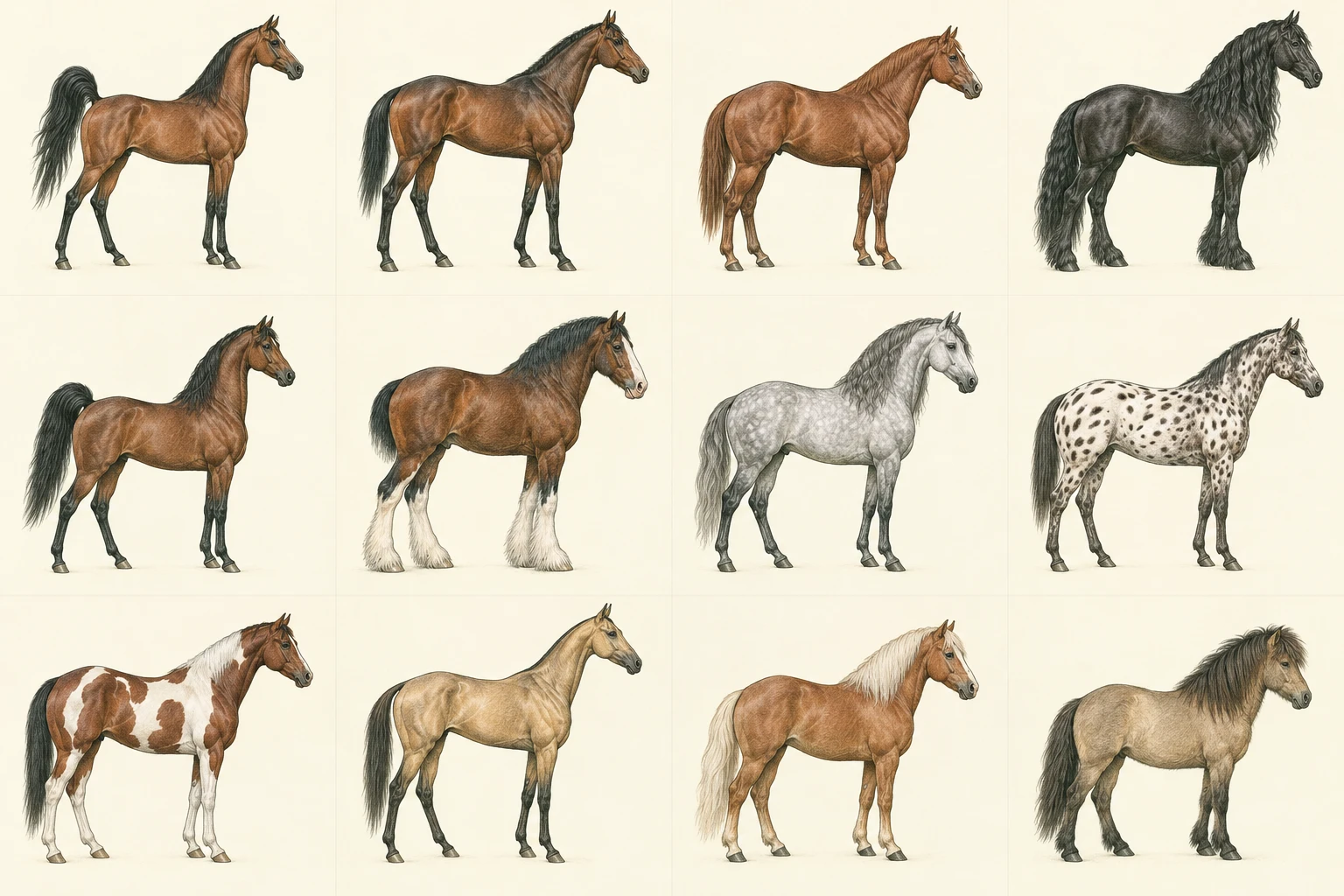
In a technical side view, compare length, neck set and the relationship of the back to the quarters. A lean outline should not be confused with poor condition, just as visible muscle should not be confused with training. Evaluating an actual horse requires its present management and movement to be considered alongside breed type.
Coat sheen and visual variation
The metallic effect is central to the breed's popular image, but the association's material notes variation in its expression. Akhal-Tekes occur in multiple colours; gold is neither the only colour nor proof of purebred identity. Lighting can make a sheen more pronounced, so a studio image and an ordinary outdoor view may look different.
Treat coat study as one branch of identification. Ask for pedigree and registration documents if a purebred claim matters. A genetic or pedigree category provides information that a beautiful coat cannot. For a riding partnership, current training and ordinary behaviour remain more practical than the intensity of reflected light in a photograph.
Riding potential and rider match
The breed is associated with endurance heritage and appears in modern sport. That history invites investigation of a horse's individual experience rather than an assumption about automatic aptitude. Ask which disciplines it has been trained in, what its current workload looks like and what the rider has actually demonstrated.
Descriptions of sensitivity or loyalty can mean different things to different owners. Replace them with observable questions about handling, mounting, riding alone and accepting a new rider's cues. An instructor who knows your goals can help translate an interesting breed profile into a realistic decision about a particular horse.
Practical ownership and comparison
Source suitable professional support before bringing home a less common breed. A lean, distinctive body does not remove the need for individual saddle fitting, routine hoof care and a clear daily-care plan. Ask the current keeper which equipment fits and how the horse responds to changes in environment or routine.
Compare the Akhal-Teke with the Arabian for a different expression of desert-associated heritage and with the Thoroughbred for another athletic outline. Similarities in appearance are useful for study, but avoid treating them as proof of direct ancestry. Documented identity, individual experience and your intended use should drive the final comparison.
Common questions
Are all Akhal-Tekes golden?
No. ATAA’s breed standard accepts all colours and white markings. The celebrated metallic appearance can occur across different colours and varies between horses.
How tall is an Akhal-Teke?
The cited ATAA standard describes a medium-sized horse ranging from 14.3 to 16 hands.
Does metallic sheen prove the breed?
No. Visual appearance alone cannot establish pedigree. Check the horse’s documented identity when purebred status matters.
Sources & further reading
We use breed registries, equestrian organisations and specialist reference sources. Registration rules and training standards can change; check the original source for the latest requirements.
- ATAA: breed overview and history ↗akhal-teke.org
- ATAA: breed standard ↗legacy.akhal-teke.org
- ATAA: traditional tack ↗akhal-teke.org
- ATAA: coat colours ↗akhal-teke.org
- ATAA: discussion of variation in metallic sheen ↗legacy.akhal-teke.org
Last editorial source check: . General educational information; work with a qualified instructor or veterinary professional for individual advice.