At a glance
Marwari quick facts
- Origin
- Marwar region of Rajasthan, India
- Height
- Described by the Marwari Horse Society as medium height; verify individual measurement
- Coat
- Coat appearance varies; ear shape and documented breed identity require separate assessment
- Best known for
- Inward-curving ear tips and a strong association with Rajasthan’s horse culture
Marwar and Rajasthan’s horse culture
The Marwari Horse Society locates the breed's home in Rajasthan, describing a nucleus in the Malani area of the Marwar region and surrounding breeding communities. Its historical account places the horse in an arid landscape and an established riding culture. Distinguish those documented geographic associations from embellished claims about a particular ancient founding date.
A breed can be culturally important without every popular story being independently proven. When learning about the Marwari, pay attention to local preservation organisations and recorded breeding work. That provides a clearer basis than repeating legends as settled historical facts.
The ears and the whole horse
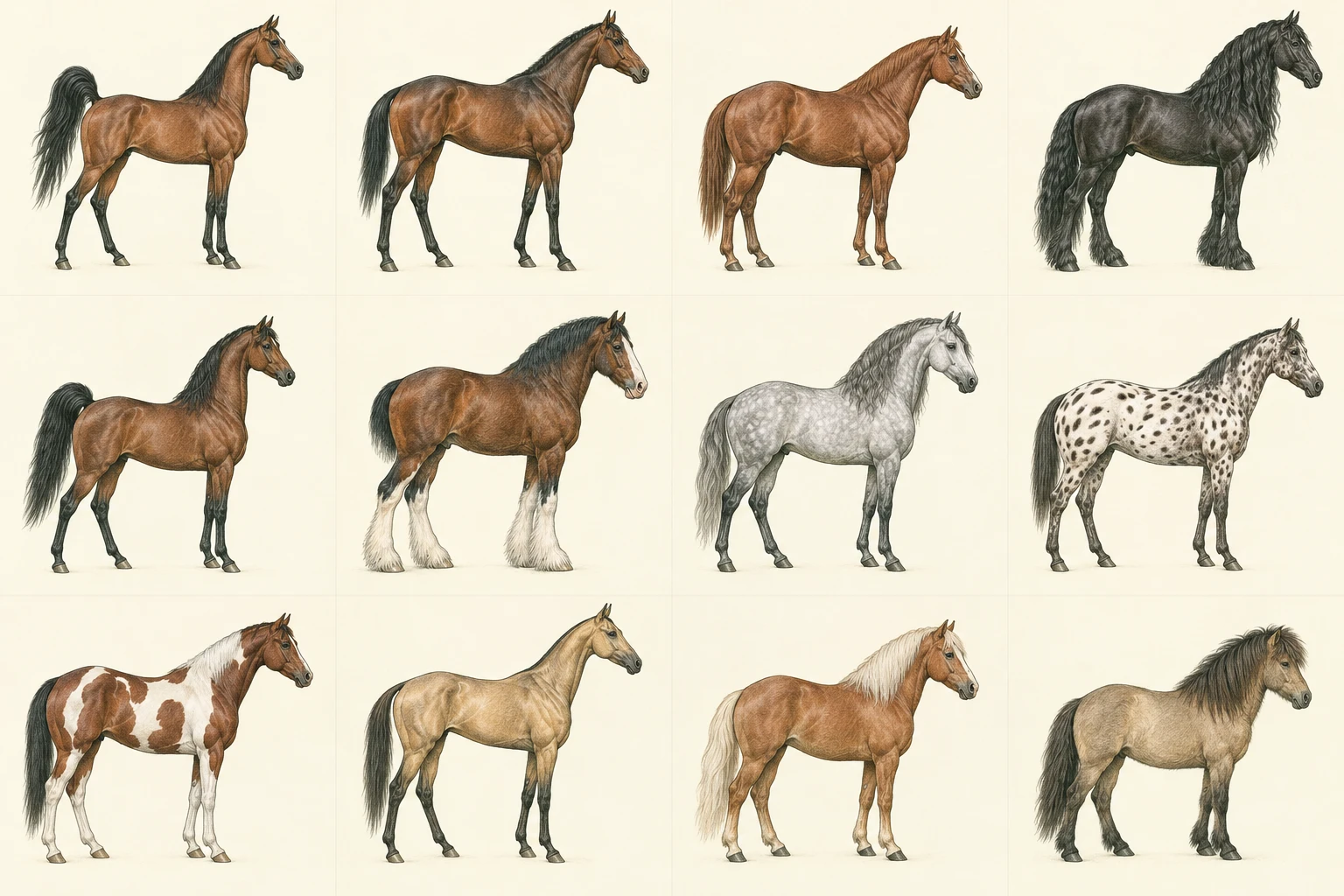
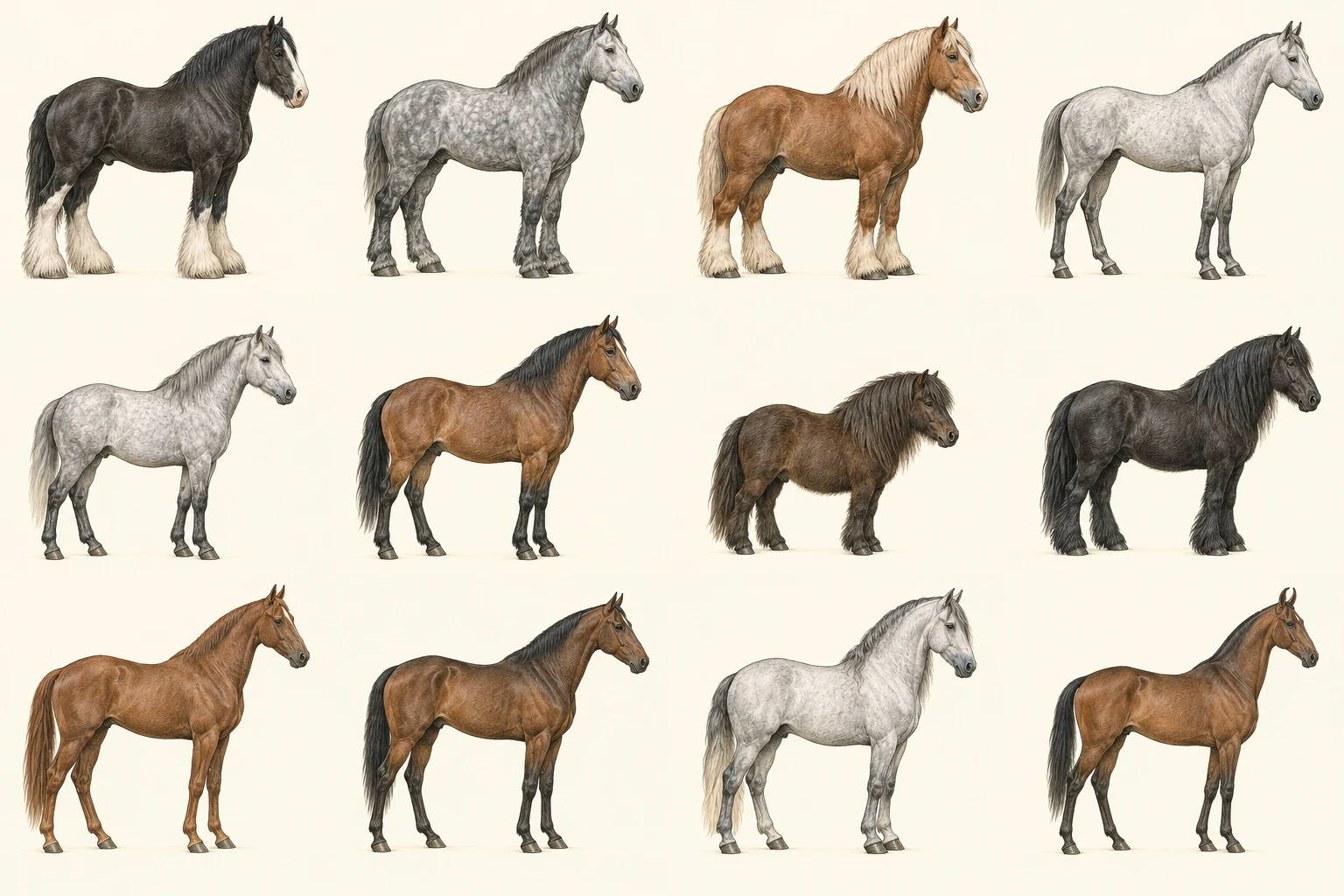
The society's breed description highlights ear tips that curve inward towards one another. It also describes an elegant, animated riding-horse outline. A technical drawing should make that head characteristic legible while still showing the rest of the body in consistent side view.
Ear shape is not the whole breed standard and is not a substitute for registration. Related Indian horse populations can share superficially similar features. For an actual horse, compare body proportions, movement and documented identity rather than treating one photogenic feature as a complete assessment.
Preservation and organised breed work
The society describes work to preserve, protect and promote the breed. Its organisational account identifies seminars in 2002 and 2006 as milestones in standardising breed characteristics and refers to studbook and genetic-characterisation efforts. These are useful examples of contemporary work supporting the breed's future.
When reading a sale or breeding description, ask which organisation recorded the horse and what documentation is available. Do not assume that every national system uses the same certificate format or the same terminology. Identity questions should be answered with records, not with a seller's claim that the horse looks especially traditional.
Scientific recording and conservation in India
India’s ICAR National Research Centre on Equines reports a Marwari research herd and long-term biometric recording at Bikaner. Its 2020 annual report analysed 226 records covering about thirty years and reported a mean withers height of approximately 150.2 cm. That is a result for the recorded research population, not a universal breed height standard or a guarantee about a horse offered for sale. Distinguishing a sample average from a required range prevents a precise-looking number from becoming misleading.
In May 2023, ICAR reported the birth of a Marwari filly following embryo transfer at Bikaner and described embryo cryopreservation work supporting conservation. This contemporary research complements the society’s work on identity and breed standards. Preservation therefore involves more than keeping a distinctive appearance: records, breeding populations and scientific programmes help maintain the breed as a living resource. A learner can value that work without treating any breeding procedure as a recommendation for their own horse.
Riding use and individual education
The society emphasises travel, vigour and an animated gait in its description. For a buyer, the practical question is what the particular horse is taught and how confidently it performs that work. A historical association with long journeys cannot establish current fitness or readiness for a new riding routine.
Ask about the normal rider, handling routine, mounting and experience in the settings you intend to use. A horse with unfamiliar training cues may need a careful introduction to your riding system. Work with a professional who understands both the individual horse and your goals rather than relying on a breed stereotype.
Ownership questions and comparisons
For a less common breed in your area, plan the available professional support, suitable facilities and equipment fitting before purchase. Measure the individual horse and record its present needs. A slender or elegant appearance does not tell you the right saddle, bridle or workload.
Compare the Marwari with the Akhal-Teke and Arabian to study different horses associated with dry-region cultures. Keep each history and identity distinct: similarities in elegance or endurance reputation do not prove a direct ancestral relationship. A good breed comparison provides context while leaving individual suitability to documentation, observation and a responsible trial.
Common questions
What is the Marwari’s most recognisable feature?
Its ear tips curve inward towards one another. That feature should be considered with the whole horse and its documented identity.
Where does the Marwari originate?
The Marwari Horse Society associates the breed with the Marwar region of Rajasthan, India, including the Malani area.
Does inward-curving ear shape prove a horse is Marwari?
No. Appearance alone cannot establish pedigree or registration. Ask for the records supporting the breed description.
Sources & further reading
We use breed registries, equestrian organisations and specialist reference sources. Registration rules and training standards can change; check the original source for the latest requirements.
- Marwari Horse Society: breed description ↗marwarihorsesociety.com
- Marwari Horse Society: history and geographic origins ↗marwarihorsesociety.com
- Marwari Horse Society: preservation and standardisation ↗marwarihorsesociety.com
- ICAR National Research Centre on Equines: 2020 annual report and Marwari biometric records ↗nrce.gov.in
- Indian Council of Agricultural Research: Marwari conservation and embryo-transfer report (2023) ↗icar.gov.in
Last editorial source check: . General educational information; work with a qualified instructor or veterinary professional for individual advice.