
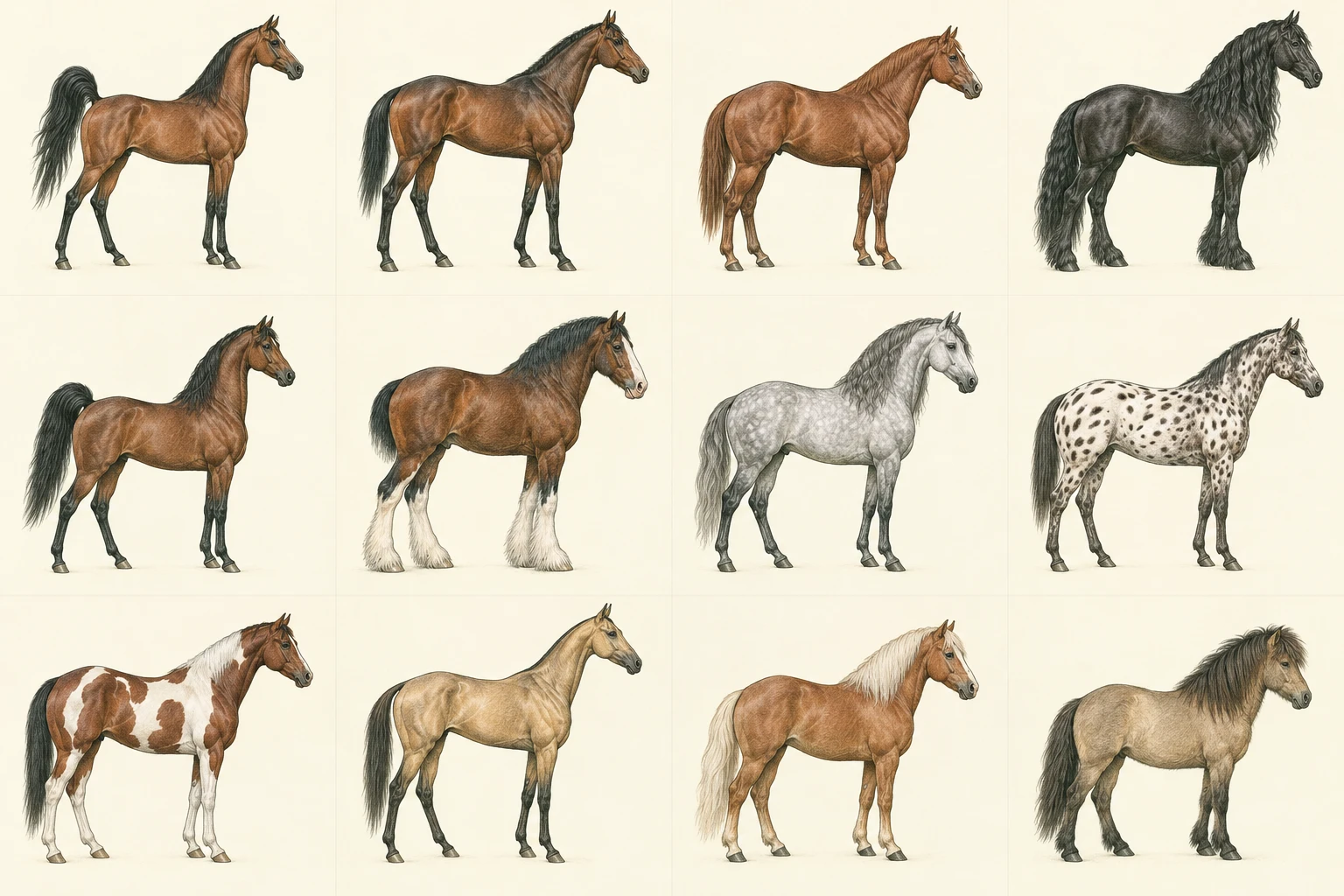
At a glance
American Quarter Horse quick facts
- Origin
- United States
- Height
- Around 15 hands on average in the AQHA UK breed description; varies by individual and discipline
- Coat
- Many recognised solid colours and permitted markings
- Best known for
- Ranch work, Western performance and quarter-mile racing
Why the breed is called a Quarter Horse
The American Quarter Horse Association of New Zealand relates the name to exceptional speed over a quarter of a mile. The American Quarter Horse Association was established in 1940 to record and preserve the breed's pedigrees. The modern registry connects a long history of useful ranch horses and sprint racers with organised breeding and competition.
History provides context for the horse's specialisations. Sprinting rewards acceleration; cattle work rewards rapid adjustments to another animal's movement. Those aims do not require exactly the same training as a long-distance trail ride or a rail class. Read a pedigree and a performance description as complementary pieces of information.
Conformation and variation within the breed
AQHA UK describes a compact horse with a broad forehead, strong shoulders and notably muscled quarters, averaging around 15 hands. It also notes differences according to discipline. A technical side view is useful for identifying the relationship between the body, neck and hindquarters rather than merely searching for the largest muscles.
Compare an individual with its proposed job. Ask whether its present way of going, stride and training suit the riding you actually intend to do. Conformation vocabulary can sharpen your observation, but appearance alone cannot prove comfort, athletic longevity or behaviour under pressure.
Ranch, arena and racing disciplines
The breed spans cattle work, ranch riding, reining, Western pleasure, English classes and racing. Each discipline develops particular skills. A well-trained reining horse may understand specialised cues that surprise a rider accustomed to another system; a former racing horse may need an entirely different transition into general riding.
Ask the seller to demonstrate the skills named in the advertisement and explain the aids they use. If you want to trail ride, request information about riding outside the arena, separation from companions and unfamiliar situations. An impressive show résumé does not answer every leisure-riding question.
Temperament without stereotypes
Quarter Horses are often recommended as versatile riding partners, but no breed label guarantees a beginner horse. A young, athletic competition prospect and an experienced teaching horse can require very different riders. Describe the level of schooling you need instead of relying on words such as gentle, bombproof or family horse.
A useful trial includes ordinary handling, standing for mounting, steering, stopping and a demonstration by the current rider. A coach familiar with your goals can help you compare the horse's responses with your current ability. Look for understandable, repeatable behaviour rather than one unusually quiet moment.
Registration and buying questions
AQHA states that preserving pedigree integrity is part of its mission and explains circumstances requiring parentage verification. Check the actual registration certificate and transfer process. Do not assume that an attractive stock-type horse has a documented Quarter Horse pedigree simply because a listing uses the breed name.
Ask which discipline the horse has been trained for, how recently it worked, what equipment is included and which cues it expects. Fit the saddle to the individual rather than buying a generic Quarter Horse size. Compare the American Paint Horse and Appaloosa as neighbouring stock-horse breeds, while keeping each registry's rules distinct.
Common questions
Are Quarter Horses only for Western riding?
No. The breed participates in Western, ranch, English and racing activities. The individual horse’s training matters more than the style of saddle in a photograph.
How big is a Quarter Horse?
AQHA UK describes an average of about 15 hands while acknowledging differences by discipline. Ask for the measured height of the particular horse.
Does a stock-horse appearance prove registration?
No. Registered identity depends on documented pedigree and registry requirements, not on muscular conformation alone.
Sources & further reading
We use breed registries, equestrian organisations and specialist reference sources. Registration rules and training standards can change; check the original source for the latest requirements.
- AQHA UK: breed characteristics ↗aqha-uk.org
- AQHA New Zealand: about the Quarter Horse ↗aqha.co.nz
- AQHA: pedigree and registration ↗helpcenter.aqha.com
- AQHA: parentage verification ↗helpcenter.aqha.com
Last editorial source check: . General educational information; work with a qualified instructor or veterinary professional for individual advice.