At a glance
Morgan quick facts
- Origin
- Vermont and New England, United States
- Height
- Generally 14.1–15.2 hands, with individuals outside that range
- Coat
- Many colours and recognised coat characteristics
- Best known for
- Versatile riding and driving with a compact, deep-bodied outline
Figure, Vermont and the early Morgan
The American Morgan Horse Association traces registered Morgans to Figure, foaled in 1789. His descendants became useful farm, road and riding horses in New England. The association's museum records their role in westward migration and military service, placing the breed within everyday American work as well as sporting history.
This is a documented foundation story, but some details of Figure's own parentage remain uncertain. Distinguish what a registry can trace from what later stories embellish. A long and well-known ancestry is part of the breed's identity; it is not evidence that every descendant behaves or performs in exactly the same way.
Recognising Morgan conformation
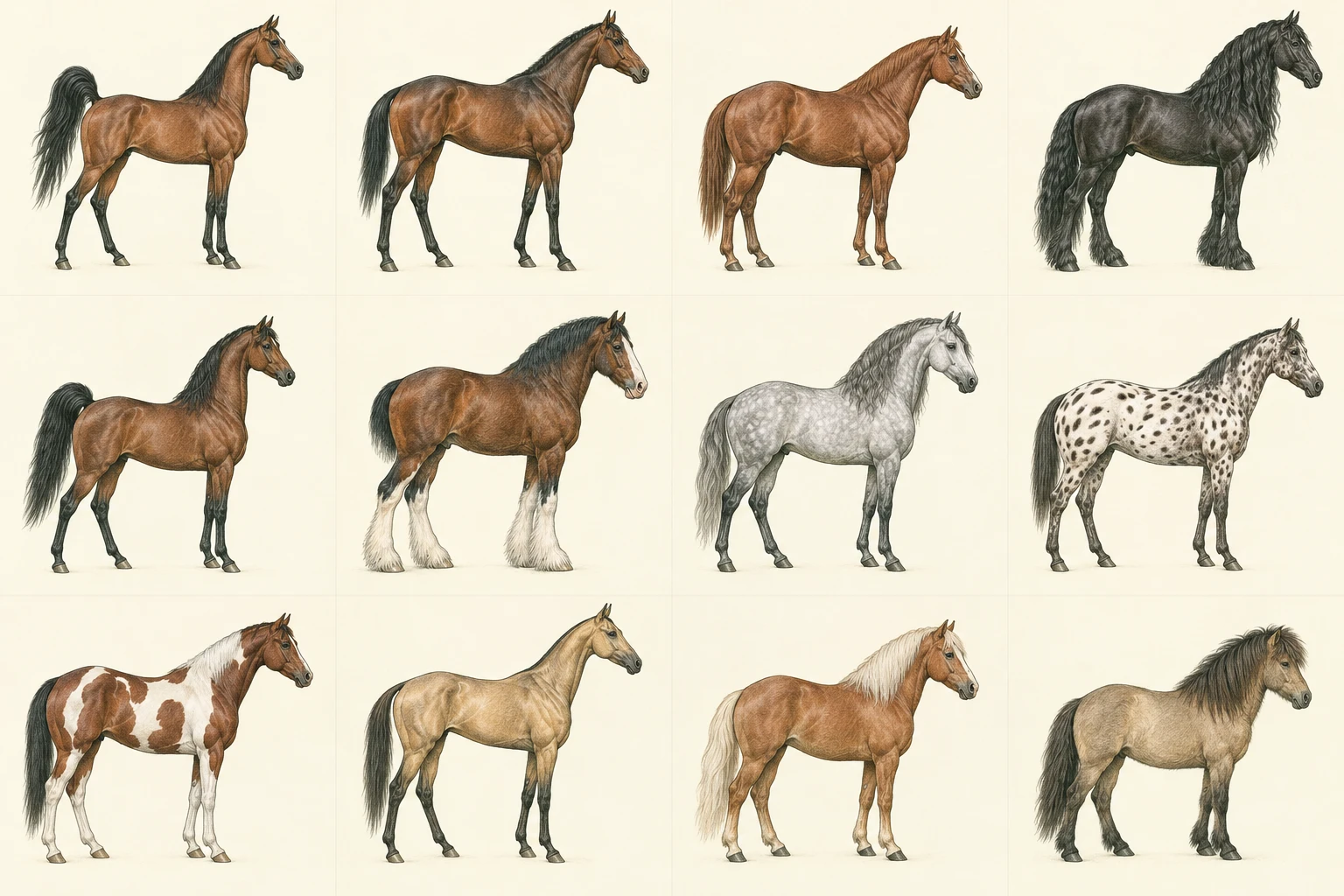
AMHA describes a deep-bodied, compact horse with an upright neck and strongly muscled quarters. Its frequently asked questions give a general height range of 14.1 to 15.2 hands and recognise that some horses are smaller or taller. The breed comes in a wider variety of colours than the common image of a bay or chestnut Morgan suggests.
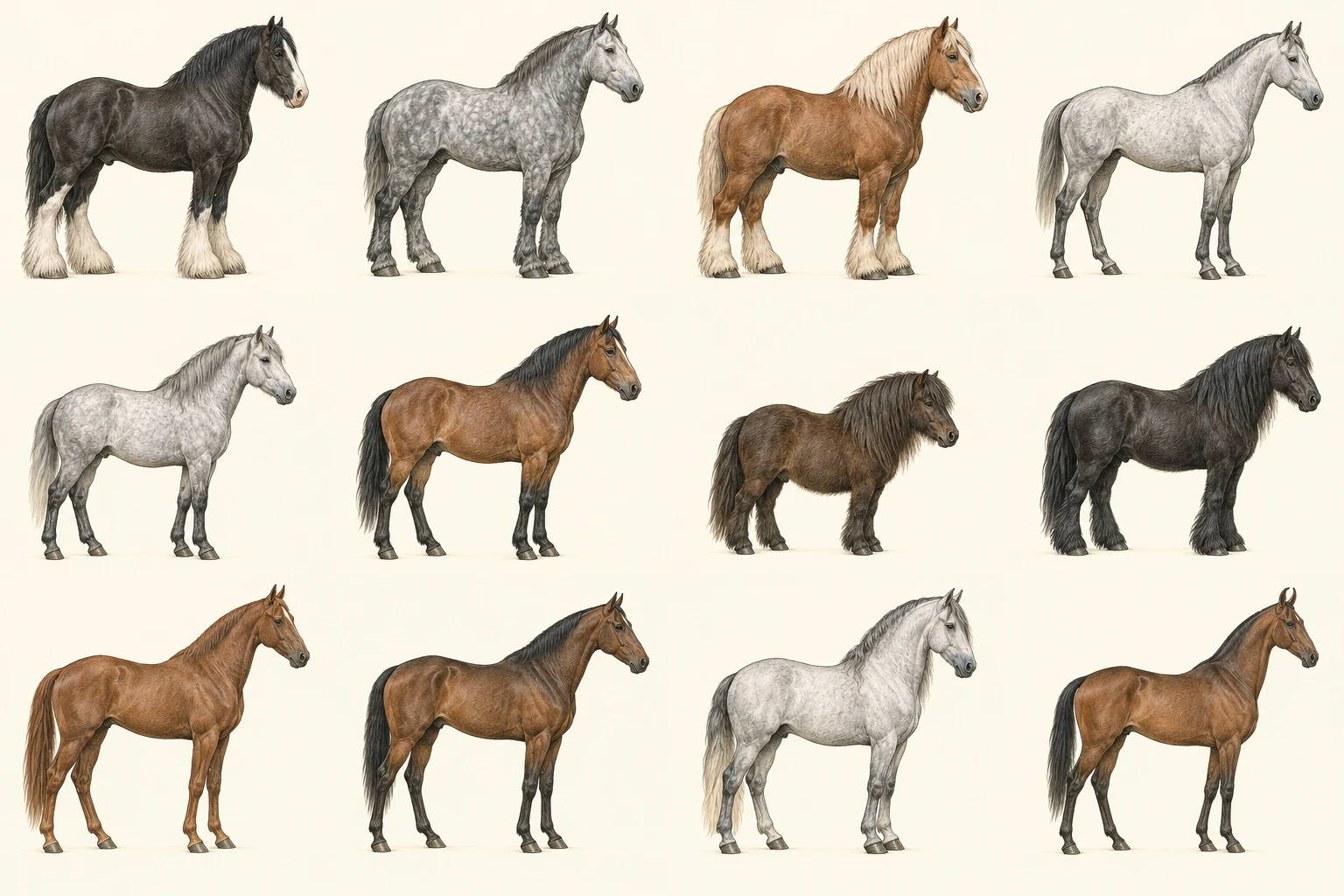
When comparing drawings, notice how the neck meets the body and how the back joins the quarters. A live horse should also be observed moving and standing without a posed show stance. Familiar breed features make identification easier, while the individual body determines practical equipment and rider fit.
Riding, driving and versatility
AMHA's breed statement describes Morgans in English and Western riding, endurance, ranch work and single or multiple driving arrangements. Versatility means the breed is represented across these activities; it does not mean an individual has already been taught every job.
Ask the seller to explain the horse's established skills and the setting in which it uses them. A horse accustomed to a formal show ring may need education for unfamiliar trails. A driving horse may need separate ridden training. Write down the activities you hope to enjoy and compare them with demonstrations rather than with a broad all-rounder label.
Families, bloodlines and different selection goals
AMHA identifies Brunk, Government, Lippitt and Western Working as the major Morgan families. These names describe breeding traditions within one registered breed, rather than four separate breeds. Family terminology adds useful context to a pedigree, especially when an advertisement refers to foundation or working lines.
A 2021 breed-association research article compared selected successful show and sport competitors from 2014–2018. It found concentrated show-ring influence from the Waseeka’s In Command and Serenity lines, while the sport sample drew more broadly from all four major families. The study concerns its particular samples and period; it is not a prediction of the abilities of every modern foal. For a learner, its useful lesson is that selection for an expressive show trot and selection for varied sport demands can produce different emphases within the same breed.
Temperament and a useful partnership
Morgan promotional descriptions emphasise willingness and interaction with people. Those qualities are attractive, but suitability remains individual. A lively competition horse can be a good match for one rider and too much for another. Age, training and the current management routine deserve as much attention as family or bloodline.
Watch catching, leading, grooming and mounting before evaluating the ridden work. Ask how the horse behaves with new people and after time away from riding. For a first horse, a coach's assessment of the actual horse-rider combination is more informative than a promise based on the breed's reputation.
Saddle fit and ownership questions
AMHA specifically notes that a broad, short back can make a narrow, long saddle unsuitable. That is a useful reason to have a fitter examine width and available length rather than buying by a breed-branded size. Rider fit is also part of the decision: the saddle must suit both partners.
Check the registered identity and transfer arrangements, then ask about the horse's recent workload, driving or riding experience and ordinary handling. If you enjoy studying breeds with proud carriage, compare the Morgan with the Friesian and Arabian. The visual comparison becomes more useful when you also consider their different histories, registration systems and proportions.
Common questions
How tall are Morgans?
AMHA gives a general range of 14.1 to 15.2 hands, with some individuals below or above it.
Do all Morgans descend from one horse?
The registered breed traces back to Figure, the stallion later called Justin Morgan’s horse. Modern individual pedigrees contain many generations and families.
Are Morgans suitable for driving?
Driving is an established Morgan activity. Check that the particular horse is trained for the arrangement and vehicle you intend to use.
Sources & further reading
We use breed registries, equestrian organisations and specialist reference sources. Registration rules and training standards can change; check the original source for the latest requirements.
- AMHA: Morgan frequently asked questions ↗morganhorse.com
- AMHA: museum breed history ↗morganhorse.com
- AMHA: breed statement ↗morganhorse.com
- AMHA: Justin Morgan and his horse ↗morganhorse.com
- The Morgan Horse: show and sport bloodline comparison (2021) ↗morganhorse.com
Last editorial source check: . General educational information; work with a qualified instructor or veterinary professional for individual advice.