
At a glance
Appaloosa quick facts
- Origin
- Palouse region of the northwestern United States; strongly associated with the Nez Perce
- Height
- Varies by individual; verify measured height for the horse being considered
- Coat
- Leopard-complex spotting and other patterns, including some solid-coloured registered horses
- Best known for
- Distinctive coat characteristics and versatile stock-horse and sport uses
Palouse heritage and the modern registry
The Appaloosa Horse Club connects the name Appaloosa with the expression a Palouse horse and records the club's foundation in 1938. Its historical account places the Nez Perce at the centre of the breed's North American development. This cultural history deserves attention alongside the visual fascination of spotted coats.
Spotted horses appear in many historical settings, but not every spotted animal belongs to the modern Appaloosa breed. Contemporary registry identity depends on documented parentage and rules. Keep ancient depictions, cultural heritage and the modern studbook distinct when discussing how the breed came to be.
Coat patterns and identifying characteristics
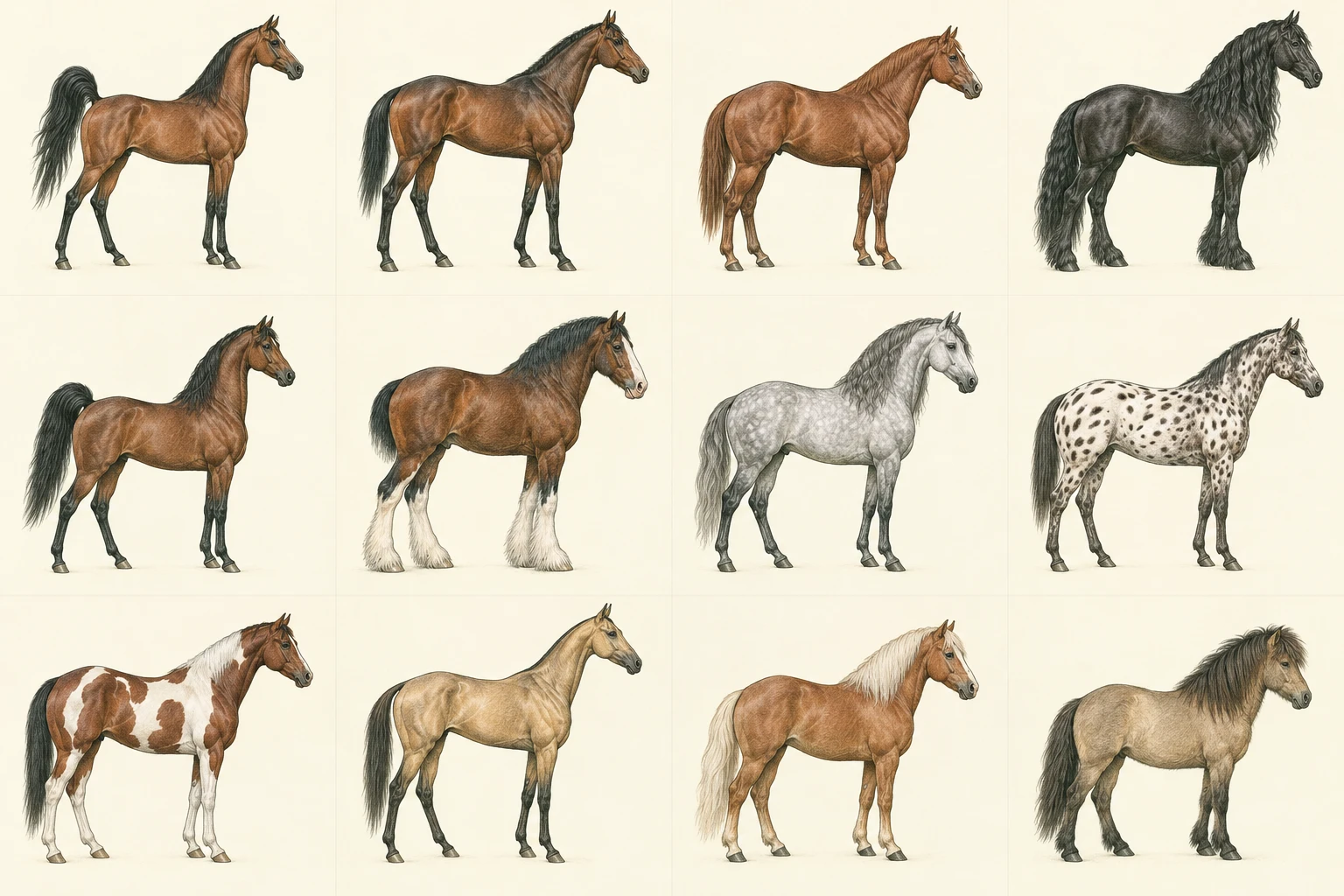
ApHC describes mottled skin, visible white sclera and striped hooves as characteristics often associated with Appaloosas. It also states that some registered horses do not show the familiar visible patterns. A leopard-spotted illustration is one example of the breed, not a template that every individual must match.
Record colour accurately when comparing horses, while remembering that markings do not tell you whether a horse is trained for your goals. Look at the body and movement independently of the coat. A dramatic pattern can make an advertisement memorable without providing information about schooling, size or ordinary behaviour.
Versatility and the horse’s actual education
The Appaloosa Horse Club describes participation in cattle work, Western pleasure, dressage, jumping, racing and endurance. Those examples demonstrate the breadth of the population. An individual may specialise in one discipline, work comfortably in several or be at the beginning of its ridden education.
Ask for a clear list of established skills and a demonstration relevant to your plans. If you want a trail partner, discuss separation from companions, road or open-space experience and riding in groups. If your interest is showing, verify the horse's recent classes and current eligibility rather than assuming all Appaloosa activities use the same rules.
Temperament and the viewing process
A colourful coat does not create a particular temperament. As with other stock-horse breeds, age, training, handling and individual disposition matter. Replace broad advertising phrases with concrete questions: does the horse stand to mount, accept grooming and respond consistently to the aids its usual rider uses?
Watch the seller handle and ride before trying the horse yourself. Take a coach who understands your ability and intended activity. A useful comparison between two Appaloosas may involve completely different levels of schooling, so do not let an appealing pattern obscure the amount of training support each would require.
Common questions
Does every Appaloosa have spots?
No. ApHC states that some Appaloosas do not display the typical visible characteristics. Registration and permitted categories are determined by the club’s current rules.
Is any spotted horse an Appaloosa?
No. Spotting is a visual characteristic that can occur outside the breed. Documented registry identity is a separate question.
Can Appaloosas do English disciplines?
Yes. The Appaloosa Horse Club describes dressage and jumping as well as Western, racing and recreational uses. Ask about the individual’s training.
Sources & further reading
We use breed registries, equestrian organisations and specialist reference sources. Registration rules and training standards can change; check the original source for the latest requirements.
- Appaloosa Horse Club: breed facts ↗appaloosa.com
- Appaloosa Horse Club: official handbook ↗appaloosa.com
- Appaloosa Horse Club: official 2026 handbook ↗sub.appaloosa.com
- Appaloosa Horse Club: racing and breed achievements ↗appaloosa.com
Last editorial source check: . General educational information; work with a qualified instructor or veterinary professional for individual advice.