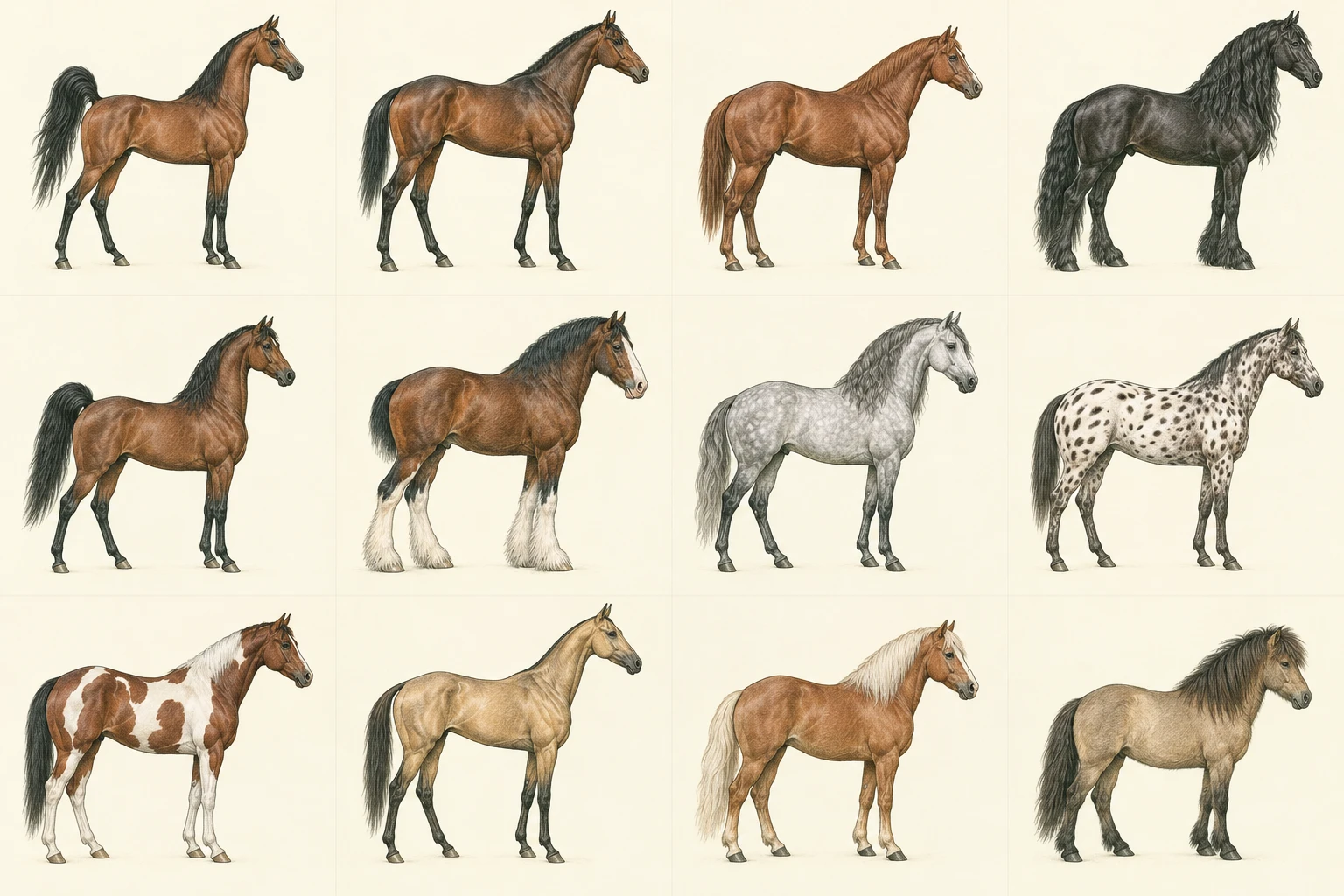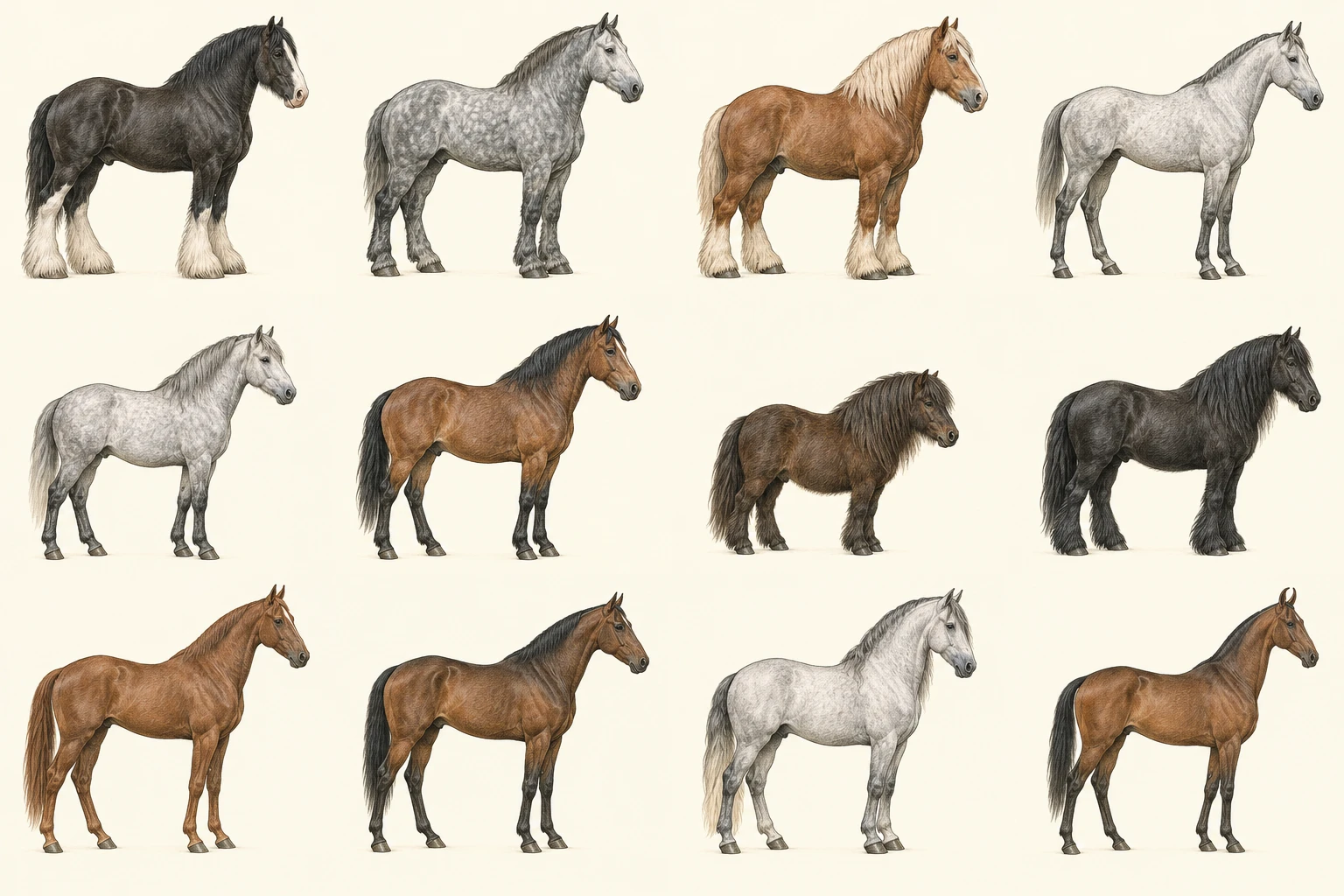
At a glance
American Saddlebred quick facts
- Origin
- United States, with the American Saddlebred Horse Association as the breed registry
- Height
- Not quoted here. An automated check of asha.net did not return a readable standard, so no measurement is copied from memory.
- Coat
- Many colours occur. Colour is not the registration.
- Best known for
- Animated saddle-seat action and an American gaited tradition
- Registry
- American Saddlebred Horse Association (ASHA)
- Show rules
- USEF publishes competition rules for the discipline
- What this page will not do
- Copy a height or gait-class rule from an unread page
Plain language
For kids
- American Saddlebreds are American riding horses known for lifting their feet high and for extra smooth gaits some of them can do.
- Their breed association is the ASHA. A horse show for them often uses a special flat saddle called a saddle seat.
- High steps look proud. They do not tell you whether the horse is calm. A coach still has to help you choose.
The rest of this page is the longer guide for adults and keen readers.
The association, and a blocked page
ASHA is the breed association riders mean when they say a Saddlebred is registered. The public website is asha.net. It answered Horsepedia’s request with a block rather than an article, which happens with some sites. The honest result is an article that names the association and refuses to invent the standard.
If you need the height limit, the colour notes or the difference between gait classes, open the current ASHA material yourself or ask the office. Quote that document and the date. Do not quote this page for a number it deliberately left out.
What people are seeing when they see the breed
In the show ring, Saddlebreds are presented with animation: a higher knee and a more upright outline than a stock-horse jog or a dressage trot. Some horses are shown at the walk, trot and canter. Others also perform the breed’s extra gaits. Which class allows which gait is a rulebook question, and the USEF rulebook is the competition source.
Animation can be trained and it can be natural. Either way, it is not a temperament score. A quiet trail Saddlebred and a fired-up show horse can share a pedigree. Ask what this horse does on an ordinary Tuesday.
Neighbours in the gaited barn
Tennessee Walking Horses, Missouri Fox Trotters, Rocky Mountain Horses and Paso Finos are other gaited breeds with other gaits and other rulebooks. ‘Gaited’ only means the horse can offer a footfall pattern that is not only walk, trot and canter. It does not mean the gaits feel the same or that the tack matches.
Hackneys share a high-stepping show tradition and are a different breed, often seen in harness. A Saddlebred cross should be labelled a cross. The gaits guide explains the family of footfalls without forcing every breed into one diagram.
Show tack is not backyard tack
Saddle-seat saddles, long toes in some show traditions, and special bits belong to a coached show barn. Copying a picture onto a horse you do not know can hurt the horse and unbalance the rider. A coach who works in that discipline should fit the tack. Horsepedia’s saddle and bridle guides are the general versions, not a Saddlebred show manual.
Feet need a farrier who understands the job the horse actually does. A long show foot is not a goal for a trail horse. Say which job you want before anyone changes the trim.
Choosing one for a family
Look for registration if you are paying for a Saddlebred, and look harder at manners, age and the rider’s level. A horse that has only jogged in a show can be a poor trail horse until it is taught, and a trail horse can be a poor show horse. The choosing guide is about that match.
Children can enjoy the breed’s presence and learn two honest sentences: the association holds the standard, and a blocked website is not a reason to guess. That is a good research habit beyond horses.
Common questions
What is the official height of an American Saddlebred?
This page does not state one. The ASHA site did not return a readable standard to our check. Use the association’s current description rather than a number remembered from somewhere else.
Are all Saddlebreds five-gaited?
No. Some are shown and ridden without the extra gaits. Which gaits belong in which class is a current ASHA and USEF question, not a guess from a video.
Is a Saddlebred a beginner horse?
Some trained individuals are suitable for progressing riders with a coach. The breed’s animation and sensitivity mean the individual matters even more than the label.
Sources & further reading
We use breed registries, equestrian organisations and specialist reference sources. Registration rules and training standards can change; check the original source for the latest requirements.
- American Saddlebred Horse Association (opens in a new tab)asha.net
- United States Equestrian Federation (opens in a new tab)usef.org
Last editorial source check: . General educational information; work with a qualified instructor or veterinary professional for individual advice.