At a glance
Tennessee Walking Horse quick facts
- Origin
- Middle Tennessee, United States
- Height
- Generally 14.3–17 hands in TWHBEA’s breed description
- Coat
- All colours and a variety of coat patterns
- Best known for
- Flat walk, running walk and canter, with a strong leisure-riding tradition
Middle Tennessee origins
TWHBEA describes a utility horse developed from Narragansett and Canadian Pacer, Standardbred, Thoroughbred, Morgan and American Saddlebred ancestry. This mixed foundation is a historical account of the breed's development, not a formula that should be applied to the pedigree or temperament of every modern horse.
The breed's role shifted towards recreational riding and organised showing. When reading a listing, ask what the horse does now rather than relying on a general heritage of travel or farm work. Current training is the bridge between an interesting breed history and a practical riding partnership.
Height, coat and the riding-horse outline
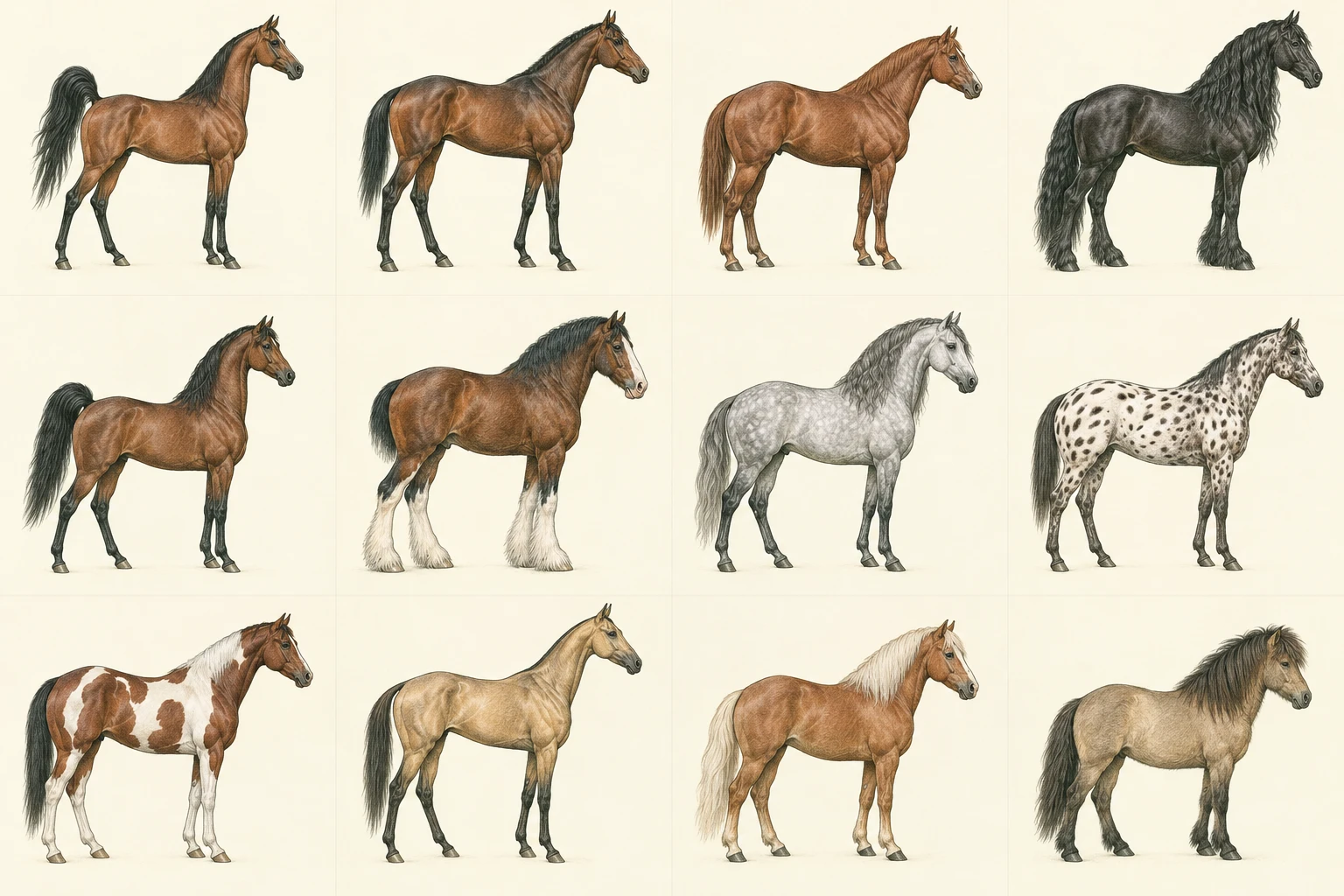
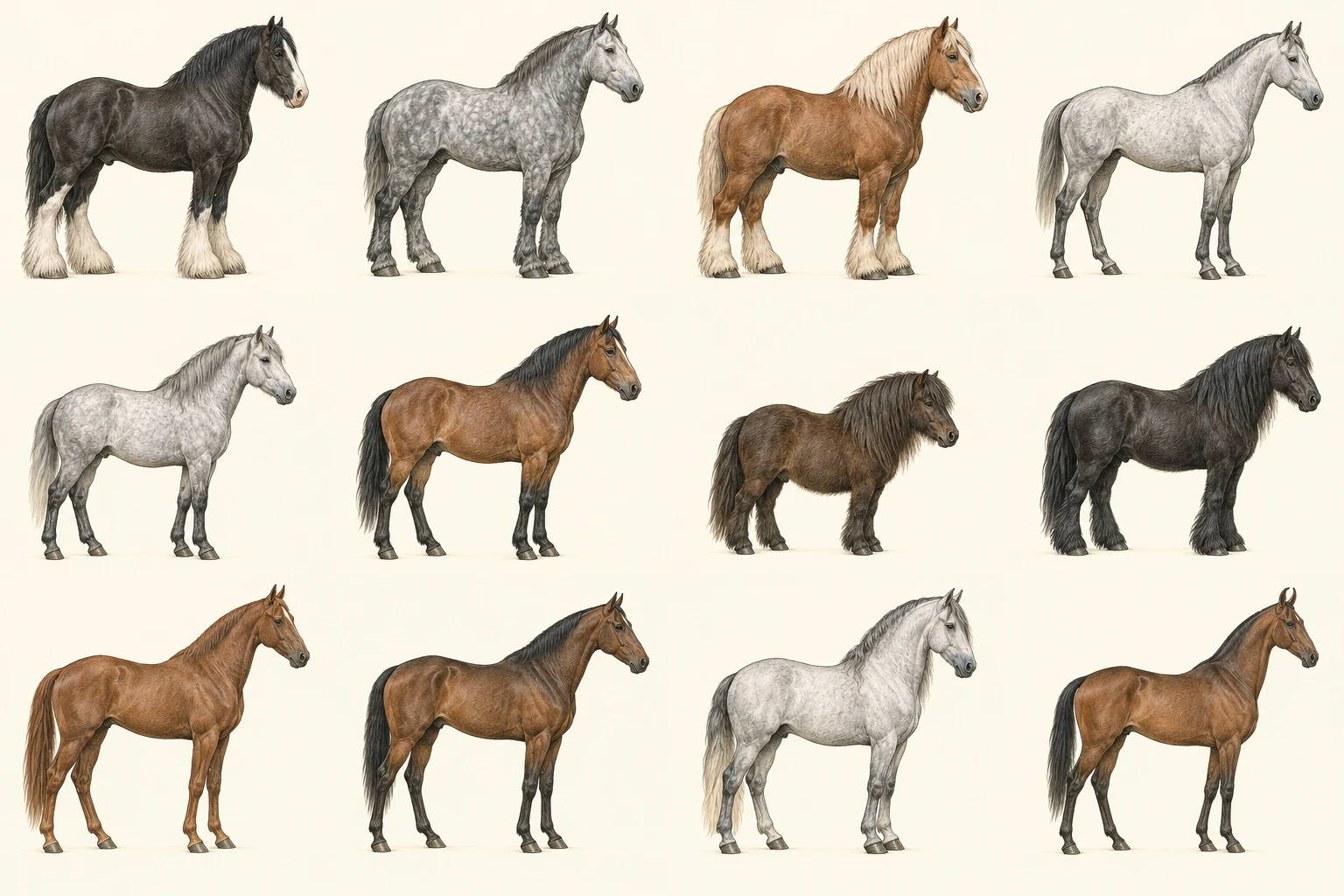
TWHBEA gives a general height range of 14.3 to 17 hands and recognises all colours with varied patterns. Its conformation description includes sloping shoulder and hip, relatively short back and strong coupling. A technical drawing can show these proportions without the distraction of show presentation or a highly posed stance.
A photograph cannot tell you how clearly a horse performs a gait. Compare the standing outline with unedited ridden footage and a demonstration at several ordinary speeds. The height range is broad enough that the individual's measurements should guide your equipment and rider-fit questions.
Flat walk, running walk and canter
The association identifies flat walk, running walk and canter as the breed's defining gaits and describes the running walk as naturally inherited. It also acknowledges other gait variations. A rider should learn to distinguish rhythm and comfortable movement from simply going faster or producing more visible limb action.
Ask the owner to demonstrate an established flat walk and running walk and to explain the aids used. If you are new to gaited horses, take lessons with an instructor familiar with the breed. A gait described as smooth still needs to be balanced, understandable to the rider and appropriate to the horse's current schooling.
Trail and show goals are different questions
TWHBEA documents English and Western tack and different show divisions. For a trail goal, ordinary handling and real outdoor experience are more informative than a show photograph. Ask about solo riding, groups, standing quietly and exposure to the routes and situations you intend to use.
For showing, consult the current rules of the specific organisation and division. Equipment and judging requirements can vary and change. Choose humane, comfortable preparation with appropriately fitted tack and professional support; an exaggerated look is not a sound basis for assessing a useful riding horse.
Selecting and equipping an individual
A breed reputation for an easy ride cannot guarantee a beginner match. Watch the seller handle and ride first, then arrange a trial with a knowledgeable coach. Ask how the horse behaves with a new rider, after time off and when asked to leave familiar companions.
Check registered identity, measured height and recent work. Fit saddle and bridle to the actual horse instead of assuming a gaited label establishes dimensions. Compare the Icelandic Horse to learn a different four- and five-gaited system and the Standardbred to understand a distinct harness-racing gait tradition.
Common questions
What is the Tennessee Walking Horse’s main gait?
The running walk is its defining gait, alongside flat walk and canter in TWHBEA’s breed description.
Are Tennessee Walking Horses only ridden in Western tack?
No. TWHBEA documents both English and Western presentation. Individual training and the rules of the chosen activity matter.
Does a smooth gait make every Walker a beginner horse?
No. Rider suitability depends on individual behaviour, schooling, equipment and the rider’s experience.
Sources & further reading
We use breed registries, equestrian organisations and specialist reference sources. Registration rules and training standards can change; check the original source for the latest requirements.
- TWHBEA: breed history, type and gaits ↗twhbea.com
- TWHBEA: judging and tack context ↗twhbea.com
- TWHBEA: colours and markings ↗twhbea.com
- TWHBEA: international competition rule context ↗twhbea.com
Last editorial source check: . General educational information; work with a qualified instructor or veterinary professional for individual advice.