At a glance
Andalusian (PRE) quick facts
- Origin
- Spain, especially Andalusia
- Height
- Around 160 cm in ANCCE’s published breed overview; individual height varies
- Coat
- Grey, bay and black are prominent; the studbook recognises other permitted colours
- Best known for
- Classical riding, dressage and the Pura Raza Española studbook
Spanish origins and the royal breeding story
ANCCE traces the organised development of the PRE to the sixteenth century and Philip II's royal stables at Córdoba. The breed became associated with Spain's courtly equestrian culture. Its history includes changes in military, agricultural and sporting roles rather than one unchanging job across five centuries.
The word Andalusian often appears in general conversation, art and advertising. For a horse offered as a PRE, look for the actual studbook identity. A familiar Iberian appearance is not a substitute for documented breeding, and a crossbred horse should be described with enough precision to explain its ancestry.
How the PRE outline is studied
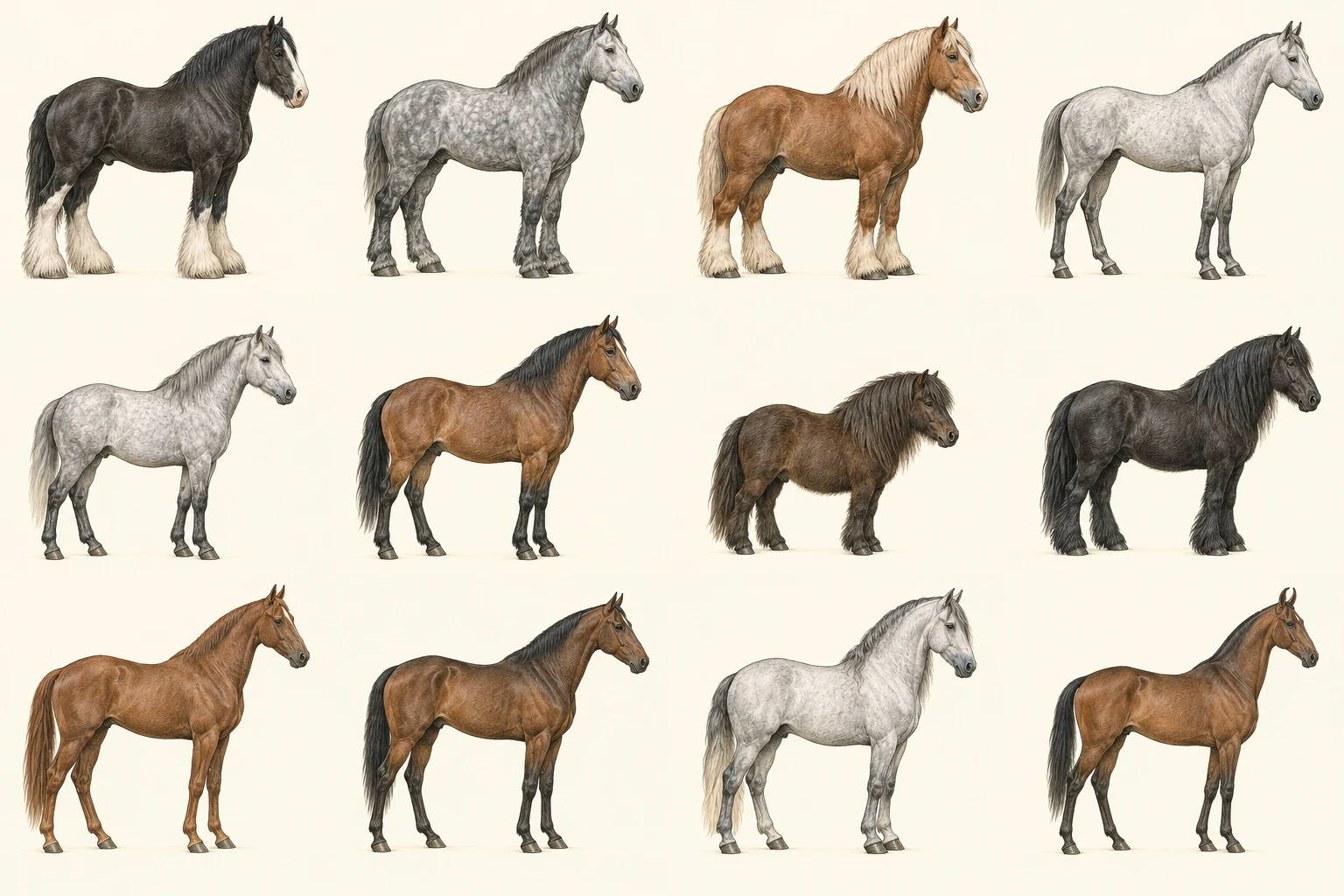
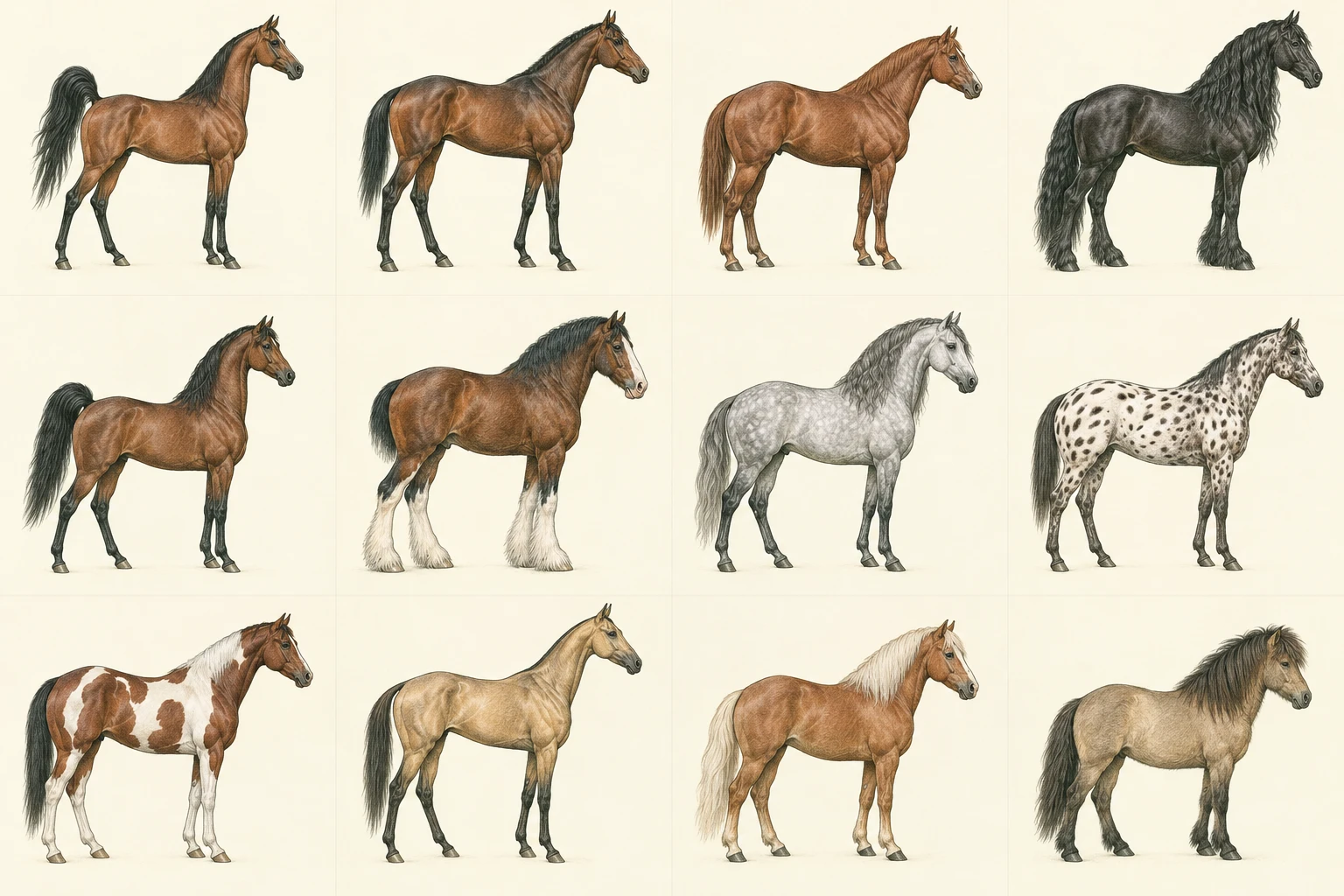
ANCCE publishes a conformation guide intended to explain the breed's body regions and measurements. The outline is associated with an expressive head, arched neck and substantial, rounded quarters. Its older general breed overview describes an average height around 160 cm and identifies grey, bay and black as prominent colours.
Use the technical illustration to compare proportions rather than to create a beauty ranking. A high neck and flowing mane can be visually striking, but a prospective riding partner also needs an individual assessment of movement, training and comfort with the intended task.
Classical work, dressage and versatility
ANCCE's improvement programme evaluates morphology and dressage-related ability, connecting the breed's classical tradition with modern selection. The association also documents other activities, including driving and jumping. Representation in a discipline does not mean every PRE is prepared for it or that a particular pedigree predicts an exact result.
At a viewing, ask which movements the horse understands and which are still being developed. A horse shown performing advanced work may depend on specialised rider cues. For leisure riding, ask about ordinary mounting, relaxed walk, changes of environment and the horse's experience outside formal training sessions.
Pedigree, paperwork and precise terminology
ANCCE identifies itself as the organisation responsible for managing the PRE studbook. Its breed material describes DNA parentage checking as part of recorded identity. Registration, breeding approval and sporting results are separate pieces of information, so ask the seller to explain the documents supporting each claim.
Avoid judging value from impressive labels alone. A buyer looking for a schoolmaster needs evidence of teaching experience and manageable responses. A breeder has different questions about pedigree and the relevant breeding system. State your purpose before comparing horses so the paperwork answers the right questions.
Choosing and equipping an individual
A PRE can have a strong neck and a comparatively compact body, but there is no universal PRE saddle or bridle size. Arrange a fitting around the actual horse and rider, and reassess after meaningful changes in work. Long mane care is a practical part of daily ownership, not merely show preparation.
Compare the PRE with the Lusitano to see how closely related Iberian traditions developed distinct modern studbooks and standards. Compare the Friesian for a different version of proud carriage and abundant hair. These comparisons are educational; they do not replace a trial of the individual horse in the setting where you will ride.
Common questions
Is Andalusian exactly the same as PRE?
The terms often overlap in everyday use, but PRE is the specific Pura Raza Española studbook identity. Check registration when a seller makes a purebred claim.
Are all PRE horses grey?
No. Grey is prominent, but bay, black and other permitted colours occur. Colour alone cannot establish breed identity.
Are PRE horses used only for dressage?
No. Dressage and classical work are major traditions, while ANCCE also documents driving, jumping and other uses. Individual training remains decisive.
Sources & further reading
We use breed registries, equestrian organisations and specialist reference sources. Registration rules and training standards can change; check the original source for the latest requirements.
- ANCCE: history and characteristics of the PRE ↗ancce.es
- ANCCE: breed conformation tutorial ↗ancce.es
- ANCCE: PRE improvement programme ↗ancce.es
- ANCCE: studbook responsibility ↗ancce.es
- ANCCE: general breed overview ↗ancce.es
Last editorial source check: . General educational information; work with a qualified instructor or veterinary professional for individual advice.