At a glance
Lusitano quick facts
- Origin
- Portugal
- Height
- APSL average at six years: mares 155 cm, males 160 cm
- Coat
- Grey and bay are the most frequent colours in APSL’s standard
- Best known for
- Classical riding, working-equitation traditions and a rounded Iberian outline
Portugal and the modern studbook
APSL's historical account dates the dedicated Lusitano studbook to 1967 and the association's foundation to 1989. APSL was authorised to manage the breed's studbook, with Portugal as its place of origin. The breed's older equestrian traditions and this modern administrative system are different parts of the same story.
The Lusitano and PRE share an Iberian context but have separate modern identities and standards. A horse advertised as Iberian needs more precise documentation if purebred status matters. Ask which registry issued the certificate and what ancestry is actually recorded.
Reading the official Lusitano standard
APSL describes a middleweight horse with rounded forms, a slightly convex head profile, an arched neck and a strong, rounded croup. Its published average height at six years is 155 cm for females and 160 cm for males. Grey and bay are identified as the most frequent colours.
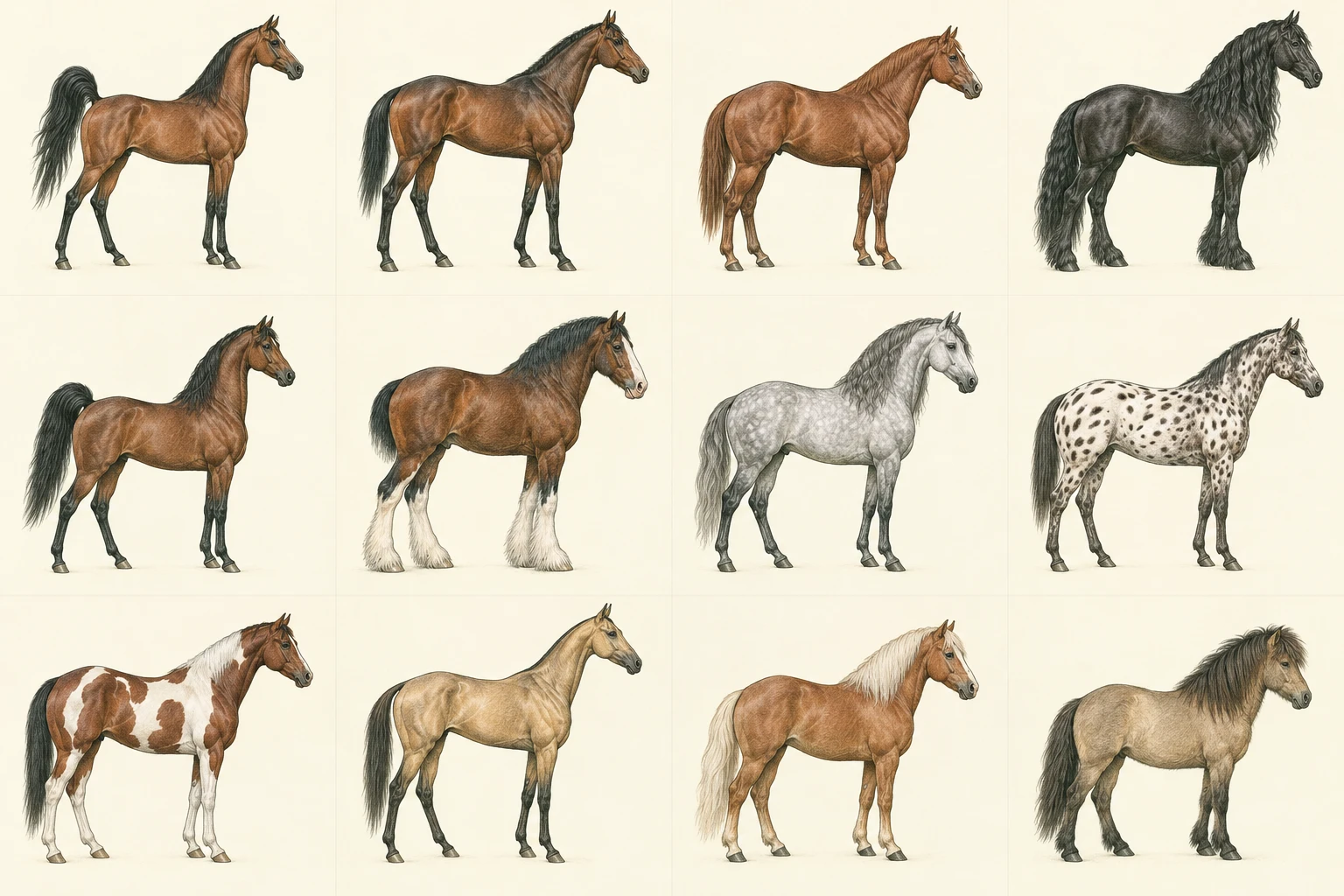
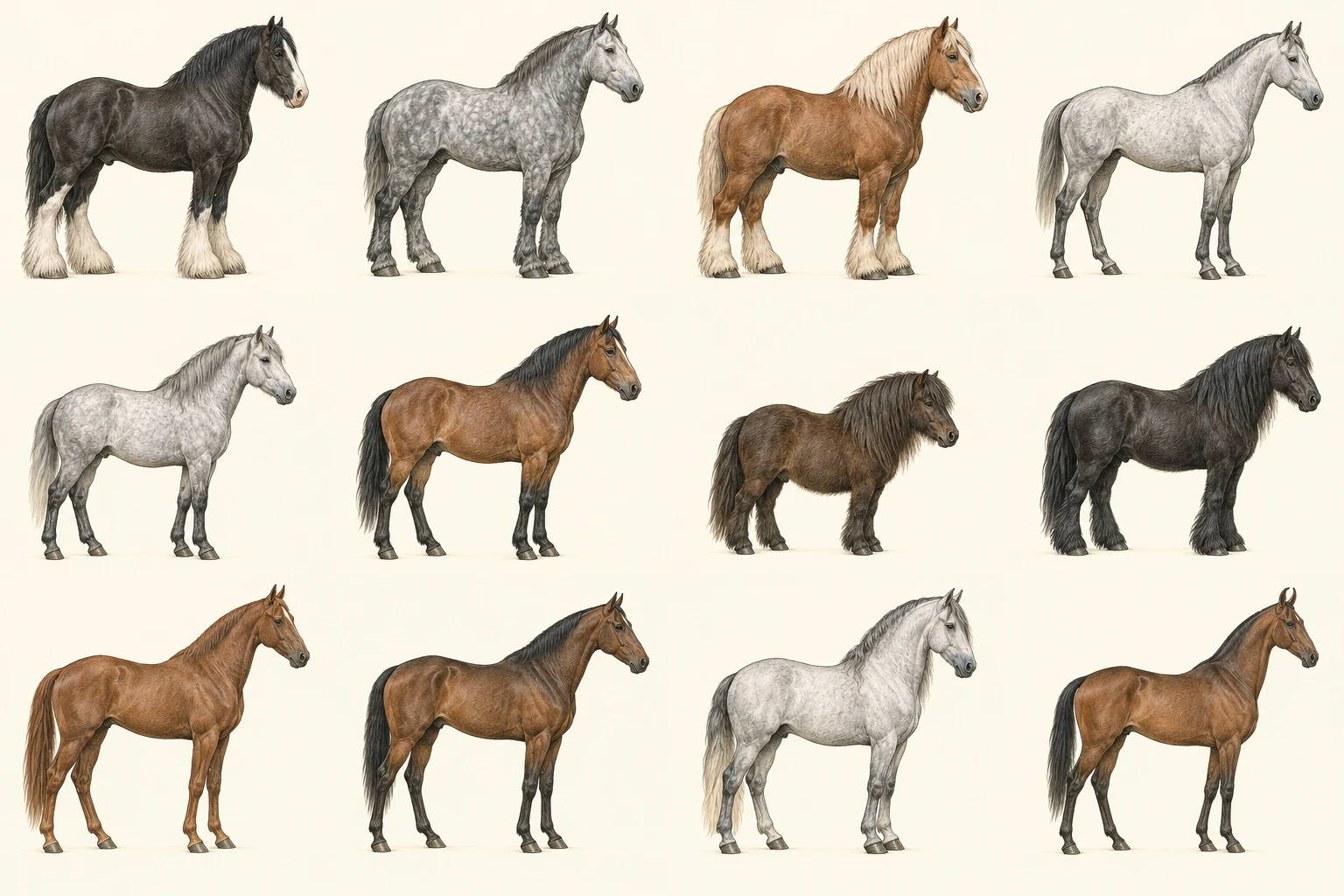
The standard is an ideal model used within a breeding system. A technical drawing helps make the characteristic silhouette clear, but an individual horse can differ in scale and proportions. Observe the live horse from several directions and in movement rather than deciding from a posed photograph alone.
Classical movement and functional tradition
APSL's standard describes agile, elevated, forward movement and an aptitude for high-school work and traditional cattle-related riding. Its historical breed material explains the importance of functional selection. These descriptions are breeding aims, not a promise that an untrained horse can perform advanced movements.
For a ridden purchase, ask what the horse is actually schooled to do and how its usual rider communicates. If advanced work is advertised, request a clear demonstration and discuss how established it is. A visually impressive movement can depend on skilled cues that a new owner has not yet learned.
Temperament and rider compatibility
The association's ideal includes a willing, manageable character, but practical suitability remains individual. A sensitive performance horse and an experienced leisure horse can belong to the same breed. Assess standing for mounting, understandable transitions and behaviour in the environment where you intend to ride.
Bring an instructor who knows your current ability and plans. Watch the seller ride first and make the trial appropriate to the horse's present fitness. Be honest about the frequency of your riding and the professional support you can provide, especially when considering a younger or more specialised horse.
Registration, fitting and useful comparisons
APSL publishes studbook rules and procedures, including recorded identity and parentage requirements. Ask for the actual documents and any breeding approval or classification cited. Registration, selection as breeding stock and sport results should not be treated as one interchangeable credential.
Fit the saddle and bridle to the individual body and head. A strong neck or compact Iberian outline does not establish a universal equipment size. Compare the Lusitano with the PRE for differences within Iberian traditions, and with the Morgan or Friesian for other proud-carriage outlines. Accurate comparison preserves each breed's own identity.
Common questions
Is the Lusitano the same as the PRE?
No. They share an Iberian historical context but have separate modern studbooks and breed standards.
How tall is a Lusitano?
APSL gives average heights measured at six years of 155 cm for females and 160 cm for males. These are averages, not a universal limit.
Are all Lusitanos grey?
No. APSL names grey and bay as the most frequent colours. Colour alone cannot prove Lusitano identity.
Sources & further reading
We use breed registries, equestrian organisations and specialist reference sources. Registration rules and training standards can change; check the original source for the latest requirements.
- APSL: Lusitano breed standard ↗cavalo-lusitano.com
- APSL: association and studbook history ↗cavalo-lusitano.com
- APSL: breed history and functional selection ↗cavalo-lusitano.com
- APSL: studbook rules ↗cavalo-lusitano.com
- APSL: registration procedures ↗cavalo-lusitano.com
Last editorial source check: . General educational information; work with a qualified instructor or veterinary professional for individual advice.