At a glance
Friesian quick facts
- Origin
- Friesland, the Netherlands
- Height
- FHANA describes 15.2–16 hands as average, with taller and shorter individuals
- Coat
- Black in the KFPS adult studbook; a small star is the permitted white marking
- Best known for
- Dressage, driving and a long mane with feathered lower legs
From Friesland to international recognition
The Friesian Horse Association of North America identifies Friesland as the breed's home. It describes an early North American presence followed by loss through crossbreeding and reintroduction in 1974. Today FHANA works with the Dutch KFPS registry, so documentation and inspection terminology often refer back to that organisation.
Regional heritage should not become a claim that every large black horse is a Friesian. A cross can inherit colour, hair or movement without sharing purebred registration. Use the horse's documented identity to separate visual resemblance from pedigree, particularly when comparing sale listings across different countries.
Breed type, colour and height
FHANA gives 15.2 to 16 hands as an average range while noting variation. Its description of the adult studbook specifies a black coat and allows a small star. Long hair and feather create the familiar outline, but the structural balance underneath the hair still matters.
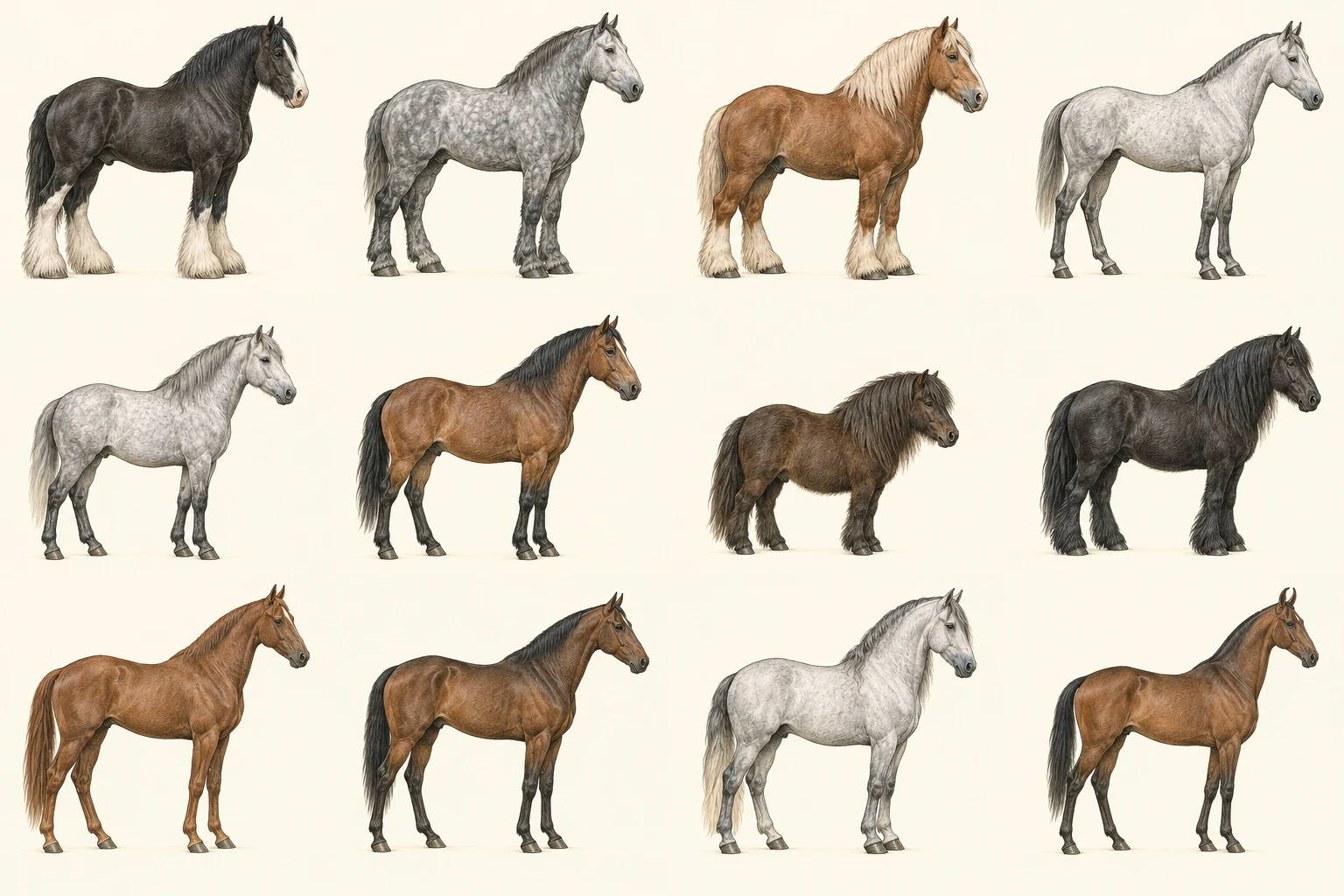
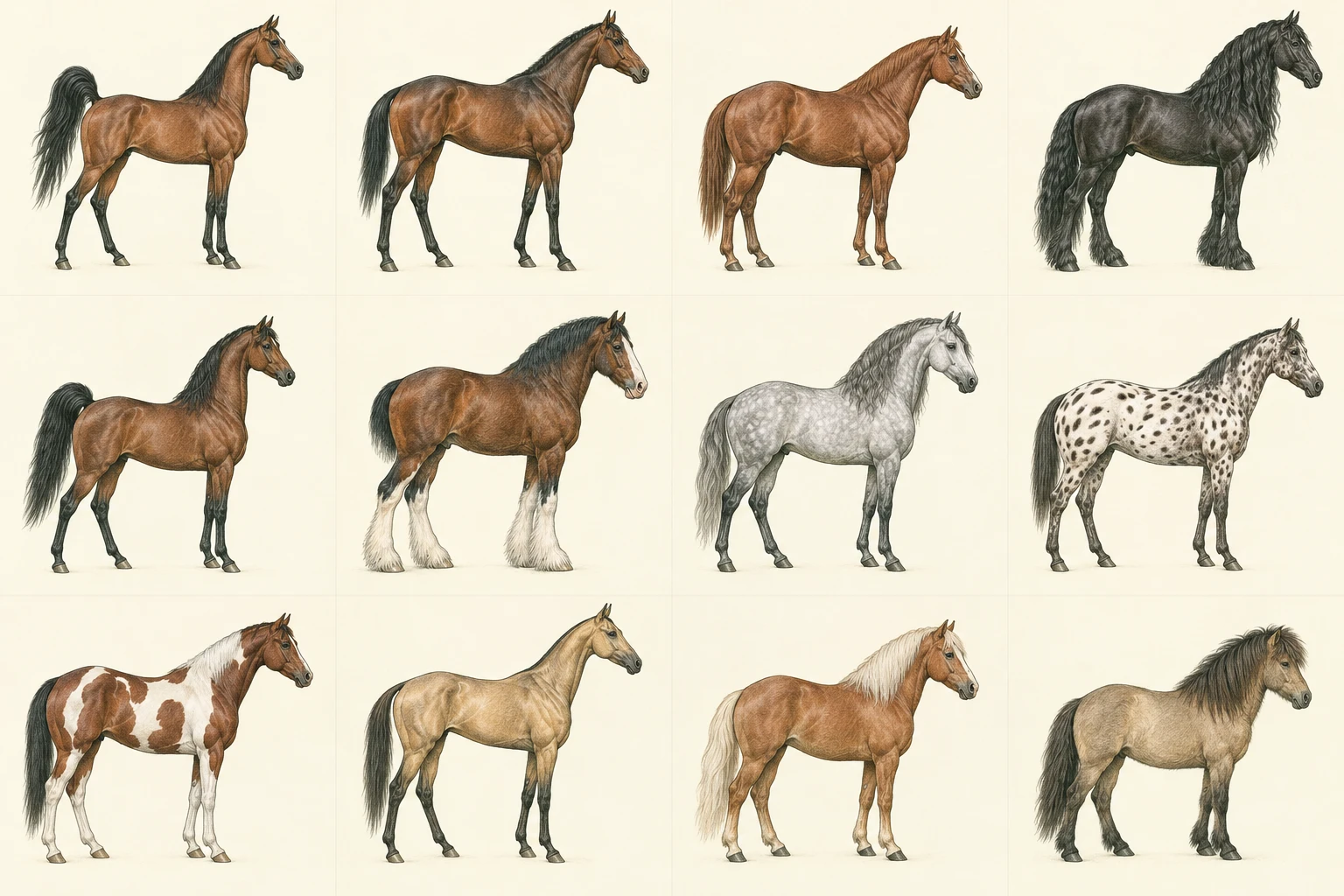
In a technical drawing, compare neck set, shoulder, back and quarters rather than treating coat colour as the main feature. At a viewing, inspect the actual body and watch movement from several directions. Hair can obscure parts of the legs, and a dramatic photograph may hide proportions that become clearer in an ordinary standing pose.
Dressage, driving and other work
FHANA lists pleasure riding, dressage and driving among the Friesian's uses and notes that the breed has not been developed specifically as a jumper. Individual horses can do other work, but a buyer should begin with the horse's demonstrated ability rather than extrapolating from impressive film or social-media footage.
For driving, ask what type of vehicle, harness and team arrangement the horse knows. A horse accustomed to a pair is not automatically established alone. For ridden work, ask for an honest description of current schooling and transitions. A horse's expressive trot is attractive, but regularity and controllability remain central to a useful partnership.
Understanding keurings and registry labels
A keuring is an inspection at which registry officials evaluate horses. It is part of the breed's organised assessment system, not a generic name for a horse show. KFPS publishes breeding goals and selection regulations that explain the relationship between conformation, breed traits, health, trainability and sport aptitude.
When a seller mentions an award or classification, ask for the exact designation and supporting record. A past inspection result and today's ridden suitability are different kinds of evidence. Neither should replace a viewing, a clear history or a professional assessment of the horse for your intended use.
Practical ownership and equipment
Budget time for ordinary grooming as well as presentation. Long mane, tail and lower-leg hair need a manageable routine, and keeping a horse clean for photographs is different from maintaining it through turnout and daily work. Ask the owner how the horse is actually kept, including handling for grooming and farriery.
Fit tack to the particular Friesian's body and head. A long mane does not dictate saddle size, and the label baroque does not establish bridle dimensions. If you like the Friesian outline, also study the Morgan and Iberian breeds to understand how similar visual impressions can arise from different histories and standards.
Common questions
Are all Friesians black?
The KFPS adult studbook description requires black, with a small star permitted. A Friesian cross or an animal outside that studbook category needs its own documentation and should not be judged by colour alone.
What is a Friesian keuring?
It is a registry inspection by officials assessing the horse within the Friesian breeding system.
Is a Fell Pony a miniature Friesian?
No. The Fell Pony is a separate British native breed. Similar dark colouring or abundant hair does not make it a small version of the Friesian.
Sources & further reading
We use breed registries, equestrian organisations and specialist reference sources. Registration rules and training standards can change; check the original source for the latest requirements.
- FHANA: frequently asked questions ↗fhana.com
- FHANA: conformation and performance ↗fhana.com
- KFPS: breeding goal ↗kfps.nl
- KFPS: stallion selection regulations ↗kfps.nl
Last editorial source check: . General educational information; work with a qualified instructor or veterinary professional for individual advice.