At a glance
Clydesdale quick facts
- Origin
- Lanarkshire, Scotland
- Height
- Usually 17–18 hands in the society’s current breed description; some individuals differ
- Coat
- Bay and brown are common; black, roan and chestnut also occur, often with white markings
- Best known for
- Heavy driving, farm work and expressive movement with silky feather
A Scottish working-horse history
The Clydesdale Horse Society locates the breed's development in eighteenth-century Lanarkshire, where local horses were crossed with imported Flemish stallions to increase weight and substance. This agricultural beginning is an important counterpoint to the polished hitch horses many people first see in advertising or parades.
The society dates its studbook tradition to 1877. Pedigree recording helped preserve the breed as working demands changed. Study that history alongside the horse's current role: a modern show or riding Clydesdale is part of the same breed, but it may have a different daily routine from a horse working in a timber operation.
Height, colour and conformation
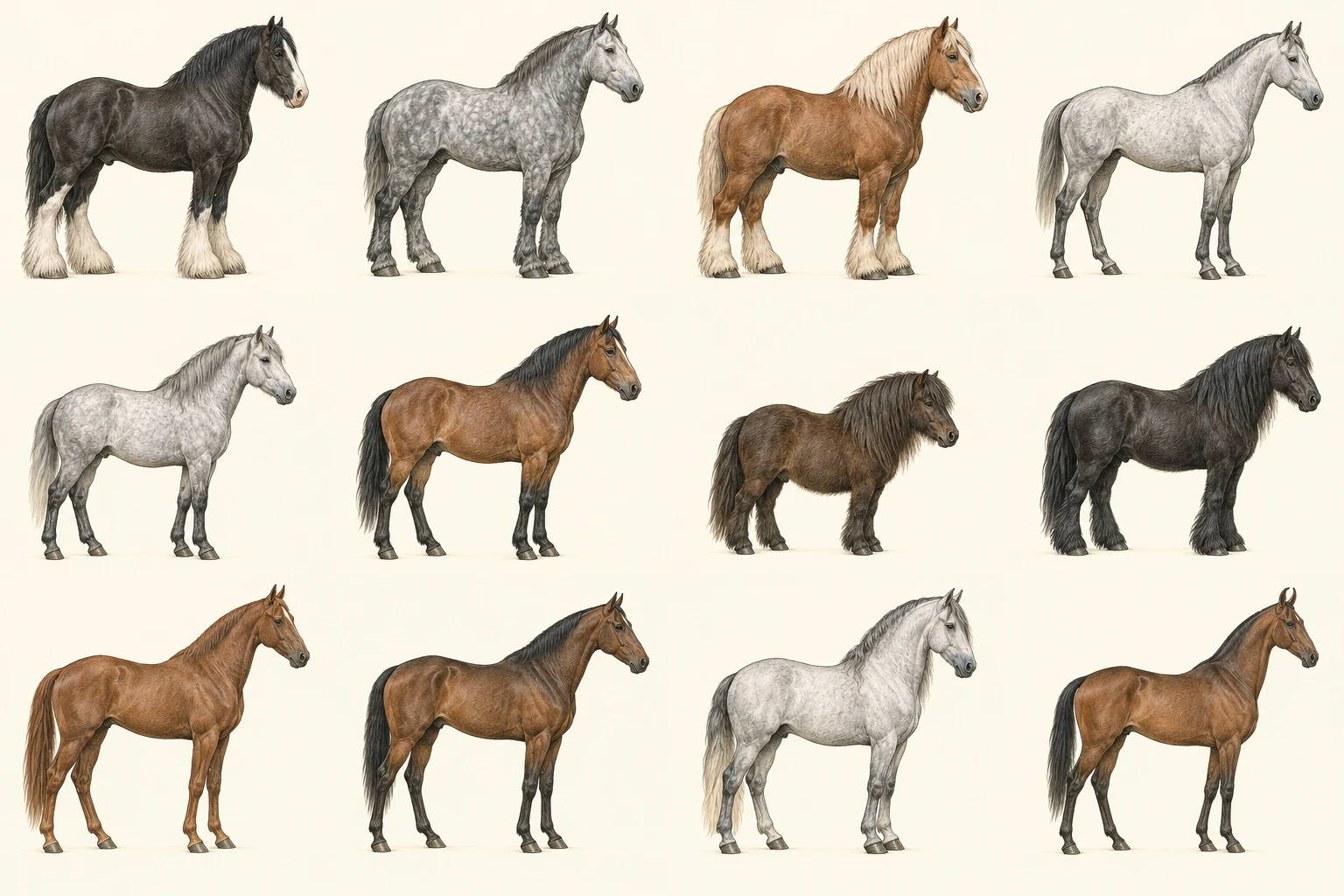
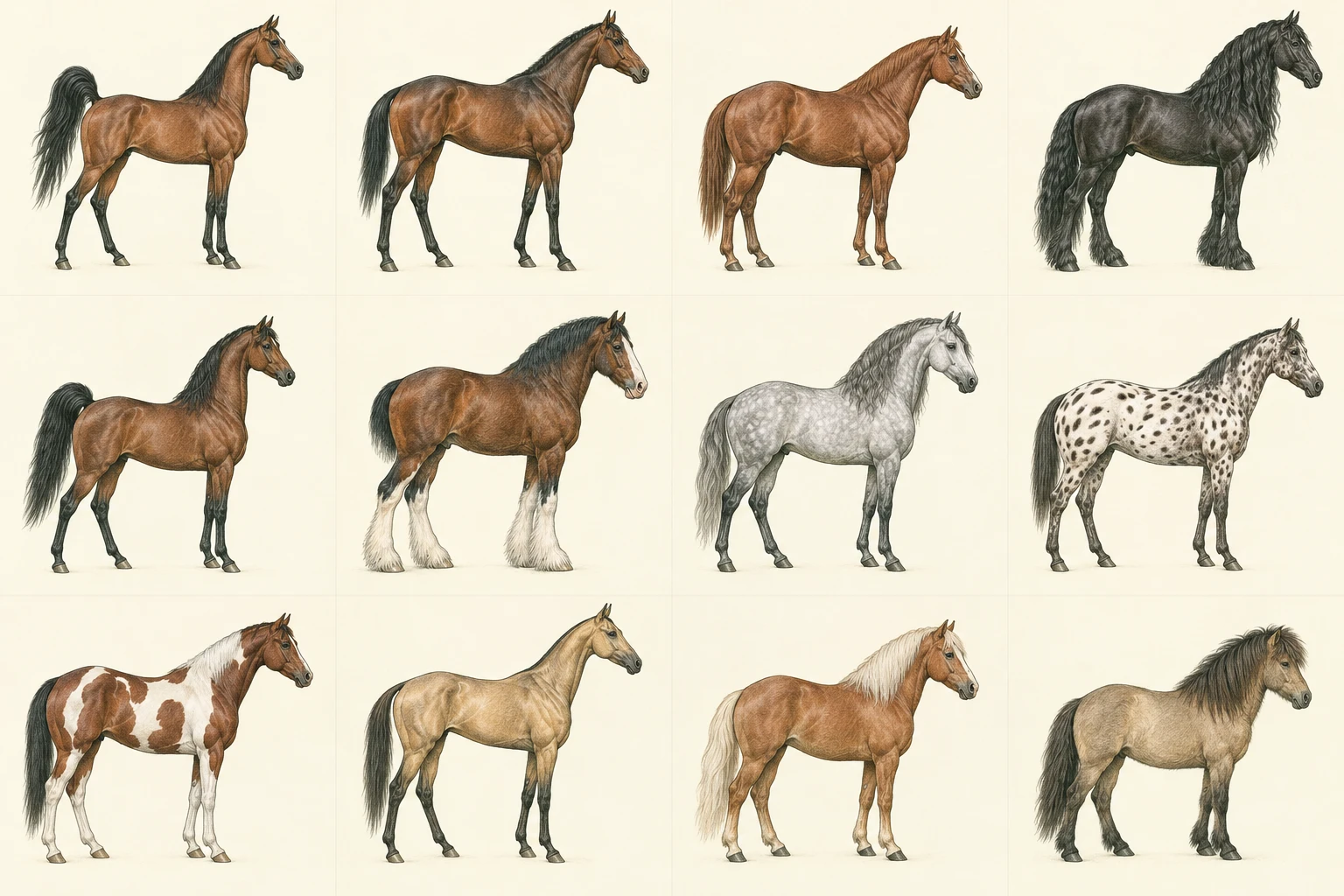
The society's current description gives a usual height of 17 to 18 hands, while allowing smaller mares and larger stallions or geldings. Bay and brown with white markings are common; other colours occur. A strong back, deep ribcage, long quarters and silky feather are characteristic parts of the outline.
White socks do not create feather: feather is the longer hair around the lower legs. In an illustration, look beyond that decorative outline to the proportions of the feet and limbs. In a live horse, ask to see movement and ordinary standing views because show preparation can draw attention away from the structure underneath.
Action and modern disciplines
The Clydesdale standard places particular emphasis on free movement at walk and trot. The society describes continuing roles in driving, farm work and logging, alongside growing interest in riding. A well-presented hitch can show striking teamwork, but individual training and a safe, well-matched arrangement produce that performance.
If your goal is driving, establish whether the horse has worked singly, in a pair or in a larger team. For riding, ask about mounting, transitions, arena lines and the rider it is used to carrying. Do not assume that being trained to pull a vehicle also means being established under saddle.
Planning for a heavy horse
Start with dimensions. Measure gates, stable access, a proposed trailer and available turning space rather than assuming that equipment designed for an average riding horse will accommodate a Clydesdale. Ask the current keeper which facilities and transport actually work for that individual.
Handling quality matters at this scale. Watch the horse lead, stand and move its feet for routine care. A calm reputation is welcome, but clear training and a practical environment remain essential. Make your daily-care plan concrete, including access to professionals comfortable working with heavy horses.
Equipment and comparing draft breeds
A ridden Clydesdale needs individual saddle assessment; a driving Clydesdale needs correctly fitted harness. These are separate equipment questions, and the largest available size is not automatically suitable. Long leg hair also makes a regular grooming and inspection routine useful, so ask how it is maintained through the seasons.
Compare the Clydesdale with the Shire, Percheron and Belgian Draft to understand different heavy-horse outlines. Similar height does not make the breeds interchangeable. Consider the job, documented pedigree, training and the practical facilities required by the horse you are actually viewing.
Common questions
Is every Clydesdale bay with white legs?
No. Bay and brown with white markings are common, but the breed society also describes black, roan and chestnut horses.
Can Clydesdales be ridden?
Yes. Ridden heavy-horse classes and recreational riding are established uses. The individual needs appropriate ridden training and fitted equipment.
What is feather?
Feather is the longer hair on the lower legs. In the Clydesdale standard it should be plentiful and silky; it is separate from coat colour.
Sources & further reading
We use breed registries, equestrian organisations and specialist reference sources. Registration rules and training standards can change; check the original source for the latest requirements.
- Clydesdale Horse Society: breed history ↗clydesdalehorsesociety.com
- Clydesdale Horse Society: the Clydesdale today ↗clydesdalehorsesociety.com
- Clydesdale Horse Society: breeding programme ↗clydesdalehorsesociety.com
Last editorial source check: . General educational information; work with a qualified instructor or veterinary professional for individual advice.