At a glance
Shire quick facts
- Origin
- England
- Height
- ASHA stallion standard: minimum 16.2 hands, average 17.1; mares may be smaller
- Coat
- Black, brown, bay and grey, with rare chestnut or sorrel in the cited ASHA standard
- Best known for
- Heavy driving, cart-horse heritage and a large feathered outline
English cart horses and organised records
The American Shire Horse Association describes the Shire as a breed developed in England and links pedigrees to the British studbooks. The English Cart Horse Society was founded in 1878 and later took the Shire Horse Society name; ASHA was established in 1885. These records are firmer reference points than sweeping stories about every medieval war horse being a modern Shire.
Historical regional types and later breeding choices shaped the modern population. It is therefore useful to separate a broad heavy-horse ancestry from documented breed identity. The term Shire describes a registry-connected breed, not simply any very tall horse with white legs.
Height and characteristic conformation
ASHA's stallion standard gives a minimum of 16.2 hands and an average of 17.1 hands, with mares allowed to be somewhat smaller. It describes a long, slightly arched neck, deep body, strong back, substantial limbs and fine, silky feather. Preferred colours include black, brown, bay and grey, with chestnut or sorrel noted as rare.
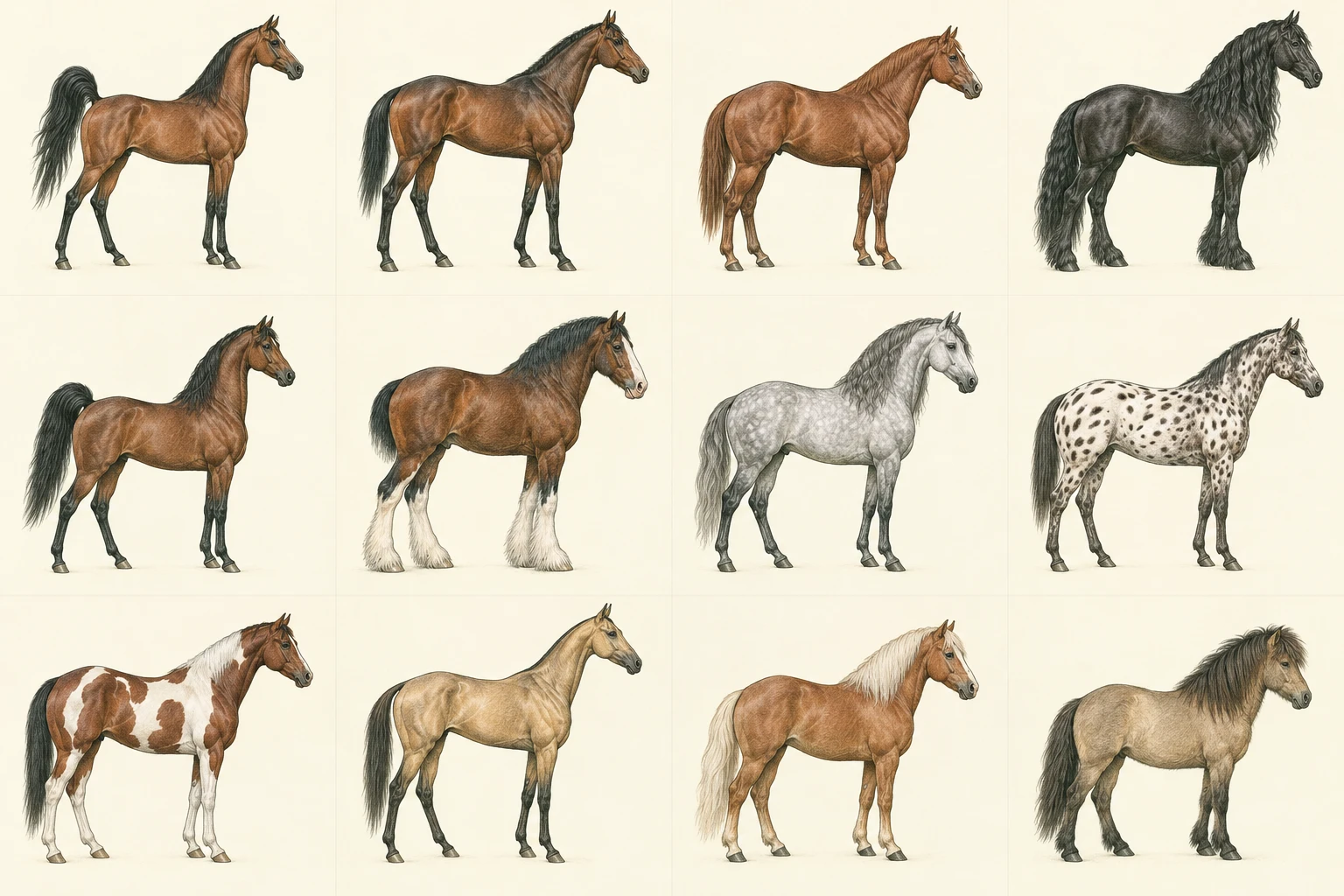
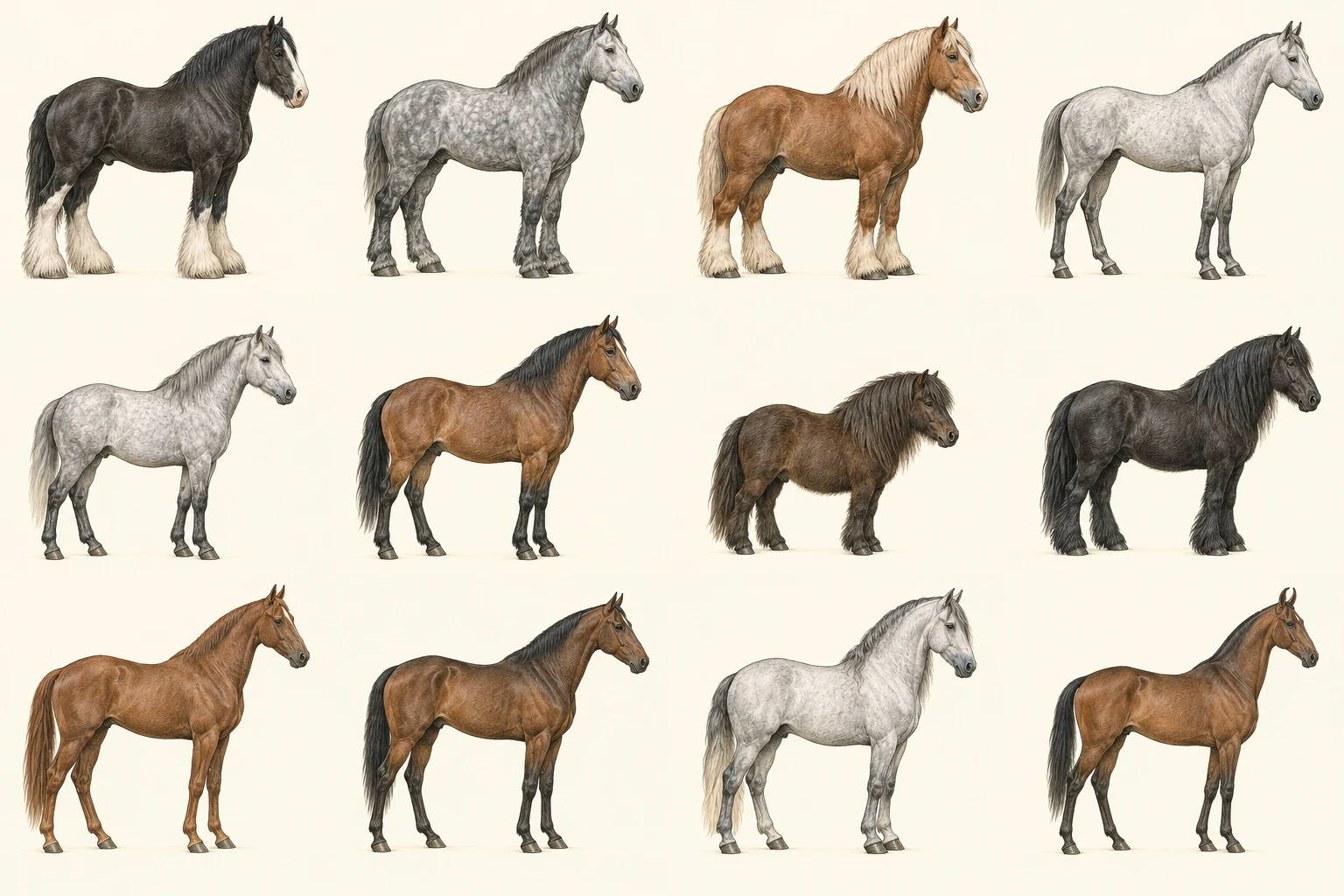
Those are guidelines in the cited association's standard, not measurements of every Shire. Ask for an individual's height and consider its entire body when planning facilities and equipment. A drawing can make the scale and proportions legible, while movement and ordinary handling provide information a static outline cannot.
Driving, riding and working roles
The Shire's cart-horse heritage is visible in modern driving and heritage work. Ridden classes are also documented in the British society's show material. Every activity depends on specific training: pulling a vehicle, working as part of a team and carrying a rider should not be treated as interchangeable skills.
If you want to drive, ask which vehicle and hitch arrangement the horse understands and request an appropriate demonstration with an experienced driver. For riding, observe mounting, steering and basic transitions before discussing more ambitious work. A horse's impressive size does not prove the education required for either activity.
Facilities and daily handling
Measure the practical route through your property: gates, stable entrances, standing areas and transport. Planning from the actual horse's dimensions is more useful than buying the largest item available and hoping it fits. Ask the current keeper what has worked for loading, grooming and routine appointments.
Watch leading and standing quietly. At this scale, clear responses and suitable space are everyday necessities. A breed reputation for patience is welcome, but the horse's own behaviour and the handler's experience matter. Organise professional support familiar with heavy horses before deciding how the care routine will work.
Registration and comparing heavy breeds
ASHA explains relationships between British, American and Canadian Shire registries. Check the documents and transfer arrangements relevant to the horse's country of residence. A photograph that looks like a Shire cannot establish a purebred claim, and different papers can carry different information about ancestry and eligibility.
Compare the Shire with the Clydesdale for another feathered heavy-horse outline and with the Percheron for a different presentation of draft substance. Saddle and harness fitting remain individual decisions. Neither tall stature nor broad shoulders tells you exactly which equipment fits the horse or its intended work.
Common questions
How tall is a Shire?
ASHA’s stallion standard specifies at least 16.2 hands and gives 17.1 as an average. Mares may be smaller; individual measurements and other registries’ rules should be checked.
Can Shires be ridden?
Yes. Ridden heavy-horse classes and recreational riding exist. The horse needs appropriate ridden training and equipment fitted to horse and rider.
Are Shires and Clydesdales the same breed?
No. They are distinct heavy-horse breeds with different histories and studbooks, despite similarities in scale and feather.
Sources & further reading
We use breed registries, equestrian organisations and specialist reference sources. Registration rules and training standards can change; check the original source for the latest requirements.
- American Shire Horse Association: breed standard ↗shirehorse.org
- American Shire Horse Association: registries and history ↗shirehorse.org
- American Shire Horse Association: history of the studbook ↗shirehorse.org
- Shire Horse Society: ridden class material ↗shire-horse.org.uk
Last editorial source check: . General educational information; work with a qualified instructor or veterinary professional for individual advice.