At a glance
Shetland Pony quick facts
- Origin
- Shetland Islands, Scotland
- Height
- Not over 42 inches / 107 cm in the UK SPSBS standard
- Coat
- Any horse colour except spotted in the cited UK standard
- Best known for
- A small, robust pony used in driving and suitably matched children’s riding
Island identity and the studbook
The Shetland Pony Stud-Book Society holds the studbook of origin, which has kept its format since 1890. Its breeding programme defines the breed through recorded pedigree and a published standard. This is a more precise identity than a general label for any very small pony.
Shetland is also used loosely in conversation, and other registries may describe populations differently. When purebred identity or competition eligibility matters, establish which registry issued the papers. The information on a certificate gives context that height and a shaggy coat cannot supply alone.
Height, proportions and the seasonal coat
The UK standard sets a maximum of 42 inches, or 107 cm, and permits horse colours except spotted. It describes a small, proportionate head, deep body, well-sprung ribs and strong limbs. A double winter coat and abundant mane and tail contribute to the familiar appearance.
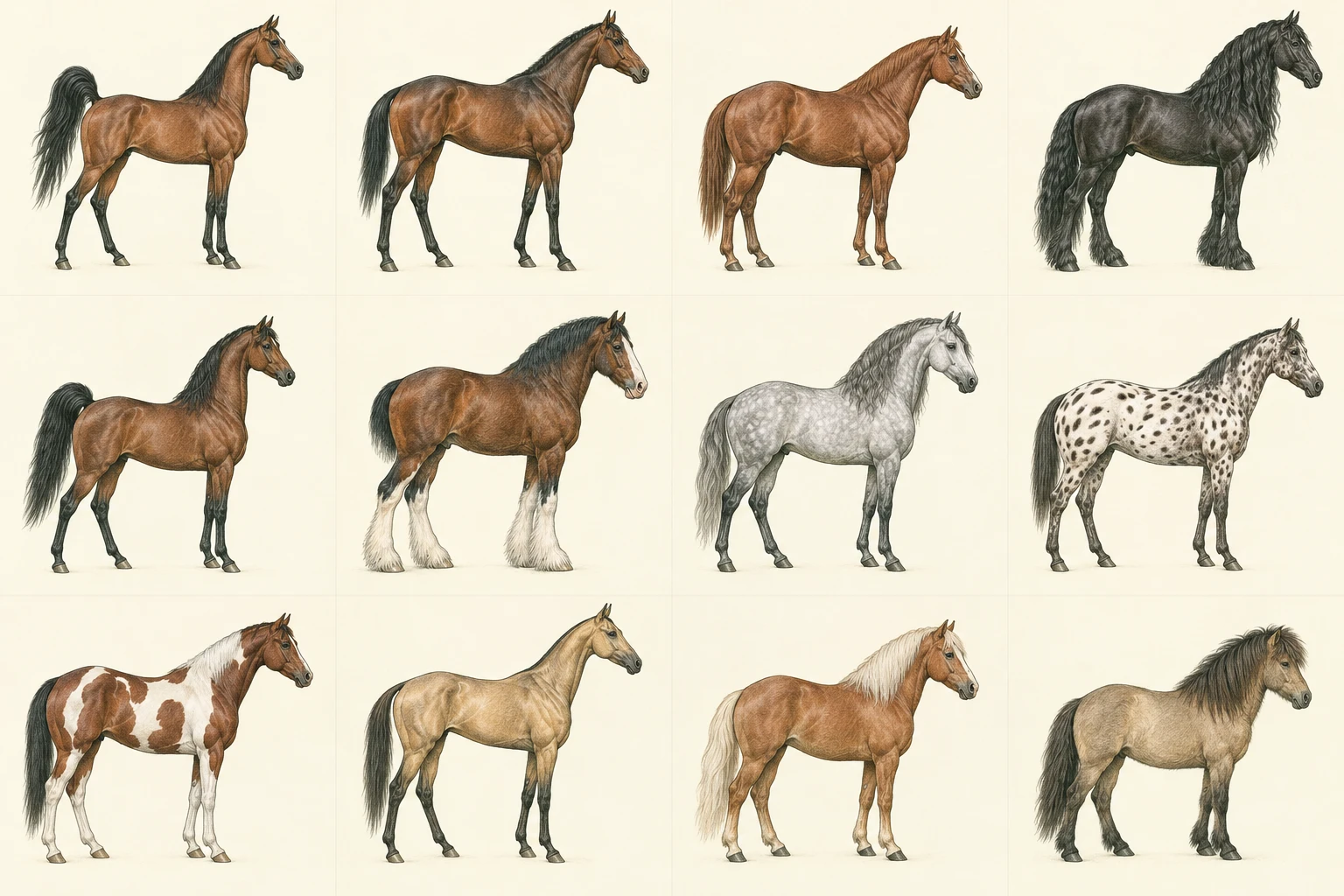
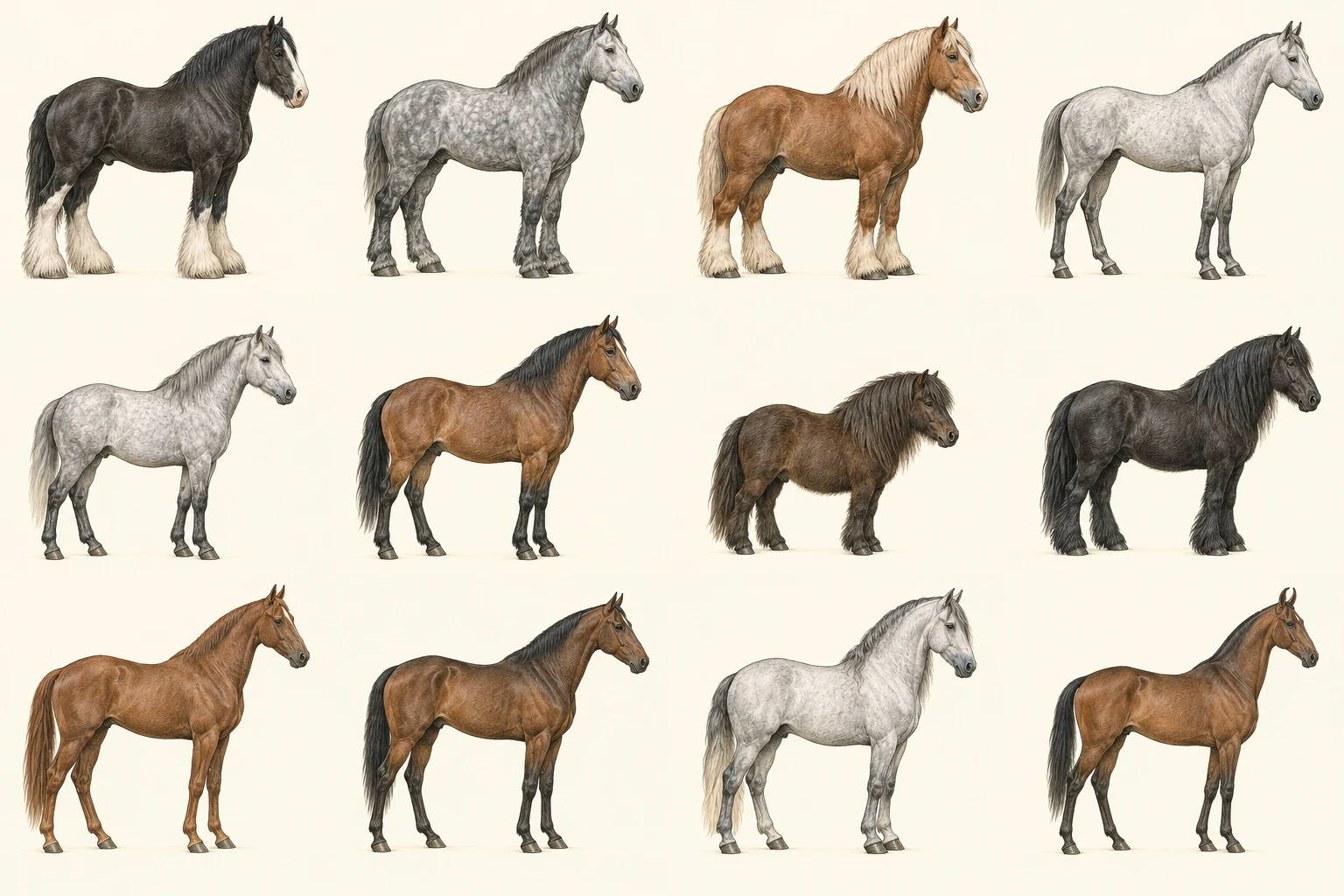
A technical drawing is useful because a dense winter coat can obscure body proportions. Compare summer and winter views of a live pony, and avoid treating hair volume as body condition. Actual measurements and an individual assessment are more reliable than judging scale from a photograph beside a child.
Standard and miniature Shetlands
The society's modern-breed page distinguishes ponies above 34 inches as Standard and those at 34 inches or below as Miniature, within its adult height limit. It also describes heavier and lighter types associated with driving and riding. These labels are part of the cited society's context, not universal names for every miniature equine.
A smaller pony does not automatically need less skilled care or become suitable for every small rider. Think about the pony's actual dimensions, training and the proposed activity. A miniature suited to in-hand work may not be appropriate as a ridden mount, and driving is its own specialist discipline.
Children’s riding and driving
The society identifies children's riding and carriage driving as important modern uses. For a young rider, the most relevant evidence is the pony's established experience with children at a similar stage. Ask how it responds when led, when following another pony and when working independently.
Watch ordinary handling and a demonstration by the owner before arranging a trial. An instructor should help judge the pony's pace, responsiveness and confidence relative to the child. For driving, use an experienced driver to assess vehicle, harness and schooling; a small vehicle still requires properly prepared pony and people.
Daily planning, equipment and comparison
Small stature is a reason to check gate security, fencing and equipment dimensions carefully, not a reason to improvise. Arrange a practical routine for grooming, foot care and appropriate activity. Ask the present keeper which equipment actually fits and how the pony behaves during everyday tasks.
Compare the Shetland with Section A Welsh Ponies for another small native type and with the Fell Pony for a larger working-pony outline. Avoid assuming that two compact ponies have the same carrying suitability or educational role. Pedigree, present training and the individual pony-rider or pony-driver match remain the decisive details.
Common questions
How tall can a registered UK Shetland be?
The SPSBS standard permits a maximum of 42 inches, or 107 cm, measured at the withers.
What is a miniature Shetland?
Within the cited society’s system, Shetlands at 34 inches or below are called Miniatures; larger animals within the breed limit are Standard.
Is a Shetland automatically suitable for a beginner child?
No. The individual needs appropriate training, manageable behaviour and a match to the child’s size and experience, assessed with an instructor.
Sources & further reading
We use breed registries, equestrian organisations and specialist reference sources. Registration rules and training standards can change; check the original source for the latest requirements.
- SPSBS: breed standard ↗shetlandponystudbooksociety.co.uk
- SPSBS: the pony today ↗shetlandponystudbooksociety.co.uk
- SPSBS: studbook and breeding programme ↗shetlandponystudbooksociety.co.uk
Last editorial source check: . General educational information; work with a qualified instructor or veterinary professional for individual advice.