At a glance
Haflinger quick facts
- Origin
- Tyrol, in the Alpine region of present-day Austria and northern Italy
- Height
- Canadian breeding standard at three years: 137–154 cm; exceptional taller horses may be accepted
- Coat
- Chestnut with a light or flaxen mane and tail
- Best known for
- Versatile riding and driving in a compact, recognisable chestnut horse
Tyrolean origins and the foundation stallion
The Tyrolean Haflinger Breeding Association dates the breed's recorded foundation to the 1874 birth of 249 Folie, from a native Tyrolean mare and an Arabian sire. Its historical account emphasises a light mountain horse rather than a heavy draft origin. The Haflinger name is associated with the village of Hafling.
The breed's earlier work included carrying and pulling on small mountain farms. As mechanisation changed those jobs, selection increasingly supported riding, driving and recreational use. That evolution helps explain why modern Haflingers can differ in build without making every variation a separate breed.
Colour, height and the technical outline
The Canadian association’s published breeding standard gives 137 to 154 cm at three years and permits an exceptional taller animal. Chestnut with light mane and tail is the familiar breed presentation. Standards and selection aims should be read in the context of the registry cited, because a single advertised range is not a substitute for the measured individual.
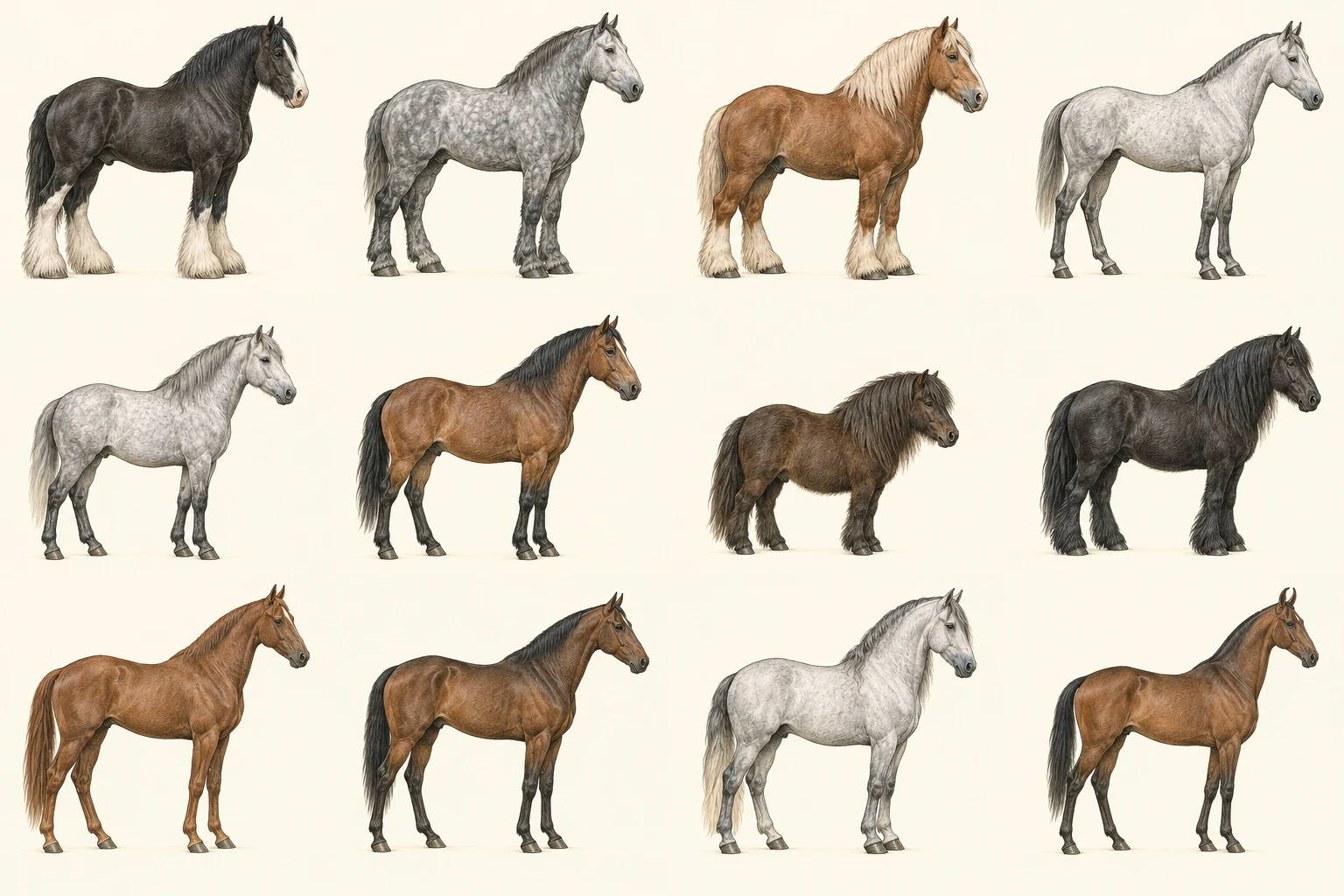
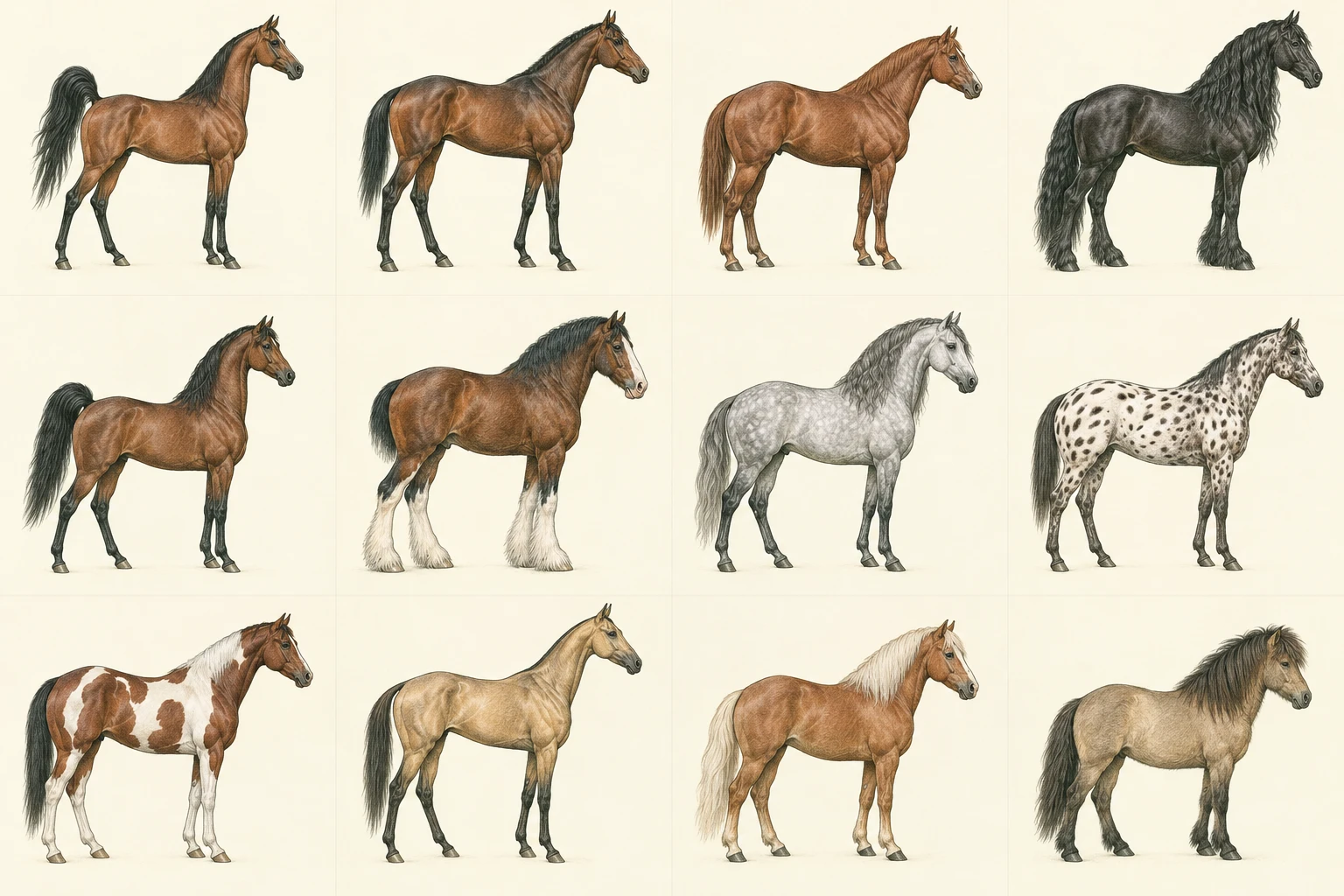
In a side-view illustration, note the proportions of neck, body and limbs, then compare with a real horse standing naturally. A thick winter coat or elaborate mane can make the body look heavier. Photographic appearance is a starting point for study, not a reliable measurement of fitness or strength.
Riding and driving today
The American Haflinger Registry describes a move towards a small, versatile riding and driving horse after the breed's wartime period. Contemporary Haflingers can be seen in leisure riding and several organised disciplines. A horse trained to pull a carriage is not necessarily schooled to carry a novice rider, and the reverse also applies.
Ask which job the horse knows, how recently it has done that work and who normally rides or drives it. If several family members hope to share the horse, assess each intended use separately. One person's comfortable match can be another's difficult ride even when the same horse behaves consistently.
Size, temperament and suitable riders
Small size should not be equated with small demands. Choose a horse according to training, individual behaviour, equipment fit and the rider's balance and experience. Breed-level descriptions of willingness can be encouraging, but they do not establish a particular horse's capacity for a given rider or workload.
At a viewing, observe ordinary handling, mounting and basic transitions before asking for more specialised work. Bring a coach and discuss your actual routine, including how often you ride and the support available between lessons. A sensible choice accounts for the whole partnership rather than simply matching a rider's height to the horse's height.
Equipment, identity and a useful comparison
A Haflinger's body can require careful saddle assessment, so have width and bearing length checked individually. Do not assume that a pony label on a saddle makes it suitable, or that a wider bridle is needed because the horse has a full mane. Ask what fits the present horse and why.
Check the registered identity and learn which standard applies to the papers. Compare the Haflinger with the Morgan for another compact, versatile outline and with the Icelandic Horse for a different small-horse tradition. Colour similarities alone do not connect breeds, and a flaxen chestnut coat is not proof of Haflinger ancestry.
Common questions
Is a Haflinger a draft horse?
The Tyrolean association describes its origin as a light mountain horse rather than a heavy draft breed. Modern Haflingers are selected for riding and driving.
Are Haflingers always chestnut?
Chestnut with a light or flaxen mane and tail is the breed’s characteristic standard presentation. Other flaxen chestnut horses are not automatically Haflingers.
Can adults ride Haflingers?
Some adults do, but suitability must be assessed for the particular horse, rider, tack and workload. Height alone cannot answer the question.
Sources & further reading
We use breed registries, equestrian organisations and specialist reference sources. Registration rules and training standards can change; check the original source for the latest requirements.
- Tyrolean Haflinger Breeding Association: history ↗haflinger-tirol.com
- American Haflinger Registry: breed information ↗haflingerhorse.org
- Canadian Haflinger Association: breed standard ↗clrc.ca
- Tyrolean Haflinger Breeding Association: breeding programme ↗haflinger-tirol.com
Last editorial source check: . General educational information; work with a qualified instructor or veterinary professional for individual advice.