At a glance
Icelandic Horse quick facts
- Origin
- Iceland
- Height
- Approximately 130 cm to more than 150 cm in Horses of Iceland’s breeding description
- Coat
- A wide range of colours and patterns
- Best known for
- Tölt, flying pace and an internationally organised gaited-horse tradition
Island history and an international breed
FEIF dates the arrival of ancestral horses to the settlement period of 874–930 and describes more than a millennium without genetic input from other breeds on Iceland. Modern Icelandic horses also live and breed abroad, supported by national associations and an international system for recording identity and assessment.
A horse born outside Iceland can still be a registered Icelandic Horse. Birthplace, pedigree and membership in a studbook are separate concepts. This is useful when reading advertisements: a local-bred horse is not less Icelandic merely because its passport was issued elsewhere, provided its identity meets the breed's requirements.
Tölt and flying pace explained
Horses of Iceland describes tölt and flying pace as natural extra gaits alongside walk, trot and canter or gallop. Some horses are four-gaited and do not show flying pace; others are five-gaited. Tölt is an evenly sequenced four-beat gait, while flying pace is a fast lateral gait.
Gait quality is more informative than a claim that a horse can perform every gait. Ask whether the tölt is established, at which speeds it remains clear and what aids the horse expects. A new rider may benefit from lessons with an instructor familiar with Icelandic horses instead of trying to transfer every cue unchanged from another riding style.
Size, body and rider suitability
Horses of Iceland's breeding material describes heights from about 130 cm to more than 150 cm. Despite this modest scale, the breed is called a horse. FEIF emphasises that carrying suitability cannot be decided from height alone, and points to the individual body, rider and work as relevant considerations.
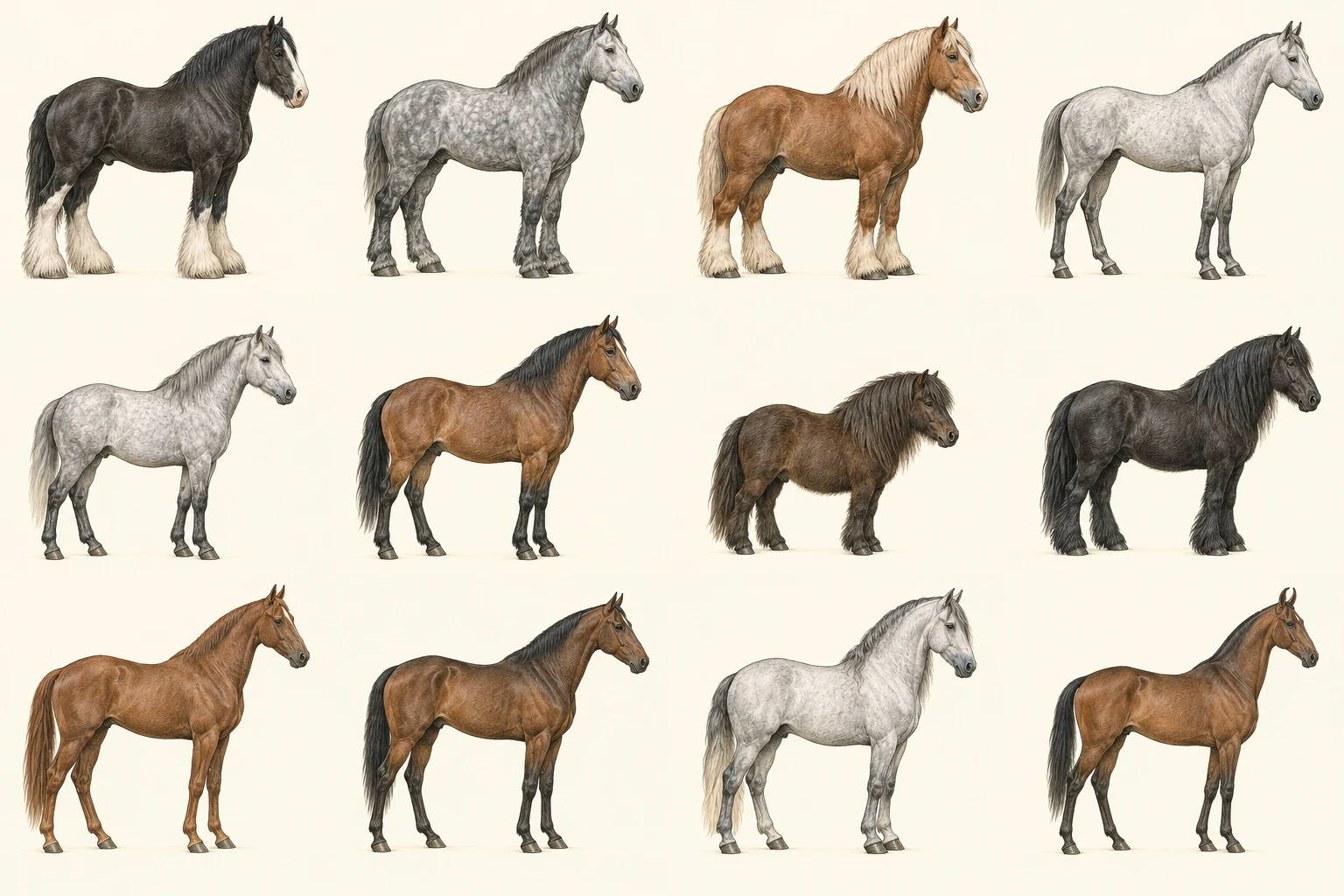
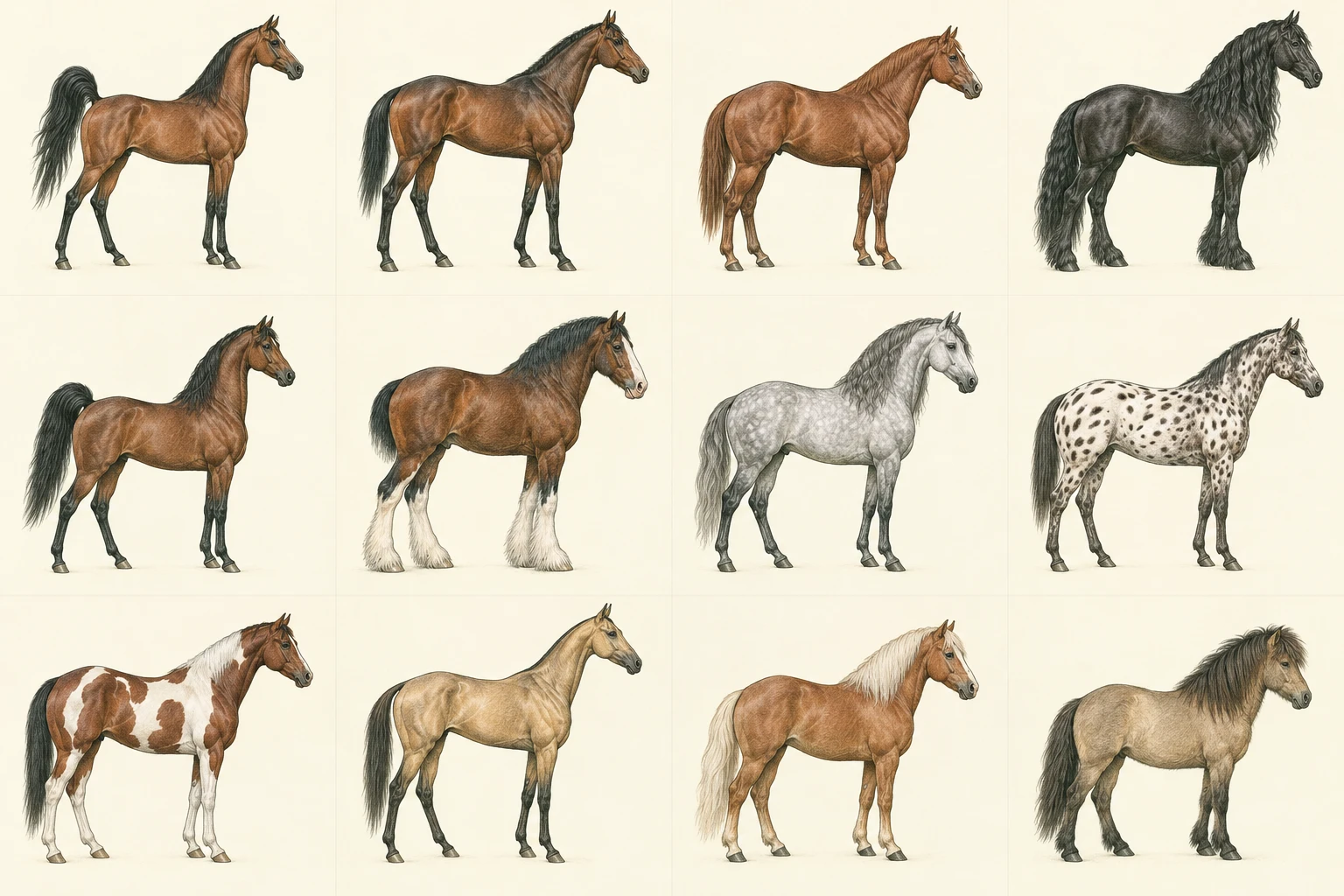
Avoid universal rider-weight rules attached to a breed name. Ask a knowledgeable professional to assess the particular combination and its equipment. In a technical drawing, study the strong body and limb proportions, but remember that a drawing cannot tell you the fitness or appropriate workload of a live animal.
WorldFengur and assessments
FEIF identifies WorldFengur as the global studbook database developed by Icelandic authorities and FEIF. It includes pedigree and assessment information across participating countries. Breeding assessments examine conformation and ridden qualities within an organised system rather than relying on a seller's informal description of gait or type.
Ask for the registered identity and any assessment record that is mentioned in a listing. Interpret scores in their own context: breeding evaluation, competition performance and being a suitable leisure partner answer different questions. A horse can be appropriate for a rider's ordinary plans without needing a top sporting score.
What an Icelandic Horse BLUP value means
FEIF explains BLUP as Best Linear Unbiased Prediction: a statistical estimate of breeding value using assessment and pedigree information. The published scale is centred on 100, with ten units representing one standard deviation. Results include an accuracy estimate, so a number supported by little information should not be interpreted like a well-established estimate. Values are updated as assessment information and the reference population change.
This is a breeding tool rather than a percentage score for being a good riding horse. A value of 110 does not mean that the horse is ten percent easier to ride, and a leisure buyer should not treat a statistical rank as a substitute for watching mounting, transitions and clear tölt. If a seller highlights BLUP, ask which trait the number describes, when it was calculated and how much information supports it. Then return to the horse’s present training and your own riding goals.
Choosing a horse and establishing a routine
FEIF's buying checklist distinguishes calm and spirited individuals, leisure and sport goals, and different training levels. Decide whether you want a four- or five-gaited horse and which abilities you will actually use. Observing the horse with its usual rider makes those terms more concrete.
Ask about catching, mounting, riding alone, group travel and its usual care routine. Arrange tack fitting for the individual body rather than choosing by a generic Icelandic size. Compare the Tennessee Walking Horse and Standardbred to understand other gait traditions, while keeping their different footfall patterns, training and registries clearly separated.
Common questions
Do all Icelandic horses have five gaits?
No. Some are four-gaited and lack flying pace, while five-gaited horses can perform it. Individual expression and training still vary.
Can an Icelandic Horse be born outside Iceland?
Yes. The breed is internationally recorded, including horses bred in other countries. Check pedigree and registration rather than birthplace alone.
Is tölt the same as pacing?
No. Tölt is an even four-beat gait. Flying pace is a separate fast lateral gait with a different rhythm.
Sources & further reading
We use breed registries, equestrian organisations and specialist reference sources. Registration rules and training standards can change; check the original source for the latest requirements.
- FEIF: the Icelandic Horse ↗feif.org
- Horses of Iceland: five gaits ↗horsesoficeland.is
- Horses of Iceland: breeding objectives and height ↗horsesoficeland.is
- FEIF: breeding and WorldFengur ↗feif.org
- FEIF: choosing an Icelandic Horse ↗feif.org
- FEIF: rider weight considerations ↗feif.org
- FEIF: interpreting BLUP breeding values and accuracy ↗feif.org
Last editorial source check: . General educational information; work with a qualified instructor or veterinary professional for individual advice.