At a glance
Mustang quick facts
- Origin
- Free-roaming herds on public lands in the western United States, descended from domestic horses
- Height
- No single breed height. Individuals vary widely by herd area.
- Coat
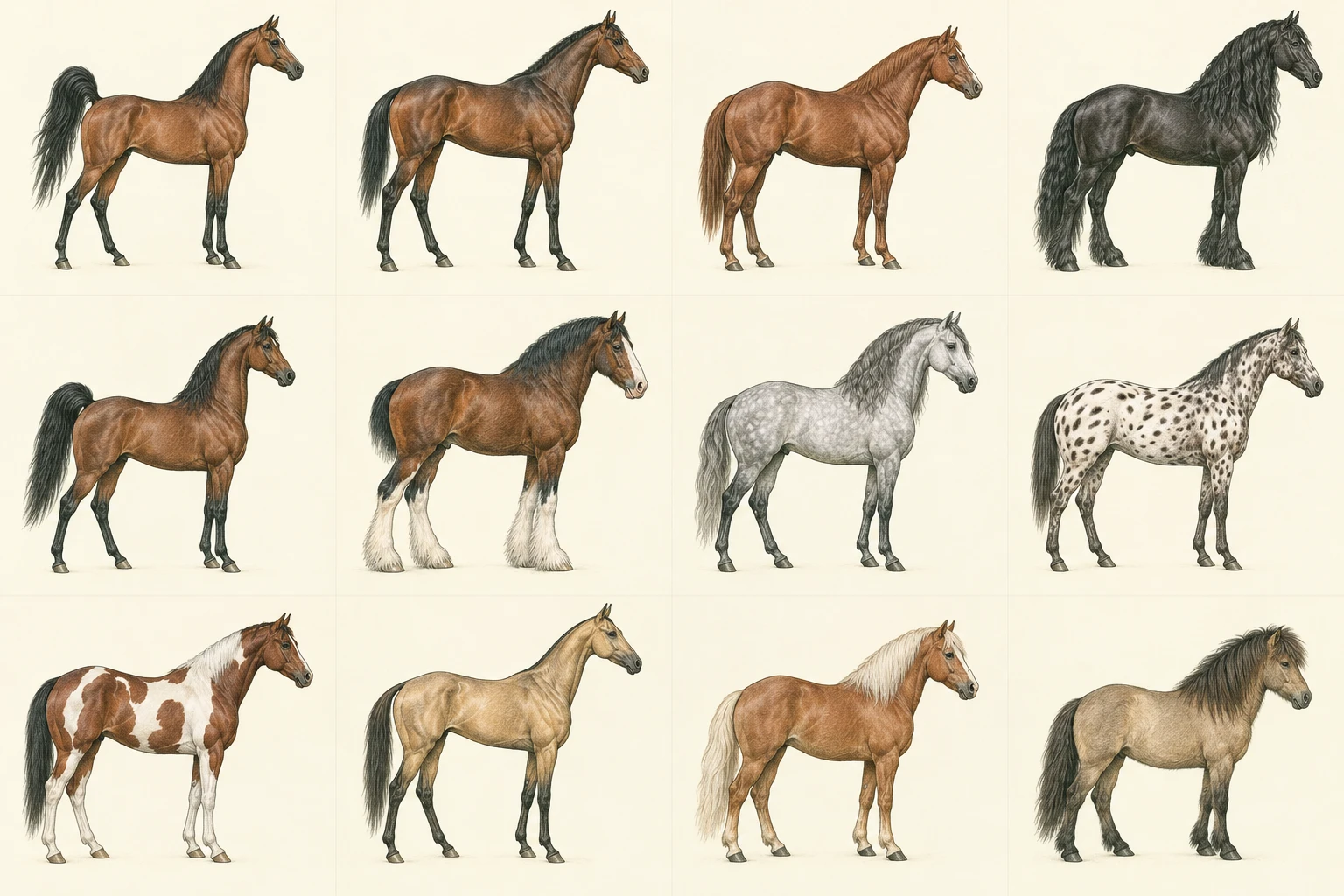
- Many colours and patterns, depending on the herd. There is no closed colour list.
- Best known for
- Free-roaming life on western public lands and the federal adoption program
- Who manages them
- The U.S. Bureau of Land Management’s wild horse and burro program
- Papers
- An adoption title is not the same thing as a closed breed registry
- Type
- Varies by herd. Do not expect one outline.
Plain language
For kids
- Mustangs are horses that live free on public land in the American West.
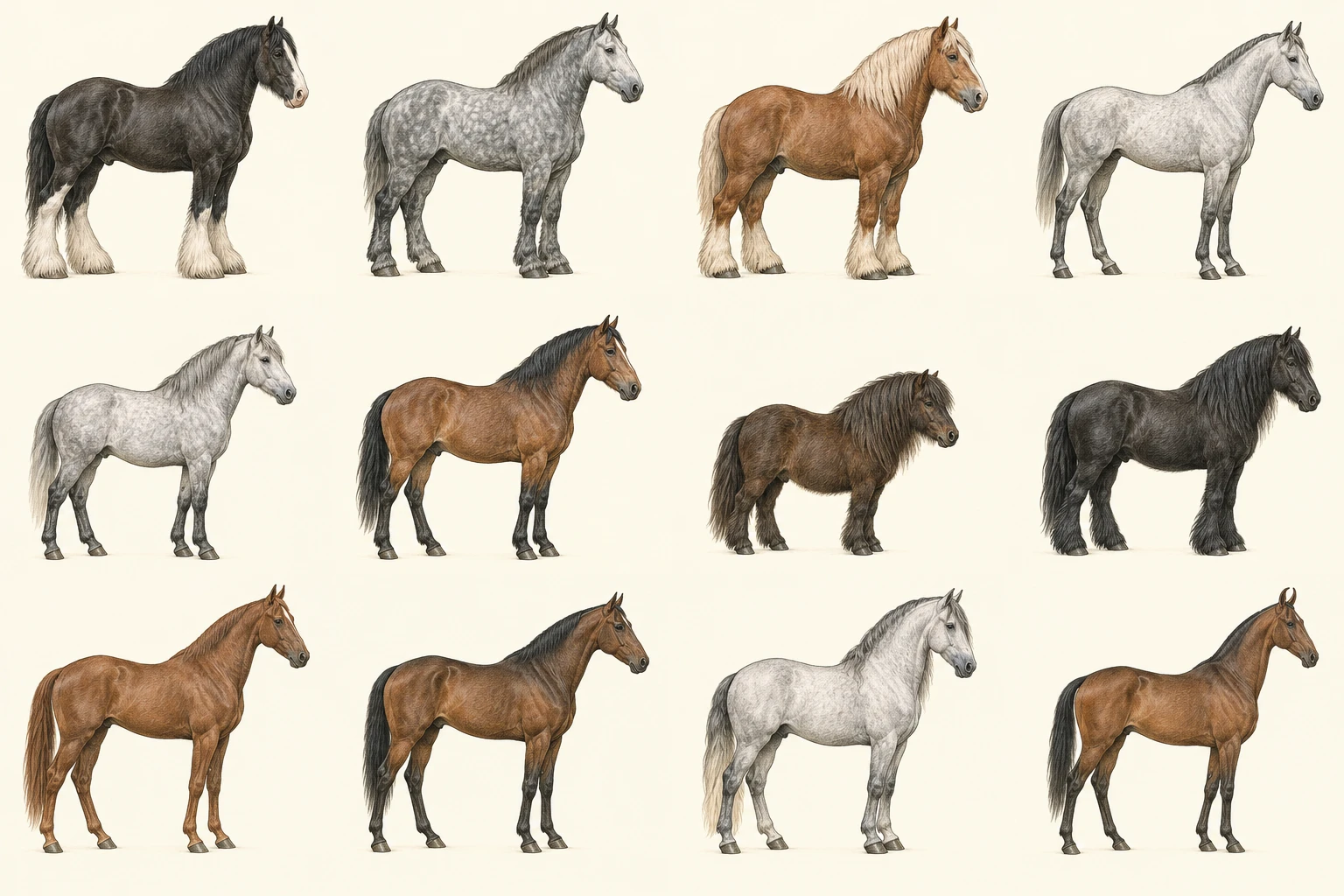
- They are not one breed with one height or one colour. Each herd can look different.
- You do not catch a mustang on a family trip. Adoption, when it happens, follows the government’s rules and needs land, time and skill.
The rest of this page is the longer guide for adults and keen readers.
A name for a life, not a studbook
The BLM’s wild horse and burro pages describe horses and burros on public lands and the program that manages them. People say mustang for the horses. The animals descend from domestic horses that became free-roaming. They are not a single breed association with a height rule and a colour chart.
That is why two mustangs can look unrelated. One herd may be compact and quick. Another may show more draft or riding-horse influence from a local history. Ask which herd area an adopted horse came from, and treat that as history, not as a guarantee of temperament.
Policy changes, so read the current page
Population estimates, gather plans and adoption rules are published by the BLM and they move. Horsepedia does not freeze a number on this page. If you need a figure for a school project, quote the BLM page and the date you read it.
The about-the-program page and the adoptions-and-sales page are the two starting links. They are more reliable than a social video of a horse running, however beautiful the video is.
Adoption is a training project
An adopted horse may be used to people or may be at the start of that education. Handling, loading and feet can all be new. A family that has only ridden quiet lesson horses is not the automatic right home. The BLM materials describe the commitment. Read them before you fall in love with a photograph.
Budget for a place to live, a trainer who knows unhandled horses if you need one, and the ordinary costs every horse has: forage, feet, and a veterinarian. The purchase price, if there is one, is the small part.
Mustangs and other ‘wild’ words
The Americas history guide separates fossil horses, the later return of domestic horses, and Przewalski’s horse. A mustang is part of the domestic-horse return, living free now under a management program. It is not a Przewalski’s horse and not a zoo subspecies.
Advertisements sometimes say mustang for any plain brown horse. Ask what the word means on that advert: a BLM adoption, a brand, or a guess. The answer changes what you are buying.
How to be a fair visitor
If you see free-roaming horses, stay at a distance, do not feed them, and do not try to touch a foal. Feeding teaches horses to approach roads. The program pages explain why harassment and unauthorised removal are not tourism.
Children can learn the four-fact story and draw a herd that is not all the same colour. That drawing is better biology than a single movie horse.
Common questions
Are mustangs a breed?
Not in the closed-studbook sense. Mustang names free-roaming horses managed as wild horses and burros, with a wide range of type. An adoption record is not the same as an Arabian or Quarter Horse registration.
Are they tame?
Some adopted horses are well started. Others have hardly been handled. Ask for the specific history of the horse, and plan training for that history rather than for the word mustang.
Can any colour appear?
Herds differ, and many colours occur. Colour does not prove a herd area or a temperament. Use the adoption paperwork and the horse in front of you.
Sources & further reading
We use breed registries, equestrian organisations and specialist reference sources. Registration rules and training standards can change; check the original source for the latest requirements.
- Bureau of Land Management: about the wild horse and burro program (opens in a new tab)blm.gov
- Bureau of Land Management: adoptions and sales (opens in a new tab)blm.gov
- Bureau of Land Management: wild horse and burro program (opens in a new tab)blm.gov
Last editorial source check: . General educational information; work with a qualified instructor or veterinary professional for individual advice.