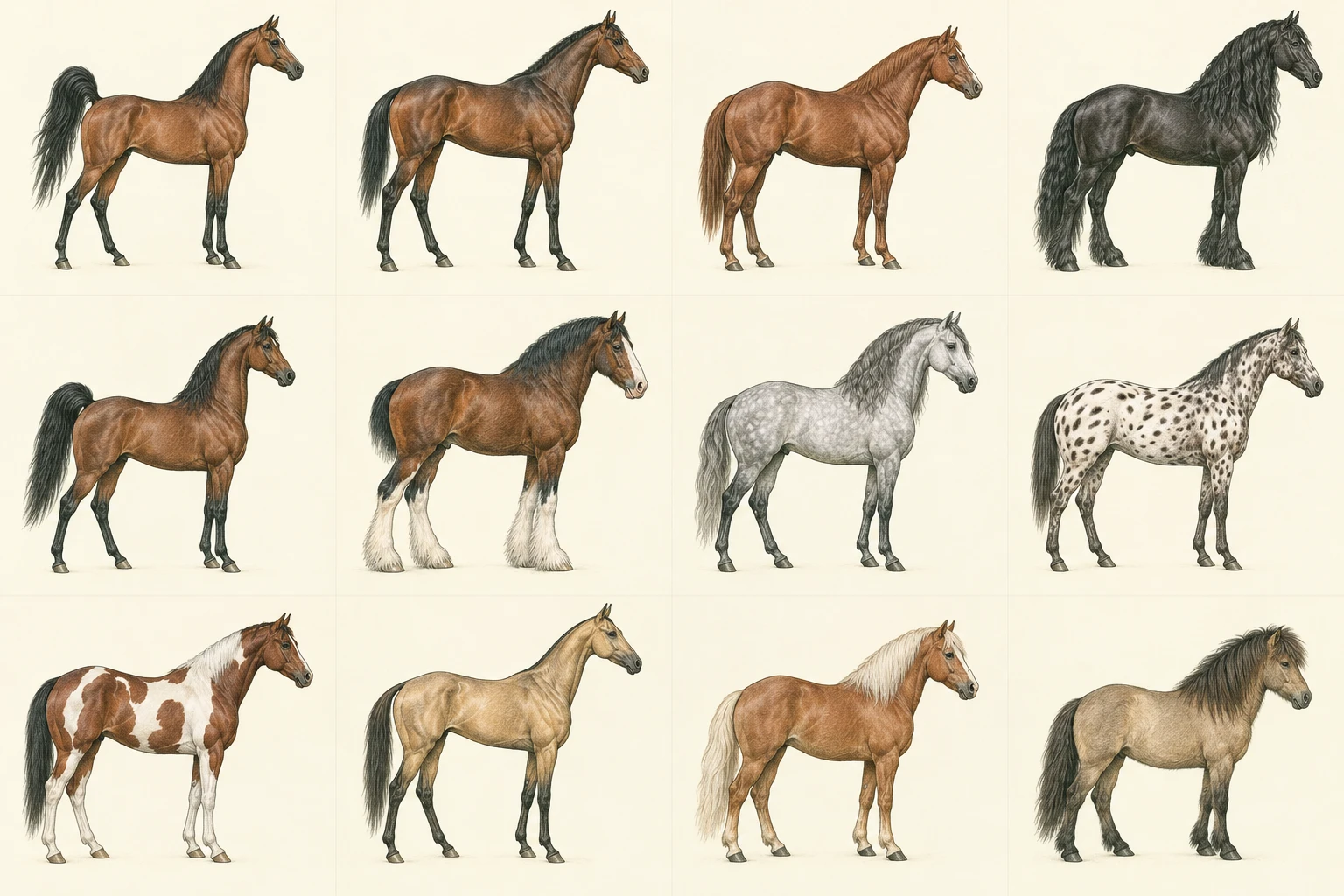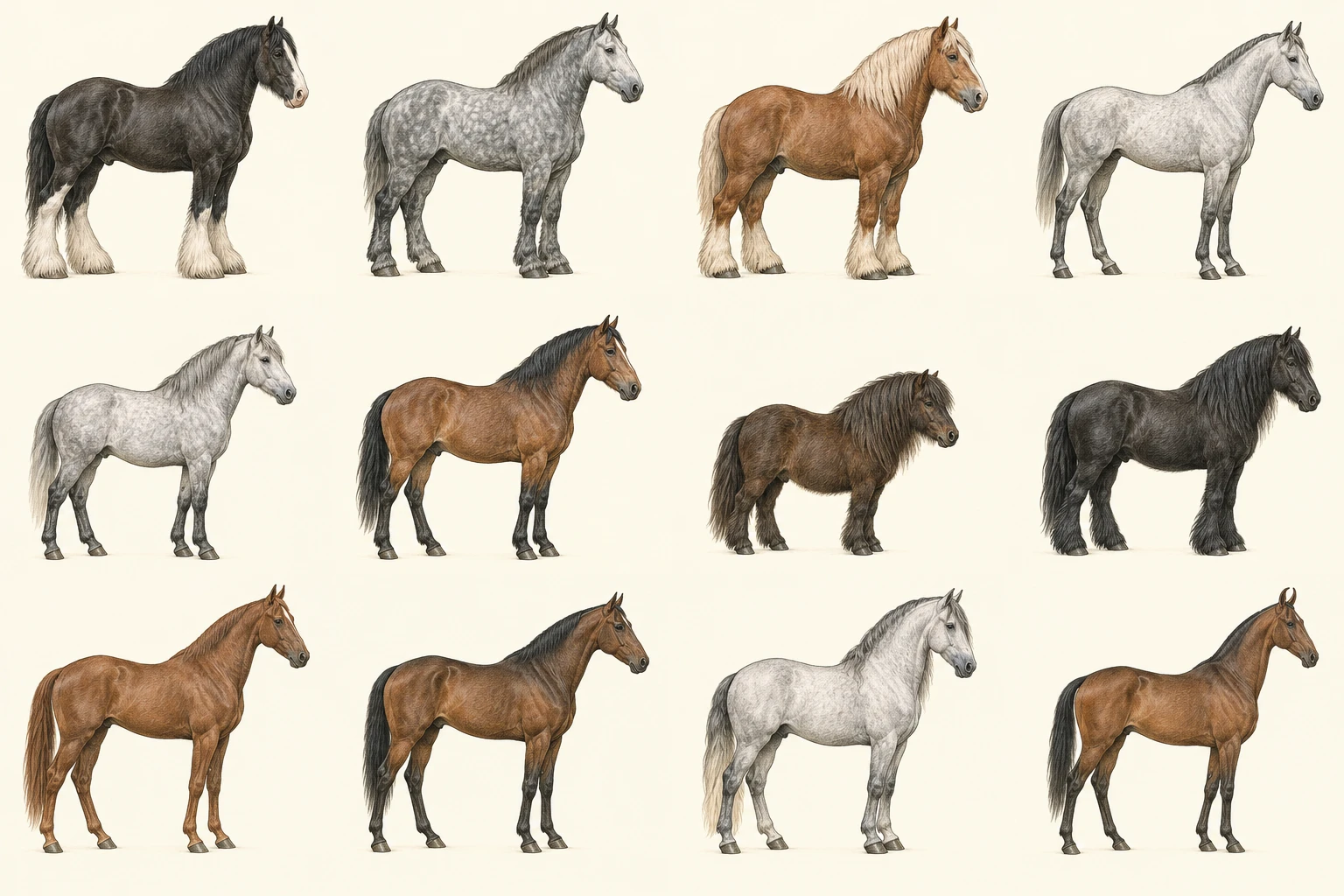
At a glance
Canadian Horse quick facts
- Origin
- Canada, with the Canadian Horse Breeders Association as the studbook
- Height
- Use the association’s current standard. The public pages reviewed did not print one measurement to copy.
- Coat
- Not fixed to one colour in the material we could read.
- Best known for
- A Canadian heritage riding and driving horse listed as critical
- Studbook
- Canadian Horse Breeders Association (Société des éleveurs de chevaux canadiens)
- Conservation list
- Critical on the Livestock Conservancy list reviewed 19 October 2026
- History on this page
- Limited to what the live pages actually returned, which was the registry’s practical role
Plain language
For kids
- The Canadian Horse is a heritage breed from Canada. People register the horses with a breeders’ association.
- A conservation list has called the breed critical, which means the population needs watching. Check the newest list if you are doing a school project.
- Critical does not mean the horse is unfriendly. It means there are not many breeding horses.
The rest of this page is the longer guide for adults and keen readers.
Start with the people who keep the book
The association’s site is where a Canadian Horse is registered, transferred or looked up through breeders. Pages we opened were thin on narrative and clear on jobs: membership, foal registration, transfers and forms. That is enough to tell a real studbook from a horse that is merely living in Canada.
A horse foaled in Canada can be a Thoroughbred, a warmblood, a pony or an unregistered animal. Geography is not a breed. If the advert says Canadian Horse, ask for the association’s papers.
Critical means the list is worried about numbers
The Livestock Conservancy groups Canadian with North American breeds in its critical category on the list we reviewed. The same list’s method is the Conservancy’s own, explained on that page. It is not a Canadian government census, and Horsepedia is not inventing a head count beside it.
For a school report, screenshot or quote the list and the date. For a breeding decision, talk to the association and to breeders who register foals. A critical label is a reason for careful breeding, not for breeding every mare.
What kind of horse families actually meet
Canadian Horses are used as riding and driving horses by the people who keep them. The association’s public pages did not hand us a temperament slogan strong enough to repeat as a promise. Expect a horse, and trial it. Heritage breeding often favours hardiness. Hardiness is not a beginner guarantee.
Compare the idea with the Mustang page and the Morgan page. One is a managed free-roaming population. One is an American studbook with a long riding history. The Canadian Horse is its own book, in its own country, with its own breeders.
Care without a myth
Feed, feet and teeth do not become optional because a breed is old or uncommon. The daily care guide is the right next read. If the horse is an easy keeper, the body-condition guide matters more than a heritage slogan about surviving winters.
Ask a veterinarian in your own province or state about vaccines and parasites. Horsepedia does not copy a national calendar onto a breed page. Canada and the United States are not one set of rules.
A fair description in an advert
Say ‘registered Canadian Horse’ only with papers, or say what is true instead. Name the age, the work, and whether the horse drives, rides, or both. Leave the century out unless you can point to the association’s own history page and the sentence you mean.
Children can hold two ideas at once: this is a Canadian breed worth keeping in the book, and a horse still has to match the rider. The choosing guide is about the second idea.
Common questions
Is every horse in Canada a Canadian Horse?
No. Canadian Horse means the breed kept by the Canadian Horse Breeders Association. Other breeds live in Canada too.
How rare are they?
The Livestock Conservancy listed them as critical on the priority list reviewed 19 October 2026. That is a category, not a head count. Use the current list.
Are they good family horses?
Some individuals are. The pages we could read did not offer a temperament promise, and a conservation label is not one either. Trial the horse with a coach.
Sources & further reading
We use breed registries, equestrian organisations and specialist reference sources. Registration rules and training standards can change; check the original source for the latest requirements.
- Canadian Horse Breeders Association (opens in a new tab)lechevalcanadien.ca
- The Livestock Conservancy: conservation priority list (opens in a new tab)livestockconservancy.org
Last editorial source check: . General educational information; work with a qualified instructor or veterinary professional for individual advice.