Plain language
For kids
- People used horses to travel, pull ploughs and carry messages before cars and tractors.
- A story that starts with ‘thousands of years ago’ can be true in spirit and still fuzzy on the exact year.
- Today some horses still work, and many are partners for riding and sport. The friendship still needs care, not just a legend.
The rest of this page is the longer guide for adults and keen readers.
Partnership, not a mascot
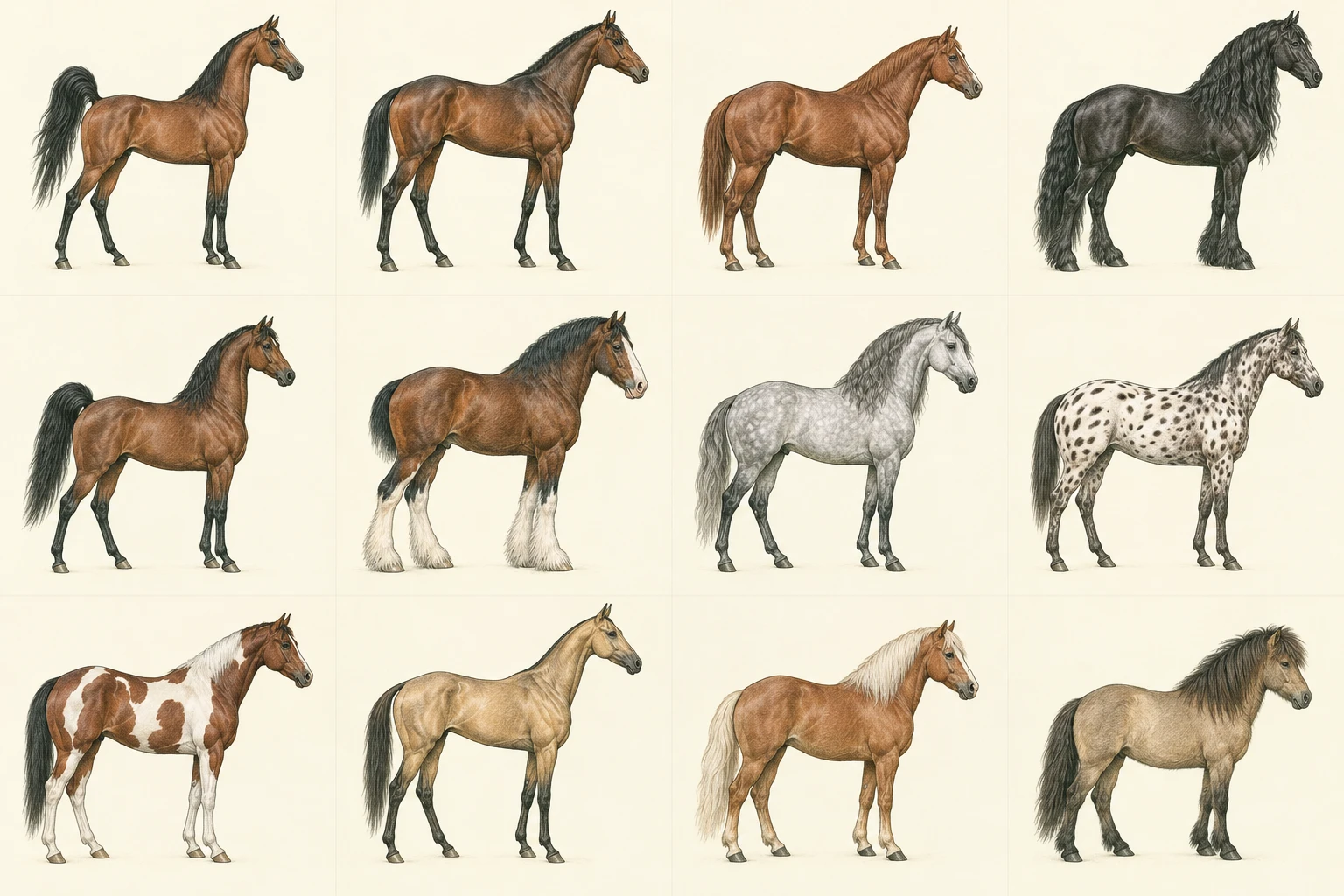
Horses changed how far a person could go in a day and how much land a family could work. That practical partnership is the heart of the history, more than any single famous rider. Different cultures bred horses toward the work they had: speed, strength, a smooth gait, or a small size that lived on poor grazing.
Archaeology and genetics keep updating the map of where domestic horses came from and how they spread. A children’s book that names one valley and one year is choosing a simple version. Horsepedia would rather say the story is old and still being studied than print a date that next year’s paper moves.
Work left marks on type
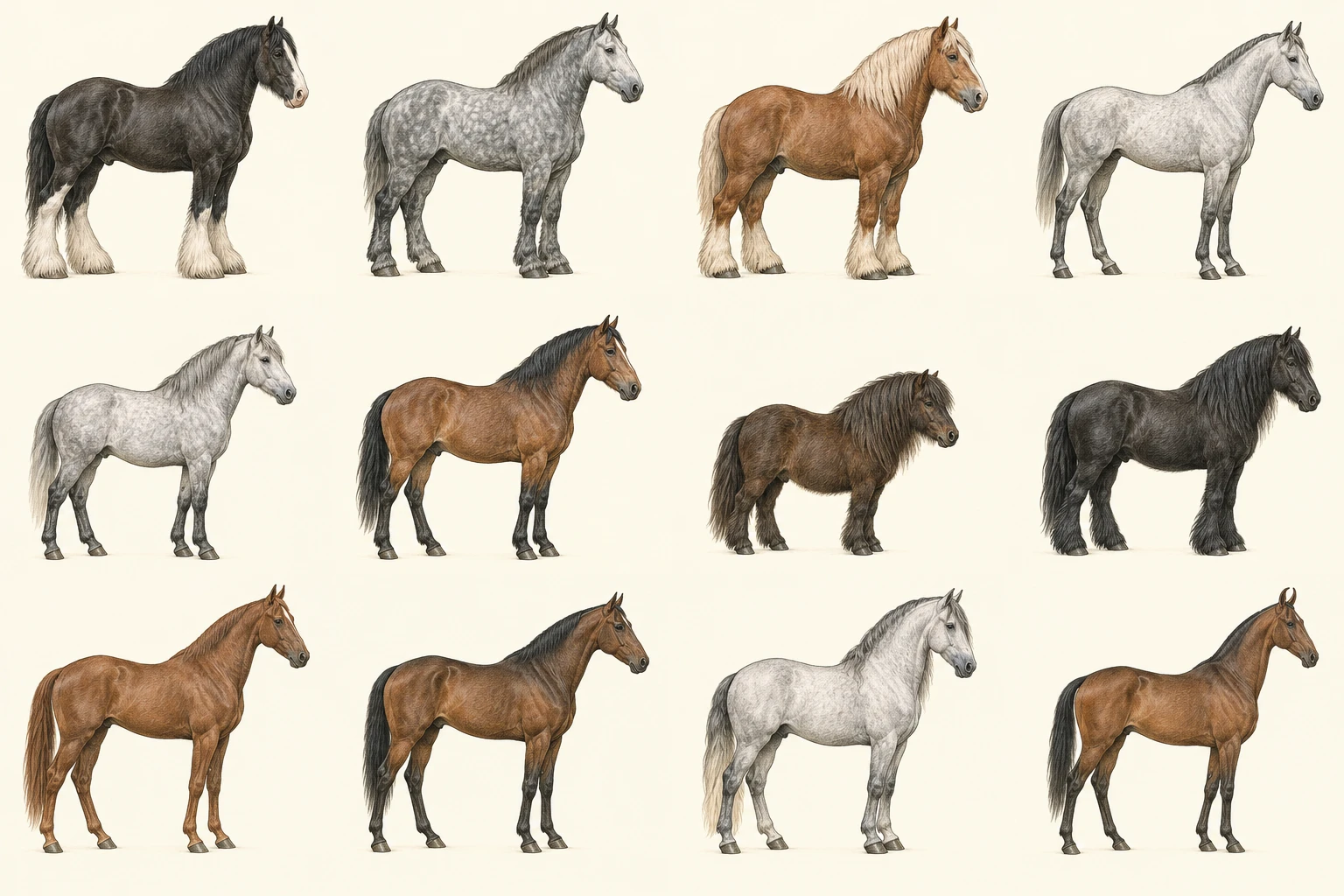
Draft horses such as the Shire, Clydesdale, Percheron and Suffolk Punch were shaped for pull. Light and gaited horses were shaped for riding long distances or for a particular seat. Ponies of the British uplands were shaped by weather and sparse feed as much as by a fashion for smallness. When a modern registry describes a breeding goal, it is often talking to that history.
War and ceremony also selected horses. The Lipizzaner’s association with the Spanish Riding School, and the Andalusian and Lusitano stories, are examples you can read on their own pages. Ceremony does not make those horses fragile toys. They were riding horses with a job.
Legends are labelled as legends
Some breed pamphlets repeat a founding myth because it is good at the campfire. Myths can hold a cultural truth and still be a poor description of a studbook. If a registry publishes a standard and also tells a legend, keep the two in different pockets. The standard tells you what the registry accepts. The legend tells you what people like to say.
Famous individual horses get the same treatment in the famous-horses guide. A statue is not a measurement. A movie is not a studbook.
The twentieth century changed the job
Engines took over ploughs, carts and many armies. Horse numbers in some countries fell, and horses that remained often moved toward sport and leisure. That shift is why a draft breed’s society may now talk about riding and showing as well as farm work. It is also why some rare breeds needed conservation societies. The Livestock Conservancy’s priority list is one place to see which North American and related populations are being watched. Categories change, so read the current list rather than quoting an old rank.
Sport governing bodies such as the FEI describe modern international disciplines. They are part of the history now, not a break from it. A child watching showjumping is watching a new chapter of an old partnership.
How to use history when you meet a horse
History explains why a horse might be built a certain way. It does not tell you whether this horse is safe for you. Ask about the individual, then enjoy the story. Children can learn a true, small history: this breed pulled, this breed raced, this breed lived on an island. Leave the embroidered bits for later, labelled as stories.
If you want the North American chapter, the next guide separates ice-age horses, the later return of domestic horses, and the wild horse that is Przewalski’s horse. Those are three different facts that popular posts often mash together.
Common questions
When were horses domesticated?
Researchers place domestication in the distant past of the Eurasian steppe and continue to debate details. Horsepedia does not print one year as if it were settled. The reliable lesson is that the partnership is ancient and that the evidence is still studied.
Did every knight ride a huge draft horse?
No. War horses varied with the century and the job. Modern draft breeds are not a costume department for the Middle Ages. Read a breed’s own history rather than a film.
Why do breed stories disagree?
Oral history, national pride and early studbooks do not always match. Prefer the registry’s current standard for facts about today’s horse, and treat older legends as culture.
Sources & further reading
We use breed registries, equestrian organisations and specialist reference sources. Registration rules and training standards can change; check the original source for the latest requirements.
- The Livestock Conservancy: conservation priority list (opens in a new tab)livestockconservancy.org
- FEI: about the disciplines (opens in a new tab)fei.org
- Spanish Riding School: the Lipizzan (opens in a new tab)srs.at
Last editorial source check: . General educational information; work with a qualified instructor or veterinary professional for individual advice.