Plain language
For kids
- A hand is 4 inches, about 10 centimetres. People measure horses at the withers, the bump at the base of the neck.
- Horses can sleep standing up for some of their rest, and they also need to lie down. Both can be normal.
- The safest fact is a habit: ask before you touch, walk around the front or far around the back, and never duck under a horse.
The rest of this page is the longer guide for adults and keen readers.
Words that unlock the other pages
A foal is a baby horse. A filly is a young female, a colt is a young male, a mare is an adult female, a stallion is an adult male who can breed, and a gelding is a male who has had surgery so he cannot breed. You do not need every word on day one. Mare, gelding and foal will get you through most yards.
The withers are the ridge at the base of the neck. Height is measured there, in hands. One hand is 4 inches. A pony advertisement that only says ‘small’ is less useful than a height. The horse-or-pony page explains why height and breed are not the same thing.
Bodies that surprise people
Horses can rest standing because of the way their legs lock, and they also lie down for some sleep. A horse lying down in the sun can be fine. A horse lying down and rolling, sweating, or unable to rise needs an adult and the veterinarian guide. Teach the difference before you teach a joke about sleep.
Horses have a wide view and blind spots in front of the nose and behind the tail. They hear well, and their ears point toward sounds. They are plant-eaters. None of that makes a horse a big dog. A horse’s kick and a horse’s weight are the reasons the safety rules exist.
Habits that keep children safe
Ask the owner before you touch. Offer a hand flat if you are allowed to give a treat, or skip treats if the yard says so. Walk to the shoulder, not underneath. If you pass behind, pass far out of kicking range or, better, go around the front with an adult. Do not run, scream, or flap coats.
Helmets are for riding, and closed shoes with a heel are the usual lesson rule. The first-lesson guide says more. A fact page is not a riding lesson. The coach is the lesson.
Facts we will not pretend to be sure about
You will see posts that claim an exact top speed, an exact number of bones, or an exact number of hours of sleep for every horse. Those numbers vary by source and by horse. Horsepedia leaves them out rather than pick the most exciting one. If a school project needs a number, use a book or a veterinary site you can name, and write the name next to the number.
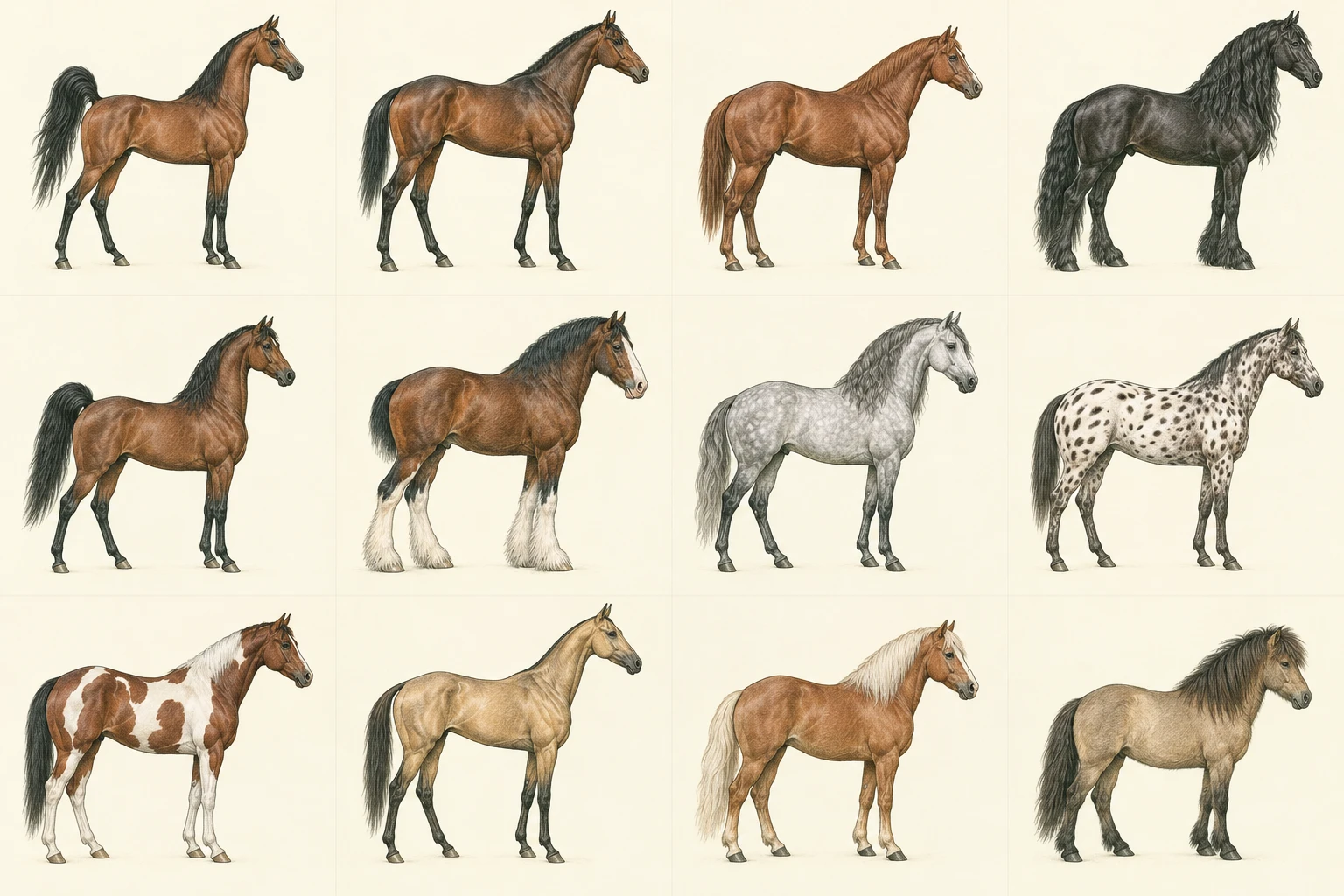
Colour does not tell you if a horse is naughty. A breed page does not tell you if a horse is safe. Those are the two corrections this site most wants children to remember.
A project that is actually fun
Choose one breed from the encyclopedia. Copy three facts the page gives: where it is from, one thing it is known for, and one thing the page says not to assume. Draw the face marking if the page mentions colour. Show an adult. You have done real research.
Then watch a real horse for five minutes from the fence and write what the ears and tail did. That second half of the project is worth more than another list of superlatives.
Common questions
How many bones does a horse have?
Textbooks often say about 205, and the count can vary. For a school project, cite the book you used rather than a caption with no author. You do not need the number to be safe or kind around a horse.
Can horses vomit?
Horses are unusually unable to vomit the way people do, which is one reason belly pain is serious. That is a veterinary fact to respect, not a party trick. If a horse looks sick, call an adult and the veterinarian guide.
What is the biggest horse ever?
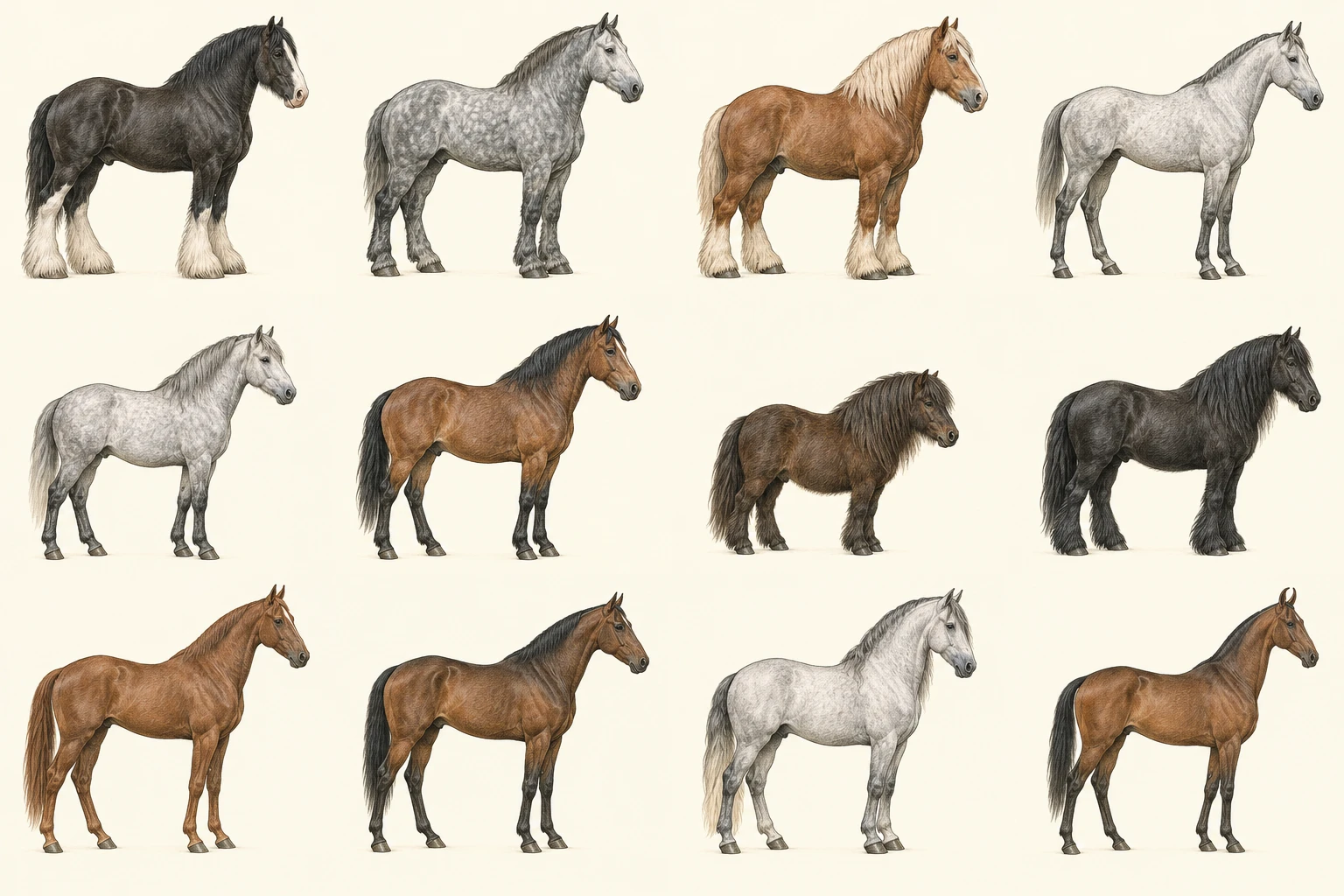
Record claims change and are easy to exaggerate. A draft breed such as a Shire or a Clydesdale is a better thing to learn than a single record. The breed page and the society are enough.
Sources & further reading
We use breed registries, equestrian organisations and specialist reference sources. Registration rules and training standards can change; check the original source for the latest requirements.
- British Horse Society: horse care and welfare (opens in a new tab)bhs.org.uk
- Extension Horses: parts of the horse (opens in a new tab)horses.extension.org
- British Horse Society: horse behaviour (opens in a new tab)bhs.org.uk
Last editorial source check: . General educational information; work with a qualified instructor or veterinary professional for individual advice.