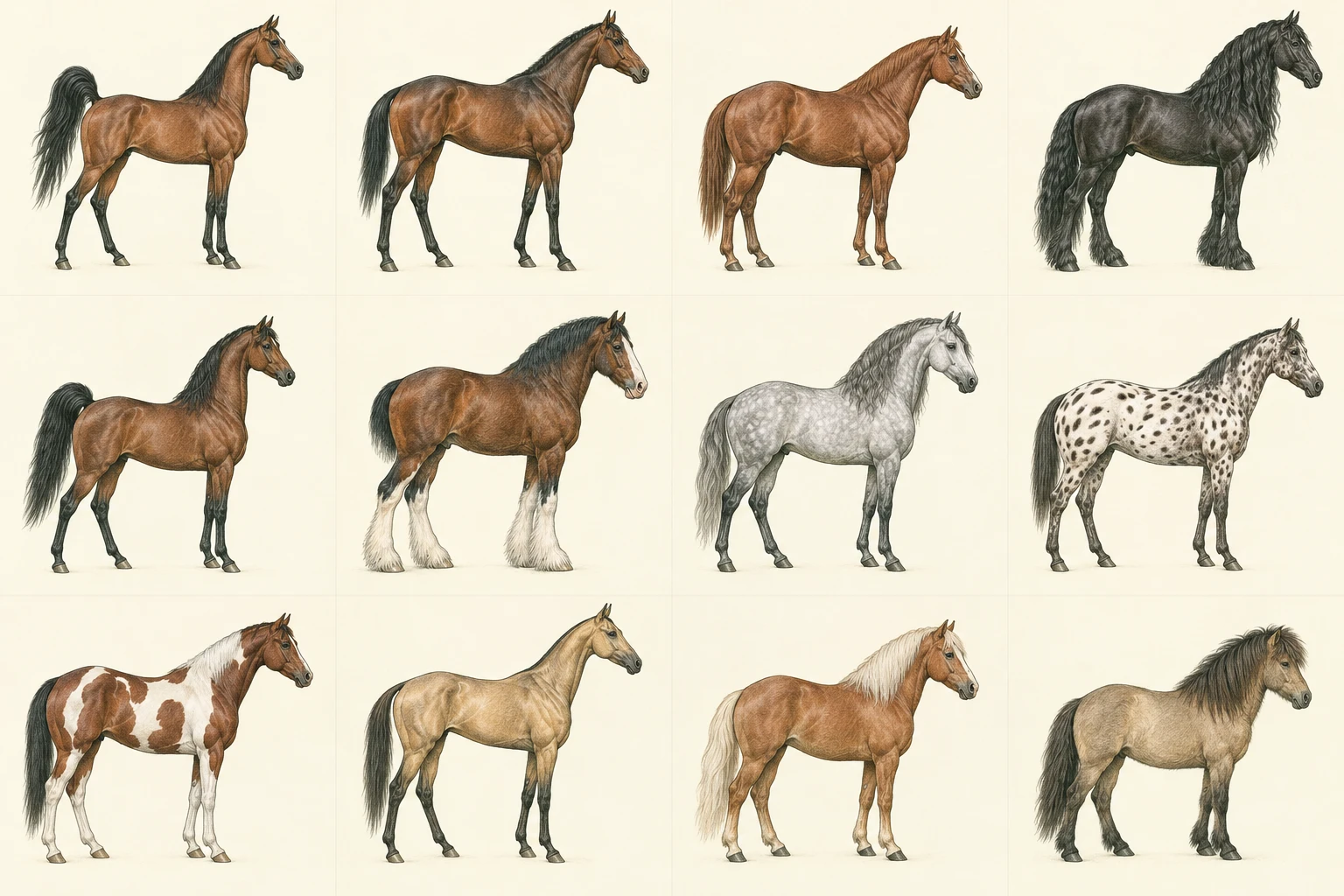
Two families with many variations
English riding includes disciplines such as dressage, show jumping, eventing and several hunter or equitation formats. Western riding includes ranch work and sports such as reining, trail, western pleasure and barrel racing. These lists are examples, not a complete division of every equestrian activity. Recreational trail riding can use either type of tack, and some riders deliberately learn both traditions.
Equestrian Canada's development framework describes the styles in relation to the tasks their equipment supports. That task-based approach is useful for beginners. Rather than choosing from a stereotype, ask what a local school actually teaches: relaxed recreational riding, precise arena patterns, jumping skills or a particular competition discipline. The answer gives the saddle and terminology a practical context.
How the saddles usually differ
A typical English saddle has no horn, uses stirrup leathers and has panels underneath. A typical western saddle has a horn, fenders and a broader visible structure, with a cinch securing it. Designs vary substantially within each family. A dressage saddle and jumping saddle support different leg positions; western saddles are also designed for particular jobs. General descriptions should not replace examination of the individual model.
Saddle fit has two sides: compatibility with the horse and suitability for the rider. Utah State University Extension explains that seat measurement differs between English and western saddles. Consequently, a quoted seat size cannot simply be transferred between the two. Try equipment with qualified guidance, considering your leg position and intended activity as well as the number printed in a listing.
Rein use depends on training and equipment
English riders commonly use a rein in each hand. Many finished western horses are ridden one-handed with neck-rein cues, but western training and beginner sessions can also involve two hands. The bit, the horse's education, the task and the competition rules all matter. Statements such as 'western means one hand' are therefore incomplete descriptions rather than universal instructions.
When trying the other style, ask the coach to explain rein organisation before moving off. Terms that sound familiar may carry a different expectation. Explain your previous experience without assuming it transfers automatically. Learning a new convention is easier when you understand its purpose and have time to practise it with a suitable horse.
Trot, jog, canter and lope terminology
Jog usually refers to a western presentation of trot, while lope commonly refers to canter. These names often suggest a particular tempo and way of going, not an entirely separate basic gait. English lessons frequently introduce rising trot; western riders may sit a jog, but posting also has practical uses outside English competition. The appropriate position depends on the horse, pace and activity.
Notice what the coach wants to improve rather than focusing only on the name. Is the goal steadier rhythm, a clearer transition or a rider who follows without gripping? The same vocabulary can describe different lesson objectives. Asking for the objective helps you understand why a correction is useful instead of treating it as an arbitrary rule of style.
Choosing lessons and moving between styles
For a first experience, prioritize a well-run school, a suitable horse and a coach who explains clearly. Ask to watch a beginner lesson in each style if both are available. Compare the activities and learning environment rather than assuming one is inherently easier. A larger saddle does not guarantee security, and a lighter-looking saddle does not automatically demand competition ambitions.
Riders crossing between traditions benefit from a reset: discuss the tack, revise the cues and begin with familiar basic tasks. Keep a short list of differences you noticed and questions for the next lesson. University extension offers horsemanship resources for both western and hunt-seat riders, illustrating that careful skill development belongs in either approach.
Common questions
Is English or western riding better for beginners?
Neither style guarantees a better start. A suitable lesson horse, clear beginner instruction and properly fitted equipment matter more. Choose a school that supports your goals and lets you progress without rushing.
Can the same horse be ridden English and western?
Some horses are trained in both. Their individual education, fitness and suitability for the requested task matter. A change of saddle alone does not teach a horse a new set of cues.
Do western riders always use one hand?
No. Rein use varies with the horse's training, bit, activity and rules. Two-handed riding can appear in western education. Ask a qualified instructor to explain the arrangement appropriate to that horse.
Sources & further reading
We use breed registries, equestrian organisations and specialist reference sources. Registration rules and training standards can change; check the original source for the latest requirements.
- Equestrian Canada: Long-term equestrian development framework ↗campus.equestrian.ca
- Washington State University Extension: Beginning horsemanship ↗pubs.extension.wsu.edu
- Utah State University Extension: Selecting a saddle to fit the rider ↗extension.usu.edu
- Extension Horses: Developing horsemanship hands and seat ↗horses.extension.org
Last editorial source check: . General educational information; work with a qualified instructor or veterinary professional for individual advice.