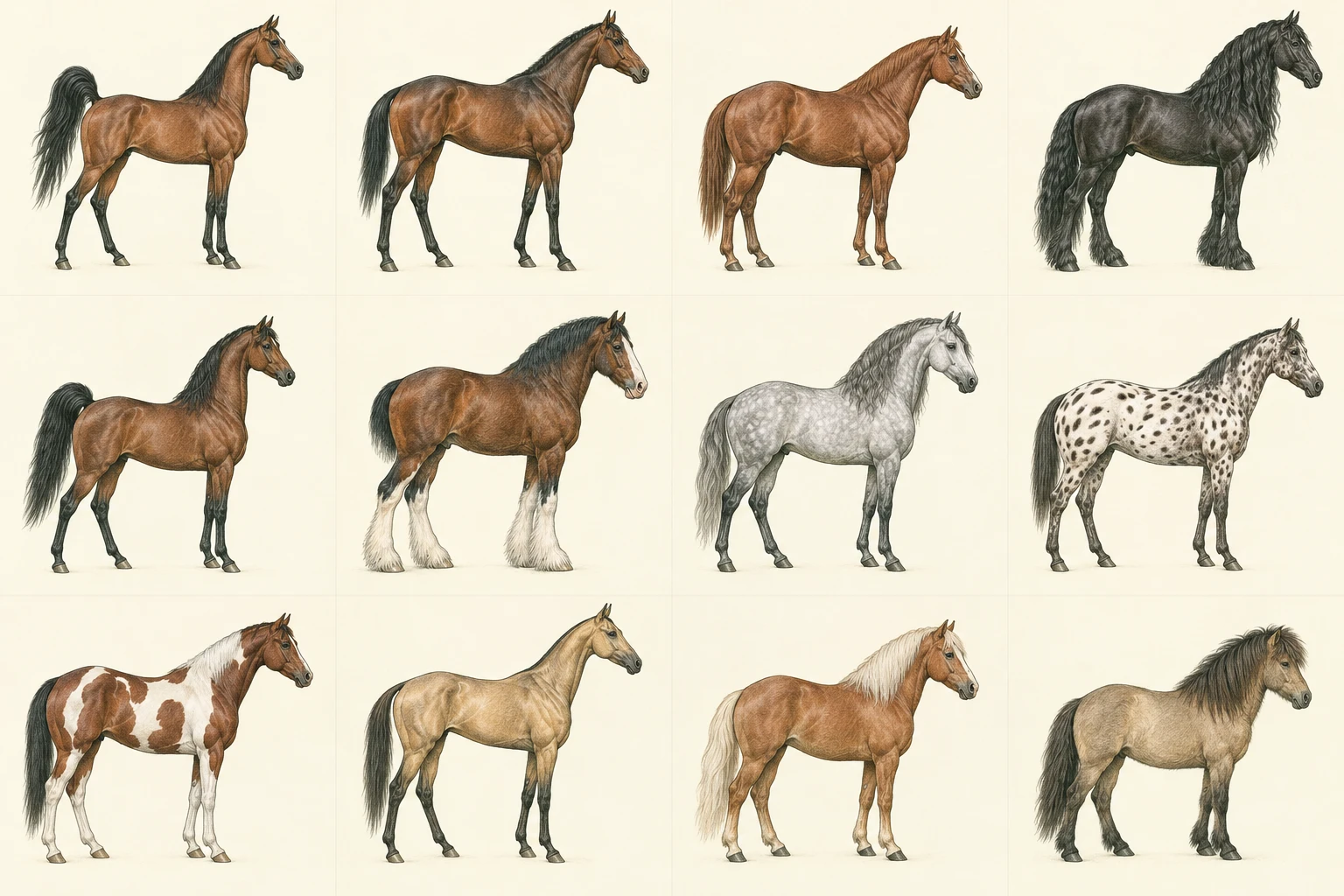
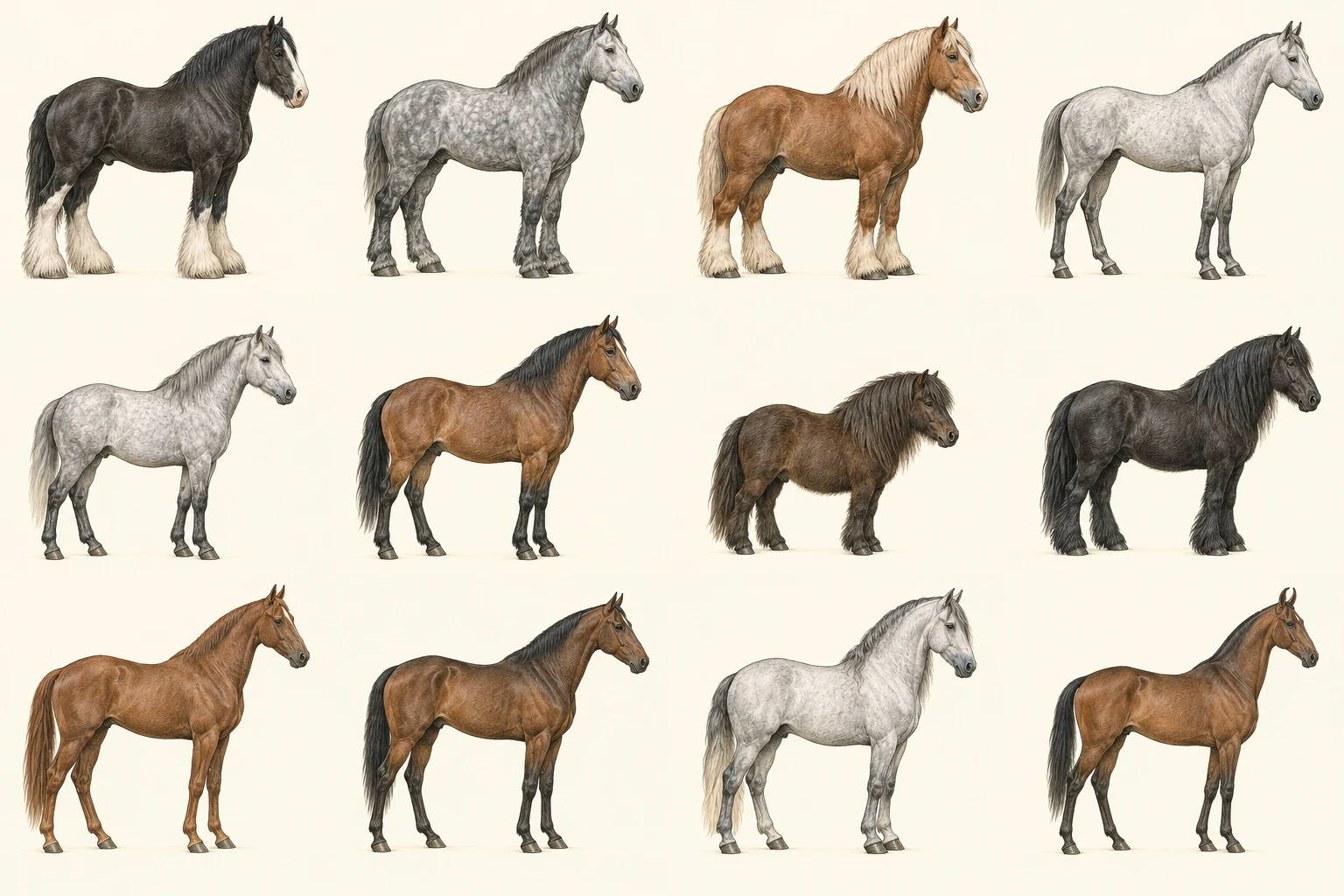
Start with an external map of the horse
Beginning at the head, identify the muzzle, nostrils, eyes, ears and poll. Continue along the neck to the withers, the ridge at the top of the shoulder region, then the back, loin and croup. The barrel describes the main trunk, while the quarters refer broadly to the hindquarter region. These words locate what you are discussing; they do not by themselves describe whether a structure is healthy.
Learn the terms on an illustration before asking an experienced handler to point them out on a horse. The BHS introductory knowledge checklist includes basic external points for this reason. A reliable label is valuable: saying 'near the left wither' gives a coach or fitter a clearer starting point than saying 'somewhere under the saddle'.
Understanding front and hind limb terms
The forelimb includes the shoulder, elbow, forearm, carpus, cannon region, fetlock, pastern and hoof. The carpus is commonly called the horse's knee. The hindlimb includes the thigh, stifle, gaskin, hock, cannon region, fetlock, pastern and hoof. The hock and stifle are different joints and should not be used interchangeably when describing a photograph or movement.
Use left and right from the horse's perspective. If you are facing its head, its left is on your right. Adding 'fore' or 'hind' avoids ambiguity when the same term appears on both limbs. For an observation notebook, write the side and location first, then the thing you noticed. This creates a useful description without attaching a medical label to it.
Conformation begins with balance and proportion
University of Minnesota Extension discusses overall balance, neck and shoulder arrangement, back length and hindquarter structure as elements of conformation. These features influence how a horse is built for movement. Breeds and types nevertheless differ: a draft horse, riding pony and Thoroughbred should not be expected to share the same outline or proportions in every detail.
Begin with the whole horse before concentrating on one angle. On level ground, look from the side, front and behind with appropriate handling support. Note the horse's age and body condition, and avoid comparing a growing youngster directly with a mature conditioned athlete. A single attractive feature does not establish overall suitability, just as one departure from a textbook ideal does not settle every question about performance.
Why hooves belong in the picture
The hoof is the point at which the limb meets the ground. Learning words such as wall, sole, frog and heel helps you understand a farrier's explanation and describe photographs consistently. The Extension Horses hoof resource treats anatomy, function, trimming principles and reasons for shoeing as connected subjects. Hoof assessment belongs within the horse's overall care, use and movement rather than an isolated aesthetic judgement.
Ask your farrier to explain the parts during a routine visit and keep a record of the horse's individual plan. Do not trim, alter shoes or infer the cause of uneven wear from an online diagram. A useful beginner goal is to recognize the named structures and understand which professional to involve when something changes.
Static photographs and movement answer different questions
A standing photograph records one moment, including the effects of stance, camera height, lens perspective and ground slope. It can introduce conformation vocabulary but cannot show the complete movement of a horse. University extension's systematic approach to evaluating horses begins with knowledge of the parts and their functions. Observing the whole animal is more informative than drawing conclusions from a cropped feature.
For comparison, request uncropped side, front and rear views on level ground, with the horse reasonably square and visible. Then view movement with an experienced professional in conditions suitable for the horse. Keep the photo observations and movement observations separate in your notes so that one does not silently become evidence for the other.
Use anatomy knowledge in practical decisions
Conformation is one part of choosing a horse, alongside training, temperament, history and the rider's intended use. An attractive outline cannot replace a professional assessment or predict a lifetime of soundness. Before comparing candidates, write down the work you plan to do and the support you have available. This gives your observations a practical purpose rather than turning a diagram into a universal ranking system.
Bring specific observations to the appropriate professional: a saddle position question to a qualified fitter, a hoof question to a farrier, and a health or lameness concern to a veterinarian. Clear anatomical language helps everyone discuss the same location. The most useful outcome of learning conformation is a better-informed conversation about the individual horse.
Common questions
What is the difference between anatomy and conformation?
Anatomy describes structures and their relationships. Conformation describes the horse's shape, proportions and arrangement of those structures. Both help with observation, but neither makes a photograph a veterinary examination.
Are the hock and stifle the same joint?
No. Both are in the hindlimb, but they are separate structures. Learning their locations makes descriptions of movement, handling and veterinary discussions more precise.
Can I judge a horse's soundness from conformation photos?
Photos can reveal aspects of shape and stance, but they do not establish soundness. Movement, history, examination and the intended work need to be assessed by the appropriate experienced professionals.
Sources & further reading
We use breed registries, equestrian organisations and specialist reference sources. Registration rules and training standards can change; check the original source for the latest requirements.
- University of Minnesota Extension: Conformation of the horse ↗extension.umn.edu
- Extension Horses: Parts of the horse ↗horses.extension.org
- British Horse Society: Introduction about the horse checklist ↗bhs.org.uk
- Extension Horses: Understanding the equine hoof ↗horses.extension.org
Last editorial source check: . General educational information; work with a qualified instructor or veterinary professional for individual advice.