
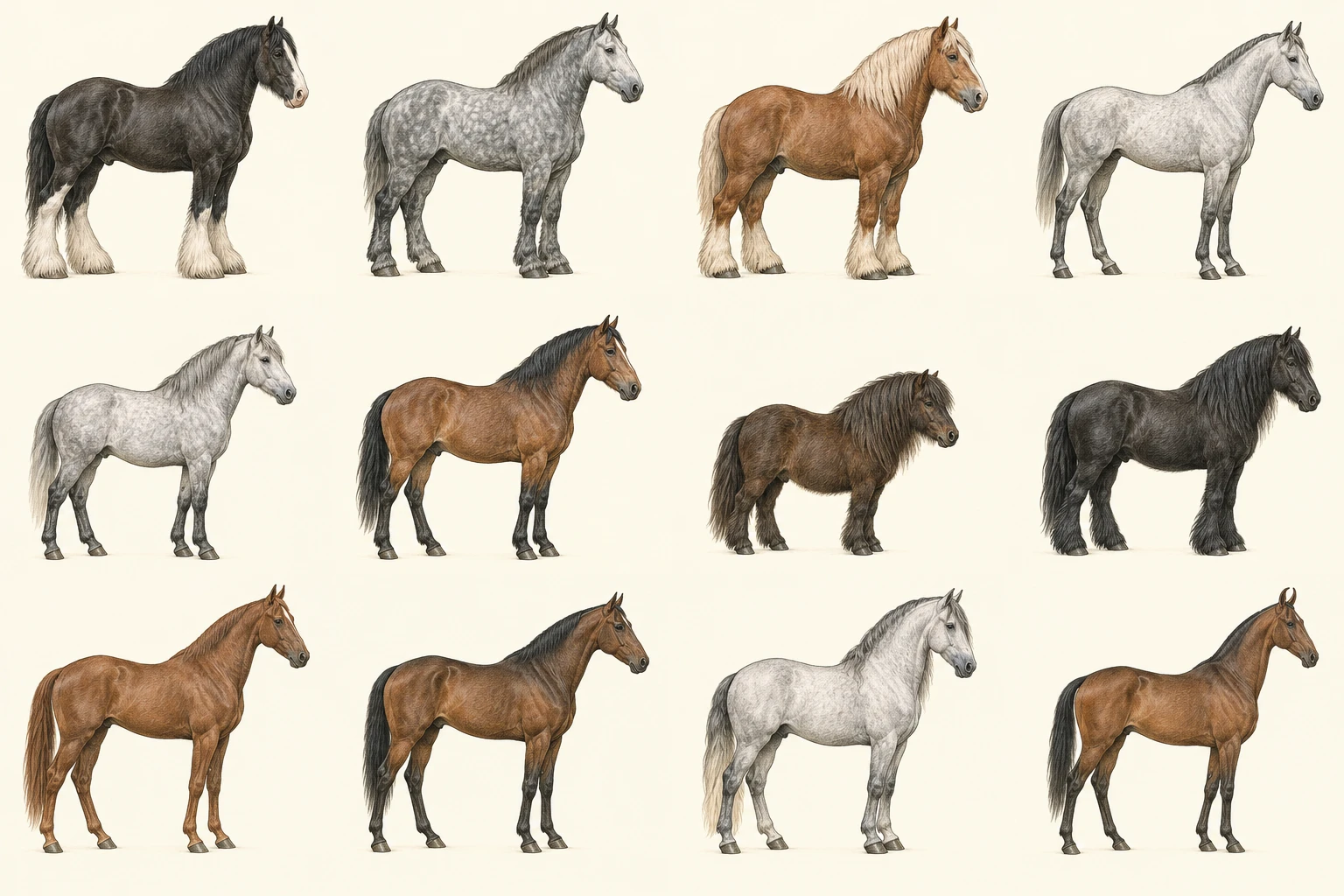
At a glance
Dartmoor Pony quick facts
- Origin
- Dartmoor, Devon, in south-west England
- Height
- Use the Dartmoor Pony Society’s current standard rather than a number copied second-hand.
- Coat
- See the society’s breed description. This page does not invent a colour list.
- Best known for
- A rare native pony of Dartmoor that the society says should be managed as a good doer
- Society
- Dartmoor Pony Society, which calls itself guardian of the rare breed
- Place
- Dartmoor, Devon, with records of ponies there since the Middle Ages, the society says
- At home
- The society says that off exposed moorland they should be managed as very good doers
Plain language
For kids
- Dartmoor ponies are a rare native pony from Dartmoor, in the English county of Devon.
- They got used to a hard, wet moor. In an ordinary field they can get too fat, so adults must watch their grass.
- Rare and pretty does not mean a pony can be handled by a child with no lessons.
The rest of this page is the longer guide for adults and keen readers.
A society that says rare on the first page
The Dartmoor Pony Society’s homepage does not make you hunt for the conservation point. It says the society is the guardian of this rare breed and represents the registered pony worldwide. Registration is the word that matters. A pony running on Dartmoor and a pony in the studbook are related ideas and not automatically the same animal.
The Livestock Conservancy’s list, reviewed on 19 October 2026, also placed Dartmoor in its critical class. Use that as a second view, with the date, and use the society for the breeding rules. Do not add the two sources into a homemade population number.
Middle Ages on the moor, modern grass at home
The society says ponies have been recorded on Dartmoor since the Middle Ages and that the moor is wild and inhospitable, so the ponies evolved to survive tough conditions. It then gives the instruction owners actually need: anywhere that is not exposed moorland, manage them as very good doers.
A good doer holds weight easily. On rich grass that becomes a health risk, not a compliment. The body-condition guide shows how to look past a fluffy coat. A veterinarian should be involved early if a native pony is getting sore in front or very cresty.
Exmoor is the next hill, not the same book
Exmoor and Dartmoor are both south-western moors and both have native ponies. They are different societies, different standards and different pages on Horsepedia. New Forest and Welsh ponies are the other names that appear in the same conversation. Papers, or a honest ‘unregistered moorland pony’, beat a blended label.
The society also mentions a part-bred register on its site. A part-bred is a real category and a different animal from a pure Dartmoor. Say which one an advert means.
Showing, owners and ordinary weeks
The society runs shows, a moorland scheme and owner services including passports and transfers. Showing a native pony is optional. Feeding it correctly is not. The feeding guide is the weekday companion to this breed page.
Children can learn the map of Devon and the phrase good doer. They should not be the person deciding how much grass a rare pony gets. That is an adult job with consequences for the pony’s feet.
Choosing a Dartmoor
Ask whether the pony is registered, what handling it has, and how it is kept in summer. A pony that has lived on the moor may be brilliant and may also be new to traffic, clippers and children. Budget time, not only the purchase.
The horse-or-pony page explains height words. The choosing guide explains whether any pony fits your child. Rare native breeding does not skip either question.
Common questions
Where do Dartmoor ponies come from?
The Dartmoor Pony Society says the breed originated on Dartmoor in Devon, and that ponies have been recorded on those moors since the Middle Ages.
Why does the society call them good doers?
It says that away from exposed moorland they should be managed as very good doers, because they evolved to survive on tough grazing and can hold weight too easily on ordinary grass.
Are they the same as Exmoor ponies?
No. They are neighbouring moorland breeds with different societies and different studbooks.
Sources & further reading
We use breed registries, equestrian organisations and specialist reference sources. Registration rules and training standards can change; check the original source for the latest requirements.
- Dartmoor Pony Society (opens in a new tab)dartmoorponysociety.com
- The Livestock Conservancy: conservation priority list (opens in a new tab)livestockconservancy.org
Last editorial source check: . General educational information; work with a qualified instructor or veterinary professional for individual advice.