Plain language
For kids
- You should be able to feel a horse’s ribs with a flat hand, not see a skeleton and not press through a thick cushion.
- A very round pony is not automatically happier. Extra fat can make feet and health harder.
- If a horse gets much thinner in a few weeks, tell an adult. That is a vet question, not a new supplement question.
The rest of this page is the longer guide for adults and keen readers.
A score is a description
The Henneke body condition score is a 1-to-9 description used widely in horse teaching. One is extremely thin and nine is extremely fat. The middle of the scale is where many healthy horses in normal work are expected to sit, but the right score for an individual is a conversation with a veterinarian or an experienced advisor, especially if the horse is breeding, growing or recovering.
Look and feel. Ribs, the crest of the neck, the withers, behind the shoulder, the loin and the tail head are the usual regions people are taught to compare. A thick winter coat hides ribs. A photo from above can flatter or accuse. Use your hands as you have been shown, on a horse that is happy to be touched.
Breed shape is not the same as fat
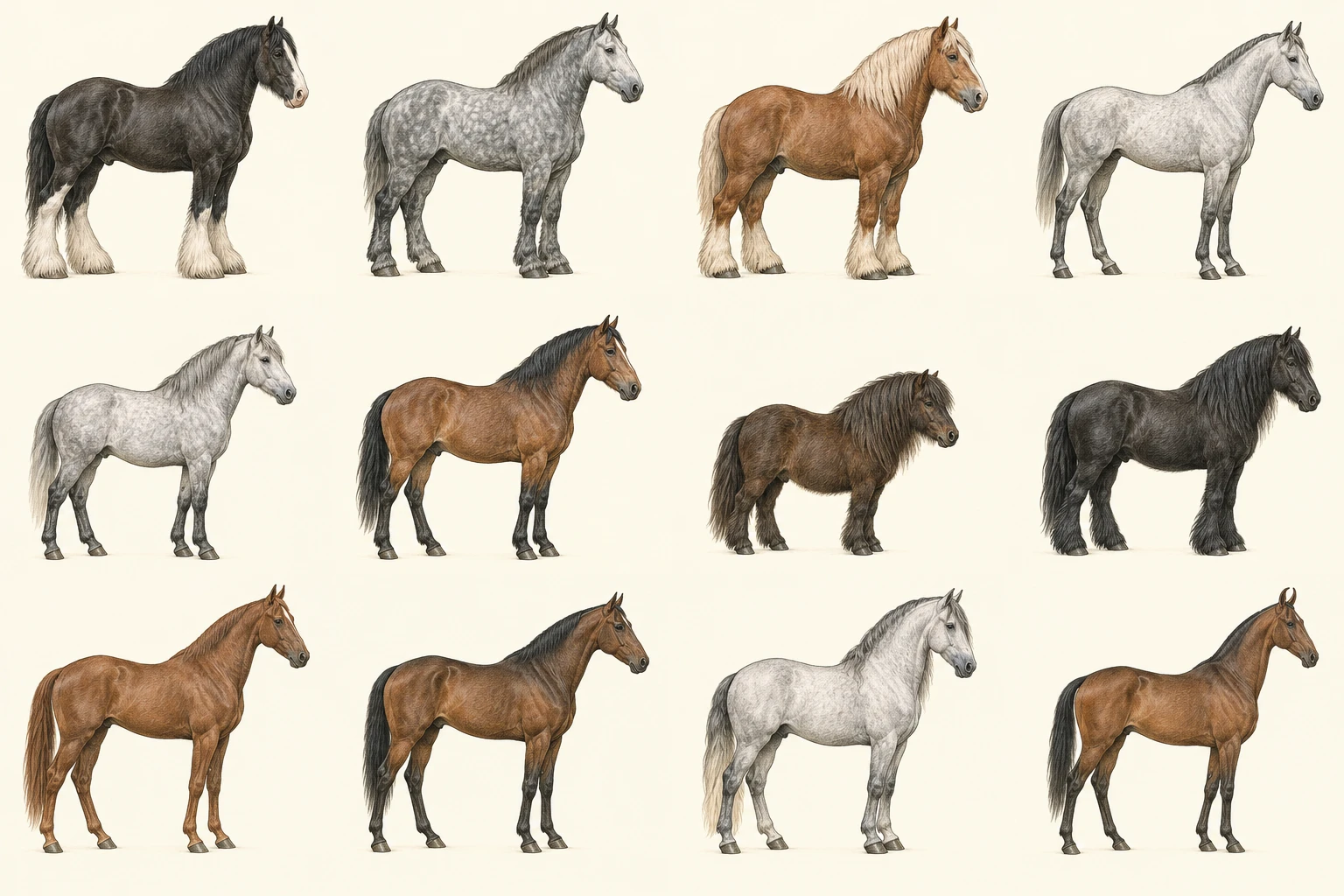
A draft horse has a different outline from an Arabian. A score still asks whether there is fat over the bones, not whether the horse matches a breed drawing. Feather, rug rubs and a hay belly from forage can confuse a glance. Say what you feel, and do not call a horse ‘just big-boned’ when the crest is hard and the ribs have disappeared.
Native ponies and some easy keepers hold fat on less feed than a hard-working thoroughbred type. That is a management fact, not a moral failing of the pony. It means the grass may need limiting, with a plan that still gives the pony something to chew so it is not standing on bare dirt for twelve hours.
When weight change is a health sign
Sudden loss of condition, a horse that eats but wastes, or a horse that is fat and footsore needs a veterinarian. Dental pain, parasites, metabolic disease and other problems can sit under a number on a score chart. A new feed bag is not the first response to a horse that dropped weight in a month.
Laminitis risk is one reason fat, especially on ponies and easy keepers, is taken seriously. This page will not list drugs or a starvation diet. Crash dieting a horse is dangerous. Reductions should be planned so forage does not disappear overnight.
Rugs, photos and winter
A rug can hide a horse that is melting or one that is too fat to cool. Take rugs off regularly and look. Winter coats are not a body-condition score. Weigh tapes, if the yard uses one, are a trend tool. They are not a laboratory scale, and they should be used the same way each time if you want the trend to mean something.
Keep a monthly note: score if you have been taught, and a sentence about crest and ribs. The note is what you show the veterinarian. Memory of ‘he looked fine in June’ is weaker.
Children and kind language
Teach children to say ‘the ribs are hard to feel’ rather than ‘that horse is disgusting’. The horse is owed care, and the owner is owed a clear description. Mocking a fat pony teaches the wrong lesson.
Children should not be put in charge of restricting feed. An adult sets the hay nets, the strip grazing, or the stable time. The child can help observe and can tell an adult if the horse suddenly looks different.
Common questions
What Henneke score should every horse be?
There is no single number for every horse. Many riding horses are kept near the middle of the 1-to-9 scale, and a veterinarian may want a different target for a broodmare, a youngster or a horse with a medical history.
Is a hay belly the same as fat?
Not always. A low, forage-filled abdomen can appear on a horse whose ribs are still easy to feel. Feel the scoring sites rather than judging the side view alone.
Can I slim a pony quickly before a show?
No. Fast feed cuts are unsafe. Plan condition months ahead with forage still in the diet, and involve a veterinarian if the pony has had laminitis or is footsore.
Sources & further reading
We use breed registries, equestrian organisations and specialist reference sources. Registration rules and training standards can change; check the original source for the latest requirements.
- Extension Horses (opens in a new tab)horses.extension.org
- British Horse Society: health care and management (opens in a new tab)bhs.org.uk
- Merck Veterinary Manual: horse owners (opens in a new tab)merckvetmanual.com
Last editorial source check: . General educational information; work with a qualified instructor or veterinary professional for individual advice.