Plain language
For kids
- A hand is 4 inches. 14.2 hands means 14 hands plus 2 inches, not 14 hands plus a half.
- Many ponies are 14.2 hands or under. A very small miniature horse can still be called a horse by its registry.
- Small does not mean a beginner’s horse. A sharp pony can be harder than a calm big horse.
The rest of this page is the longer guide for adults and keen readers.
The height habit
In a lot of sport and ordinary speech, 14.2 hands is the line between horse and pony. Fourteen hands is 56 inches. The ‘.2’ means two extra inches, because the next unit would be another hand. 14.3 is not a decimal in the school sense. Say ‘fourteen two’ out loud and you will remember.
Measure at the withers, on level ground, with the horse standing square, if a height really matters. A guess from a photo is a guess. Shoes can change a measurement a little. Competition divisions will tell you their own rule.
Breed can override the tape
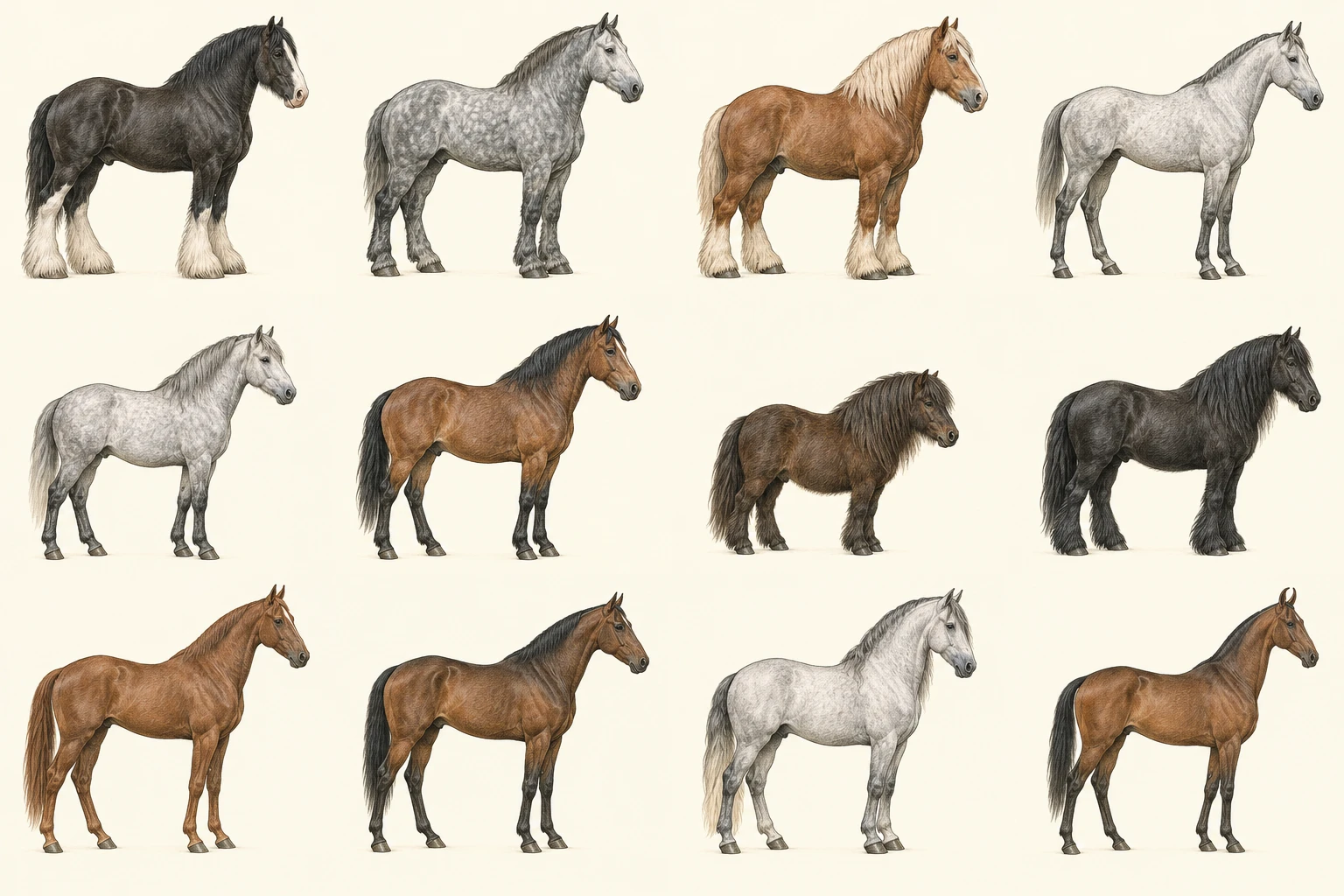
A Shetland is a pony breed. A Welsh pony and cob section has its own height rules inside one family of studbooks. An Icelandic Horse is called a horse by its people even when many individuals are around pony height. The breed page and the registry win over a playground argument.
The American Miniature Horse registries are explicit that they register horses, measured to the last hairs of the mane rather than in the ordinary wither way. The miniature guide quotes the division heights those registries publish. Small, in that case, is not a pony label.
Why the word matters
Pony classes, pony prices and pony tack are built on the word. A child who needs a pony class must meet that organisation’s height rule, not Horsepedia’s summary. A family buying a ‘pony’ should ask for the height and the registration, because the seller’s word is the start of the question.
Tack labelled pony is a size hint for people, not a promise it fits. Bridles and saddles are fitted to the animal. A 14.1-hand animal with a wide back may not take the same saddle as a narrow 13.2.
A kitchen-table exercise
Write three headings: height, breed, job. Put the horse you know into the chart. A 15-hand Connemara-cross used for lessons might be a horse by height and a pony type in the rider’s mouth. Notice the words your yard actually uses, and ask why.
Then read one pony breed and one horse breed. Compare what the registries choose to care about. That is the encyclopedia working as it should.
Common questions
Is 14.2 hands the law?
It is a widespread convention and a common competition cut-off, not a single world law. Check the rule book of the class or the registry of the breed. Some breed societies set their own heights.
Are miniature horses ponies?
Their registries describe them as horses and publish their own measurement rules. Do not call a registered miniature a pony on papers just because it is small.
Is a pony a better first mount?
Only if that pony fits the rider’s size and skill. A quiet, well-trained horse can be a better teacher than a sharp pony that happens to be the right height.
Sources & further reading
We use breed registries, equestrian organisations and specialist reference sources. Registration rules and training standards can change; check the original source for the latest requirements.
- British Horse Society: horse care and welfare (opens in a new tab)bhs.org.uk
- American Miniature Horse Registry: heights and measurement (opens in a new tab)shetlandminiature.com
- The Pony Club (opens in a new tab)pcuk.org
Last editorial source check: . General educational information; work with a qualified instructor or veterinary professional for individual advice.