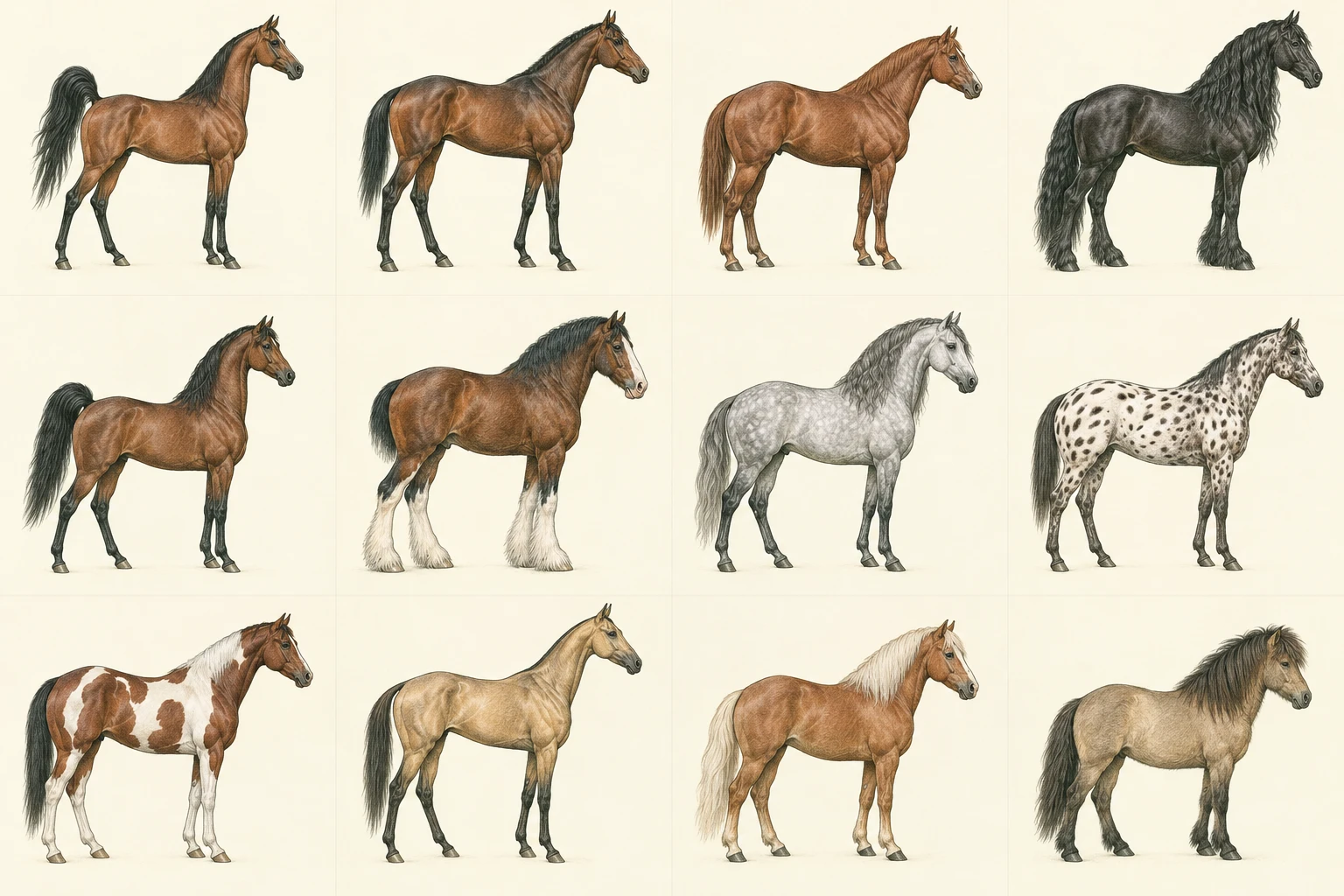
Start with bay, chestnut and black
Bay typically combines a brown or reddish body with black points: the mane, tail and lower legs, apart from white markings. Chestnut is in the red-color family and does not have the same black-point arrangement; shades can range from light to very dark. Black describes black hair across the body and points, again allowing for white markings. The Jockey Club's color guide illustrates these visible distinctions for Thoroughbred registration.
Shade is not the same as genetic identity. Lighting, sun exposure, clipping and seasonal coats can alter an impression. Examine the mane, tail, muzzle and legs as well as the body. If a registry assigns a specific label, retain that label in formal records rather than replacing it with a guess based on one photograph.
Base colors, modifiers and genotype
UC Davis Veterinary Genetics Laboratory describes coat color as the interaction of genetic factors affecting pigment and its distribution. In introductory terms, base colors are modified by dilution or patterning variants. The same modifier can look different on different base colors. Genotype means the genetic variants present; phenotype means the observable result. A horse's everyday color name is not a complete genetic report.
This layered model prevents common confusion. Ask first what the base color appears to be, then whether a dilution, progressive graying or white pattern could be influencing it. More than one factor may be present. Genetic testing can clarify a particular question, but the appropriate test and interpretation depend on the horse and the variants being investigated.
Cream dilution: palomino and buckskin
One copy of the cream dilution variant on a chestnut base generally produces palomino, often recognized by a golden body with a light mane and tail. On a bay base, one copy generally produces buckskin, with a diluted body and retained darker points. Cream on black can be visually subtle, producing smoky black. These are relationships between a modifier and a base, not separate breed identities.
Two copies of cream produce stronger dilution, with names including cremello, perlino and smoky cream according to the base color. A very pale horse should therefore not automatically be labelled gray or white. For learning, compare the laboratory's examples side by side and note what happens to body color and points rather than using overall brightness as the only clue.
Gray changes as the horse ages
Gray is progressive loss of hair pigmentation and can act on any base color. A gray horse may begin life with a much darker coat and gradually develop increasing white hairs. The pace and appearance vary between individuals. A near-white adult can still be genetically gray, so the current coat and the foal's original color answer different identification questions.
UC Davis now distinguishes a gray presence-or-absence test from testing that characterizes gray copy number. This illustrates why a simple visible label does not reveal every genetic detail. Retain dated photographs when tracking an individual horse's appearance. For health questions associated with a genetic variant, seek veterinary advice rather than treating a color guide as a care plan.
White spotting and everyday markings
Tobiano is one recognized white spotting pattern, commonly including white areas that cross the topline somewhere between the ears and tail. The amount of white varies, and additional patterning variants can change the overall appearance. A spotted coat does not establish a horse's breed. Pinto is a color-pattern description in many contexts, while American Paint Horse identifies a breed with its own registration requirements.
Face and leg markings are also useful identifiers. Names such as star, stripe, blaze, sock and stocking describe location and extent, but recording the individual shape is more precise than relying only on the name. Photograph both sides and the face in consistent light, and keep identifying marks separate from assumptions about ancestry or temperament.
Use color descriptions carefully in listings and records
Registry color categories are administrative descriptions and are not always identical to a genetics laboratory's terminology. For example, the Jockey Club guide combines gray and roan within one registration category while explaining that their definitions remain distinct. Check the rules of the relevant registry before making a formal identification claim. Everyday barn vocabulary may be less precise than the paperwork requires.
When creating a horse listing, use recent photographs and the documented color where available, then describe conspicuous markings plainly. Color can help a buyer identify the animal, but it should not substitute for identity checks, temperament information, training history or suitability. Breed illustrations on Horsepedia are teaching examples; an individual horse may have a different allowed coat or marking pattern.
Common questions
Is a white-looking horse always gray?
No. Progressive gray, double cream dilution and some white-pattern variants can produce very pale appearances. Age history, skin and eye observations, records and appropriate genetic testing may help distinguish them.
What is the difference between palomino and buckskin?
Both commonly involve one cream dilution copy. Palomino acts on a chestnut base, while buckskin acts on bay and usually retains darker points. Color photographs alone can sometimes be misleading.
Does coat color tell me a horse's temperament?
Coat color is an identification and genetics topic, not a reliable individual temperament assessment. Evaluate handling, training, behaviour and suitability directly with appropriate support when choosing a horse.
Sources & further reading
We use breed registries, equestrian organisations and specialist reference sources. Registration rules and training standards can change; check the original source for the latest requirements.
- UC Davis VGL: Equine coat color genetics ↗vgl.ucdavis.edu
- UC Davis VGL: Cream dilution ↗vgl.ucdavis.edu
- UC Davis VGL: Gray presence or absence ↗vgl.ucdavis.edu
- UC Davis VGL: Tobiano ↗vgl.ucdavis.edu
- The Jockey Club: Principal rules and color guide ↗jockeyclub.com
Last editorial source check: . General educational information; work with a qualified instructor or veterinary professional for individual advice.