Plain language
For kids
- A star is white on the forehead. A stripe is a thin white line down the face. A blaze is a wider white line.
- A sock is white low on the leg. A stocking goes higher. Draw what you see if the word feels fuzzy.
- White hair does not tell you if a horse is kind. That comes from how the horse was taught and how it feels that day.
The rest of this page is the longer guide for adults and keen readers.
Face markings are shapes, not prizes
A star is a white patch on the forehead. A snip is white between the nostrils. A stripe is a narrow white line down the face, and a blaze is a broader one. A horse can have more than one. Some faces are white enough that people argue about the word. When that happens, describe the shape and take a photo in even light. UC Davis’s coat-colour notes and the Jockey Club’s colour guidance both remind readers that names are tools, not the whole genotype.
Flesh marks, pink skin under white hair, and a dark muzzle with a small snip are different identification points. Write what you see. Do not ‘tidy’ a passport description to match a prettier word.
Legs: sock, stocking and the messy middle
A sock usually means white that stops around the fetlock. A stocking usually means white that runs higher up the cannon. Registries do not all draw the line in the same place. If you are filling in papers, use that registry’s pictures. If you are describing a horse to a friend, say ‘white to the mid-cannon on the left hind’ and you will be understood.
Look at all four legs. Horses are not symmetrical just because one side was photogenic. An ermine spot, a dark spot inside white, is worth mentioning because it helps identification. Hoof colour sometimes follows the white hair above it and sometimes does not. Mention the hoof if it is strikingly pale or dark, and do not treat it as a health diagnosis.
Markings are not paint and not a breed
A wide blaze does not make a horse a Paint, and a sock does not make it a Pinto. Those words belong to pattern genetics and, in some cases, to breed registries with their own rules. The coat-colour guide on Horsepedia separates tobiano and other patterns from ordinary markings. Read that page before you label a horse from one white leg.
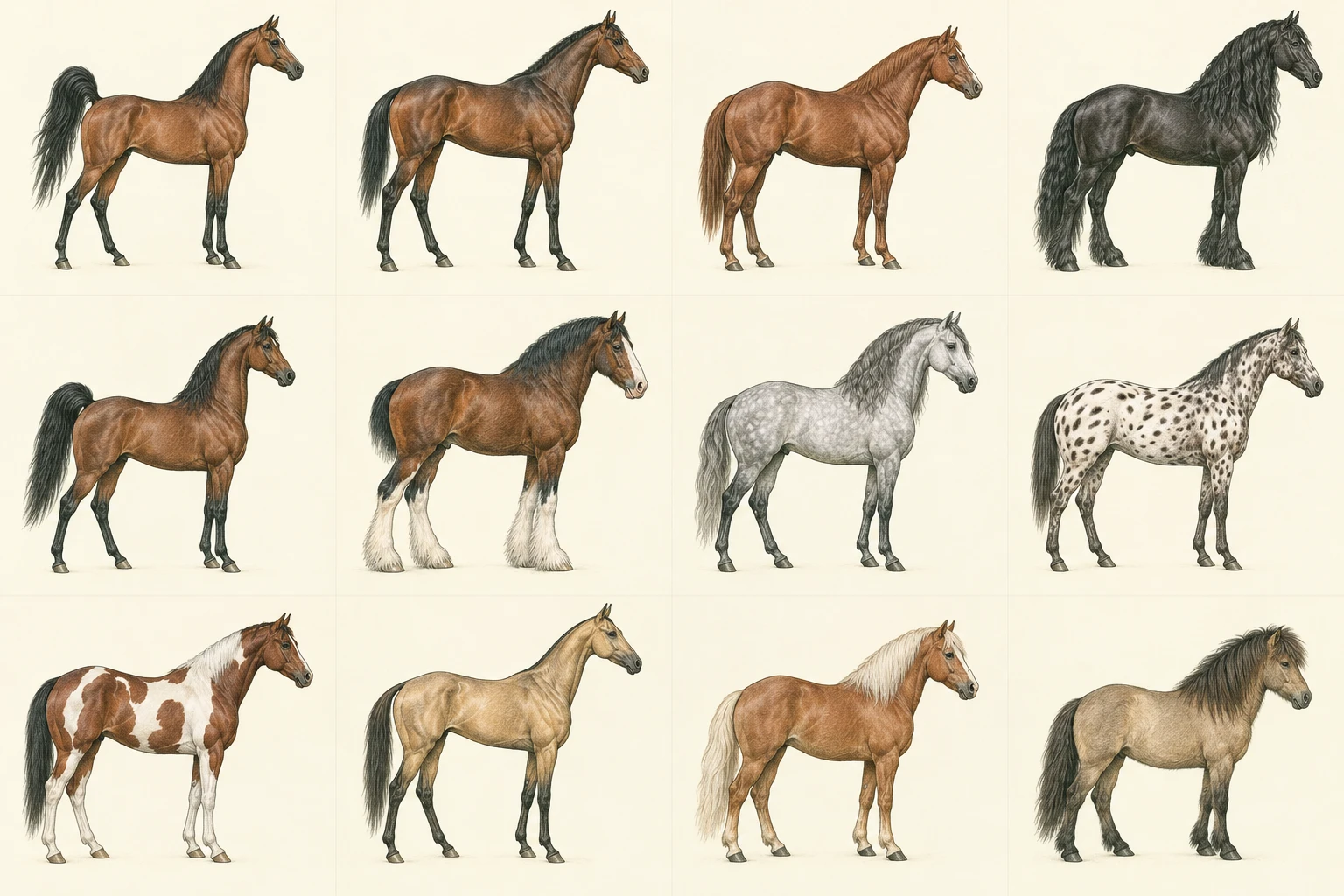
Appaloosa patterns, grey horses that lighten with age, and cream dilutes can confuse a quick glance. If the horse’s papers state a colour, keep that colour in formal descriptions. Your barn nickname can be kinder and less official.
How to record a horse
Photograph both sides, the front of the face, and the legs, in daylight, without a filter. Stand far enough back that the leg is not a close-up blob. Put the date on the note. Foals change as grey hairs come in or as a winter coat sheds. A series of photos beats one glamorous shot.
Whirls, scars and brands are also identification. A scar from an old wound should be described as a scar so the next person does not think the horse has been recently hurt. Brands and microchips, where the country uses them, outrank a cute marking description if the horse is lost.
Teaching children without the myth
Children love to spot socks and stars. Make it a game of accurate looking: ‘Is the white above or below the knee?’ That game teaches observation. Do not add ‘white legs are weak’ or ‘a blaze means a friendly horse’. Neither claim belongs in a serious yard.
If you are buying, compare the markings on the passport or registration to the horse in the stable. A mismatch is a reason to stop and ask, not a detail to fix with a pen.
Common questions
What is the difference between a stripe and a blaze?
A stripe is narrower and a blaze is wider, but the boundary is not identical in every book. Describe the width and use the registry’s term on official papers.
Do white legs mean weak legs?
No. White hair is a colour marking. Soundness comes from the foot, the limb and the horse’s history, not from the colour of the hair.
Can markings change?
White markings from birth are stable, but grey horses lighten, scars appear, and coats shed. A photo from one season can look different from another without the underlying marking having moved.
Sources & further reading
We use breed registries, equestrian organisations and specialist reference sources. Registration rules and training standards can change; check the original source for the latest requirements.
- UC Davis Veterinary Genetics Laboratory: coat colour (opens in a new tab)vgl.ucdavis.edu
- The Jockey Club: principal rules and colour guide (opens in a new tab)jockeyclub.com
- Extension Horses: parts of the horse (opens in a new tab)horses.extension.org
Last editorial source check: . General educational information; work with a qualified instructor or veterinary professional for individual advice.