Riding & horsemanship01
Prepare for your first horse riding lesson with practical advice on riding schools, helmets, boots, mounting, beginner skills and questions to ask your coach.
5 minute read ↗Horse knowledge02
Understand horse gaits through footfall patterns: walk, trot, canter, gallop, pace and tölt, plus the difference between rhythm, tempo and stride length.
5 minute read ↗Riding & horsemanship03
Compare English and western riding styles, saddle design, rein use, trot and jog terminology, disciplines and practical ways to choose your first lessons.
5 minute read ↗Horse knowledge04
Learn horse anatomy and conformation terminology, from withers and cannon bones to hooves, balance and movement, with a practical guide to observing horses.
5 minute read ↗Riding & horsemanship05
Discover how dressage, show jumping and eventing differ, what riders and horses demonstrate, how scoring works in principle and where beginners can start.
5 minute read ↗Horse knowledge06
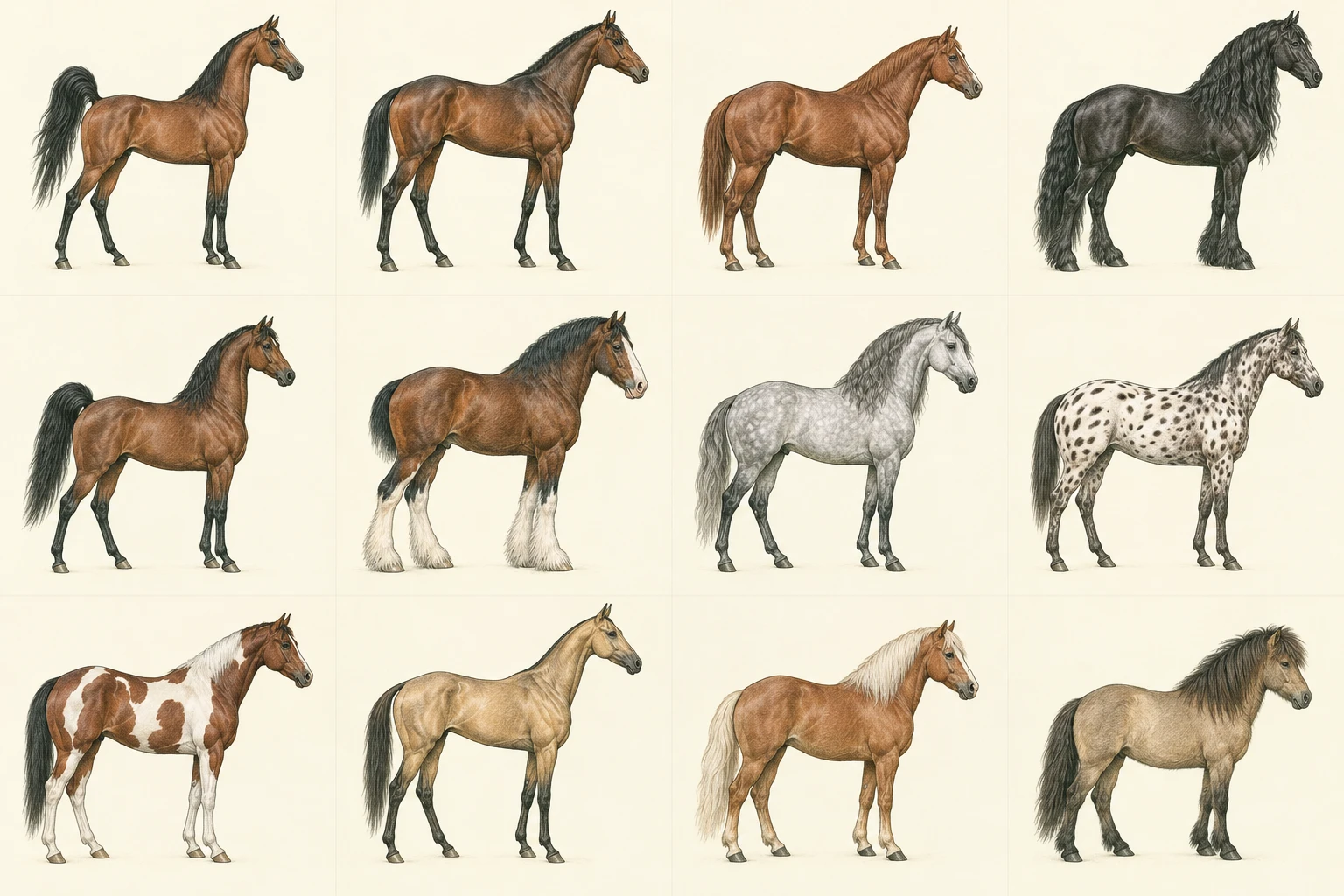
Learn horse coat colors and markings, including bay, chestnut, black, gray, palomino, buckskin and tobiano, with clear genetics terminology explained.
5 minute read ↗Horse knowledge07
Choose your first horse with a practical framework for rider suitability, ownership costs, seller questions, supported viewings and a pre-purchase exam.
5 minute read ↗Horse knowledge08
Understand saddles, bridles, pads, leg protection and rider equipment, with buying questions, fitting priorities and checks for second-hand riding gear.
5 minute read ↗Horse care09
Build a daily horse-care routine around water, forage, feet, shelter and company, and learn which changes mean you should call a professional.
4 minute read ↗Horse care10
Understand the farrier’s visit, the parts of the hoof you can name, and why smell, heat or lameness means a phone call rather than a home trim.
4 minute read ↗Horse health11
A plain guide to urgent horse signs, what to tell the veterinarian, and which worries can wait for a booked visit rather than a guess at home.
4 minute read ↗Horse health12
Learn what veterinarians mean by colic, which signs Merck lists, what to do while you wait, and why one home remedy does not fit every bellyache.
4 minute read ↗Horse health13
Why horse teeth need a professional, what dropping feed can mean, and how parasite control should follow a veterinarian rather than a yearly myth.
4 minute read ↗Feeding14
A practical horse-feeding guide to forage, water and slow diet changes, written so families can ask better questions without a homemade ration.
4 minute read ↗Feeding15
Learn how to describe a horse’s body condition, what the Henneke 1-to-9 idea is for, and when weight change needs a veterinarian rather than a diet trend.
4 minute read ↗Grooming16
Learn a calm horse-grooming routine, what a body brush, curry comb and hoof pick are for, and which skin or behaviour changes should stop the session.
4 minute read ↗Anatomy17
A family guide to horse senses: wide vision and blind spots, movable ears, smell, and why a plastic bag is not a character flaw.
4 minute read ↗Colours & markings18
Name horse face and leg markings accurately, record them for identification, and keep white markings separate from breed and from coat-colour genetics.
4 minute read ↗Behaviour19
Read ears, eyes, tail and weight as a whole, spot a warning before a kick, and give children a few clear signs that mean ‘give the horse space’.
4 minute read ↗Behaviour20
Why horses need company, how herds sort space, and how to introduce or separate horses without treating a field like a playground.
4 minute read ↗Horse history21
How horses and humans became partners in travel, farming and sport, why origin stories disagree, and how to read a breed legend with care.
4 minute read ↗Horse history22
Separate ice-age horses, the later return of domestic horses, today’s free-roaming mustangs, and Przewalski’s horse, without mixing the four stories.
4 minute read ↗Famous horses23
Meet famous horses through the records and stories that can be checked: Secretariat at Belmont, Canadian show jumping, and the novel Black Beauty kept clearly fictional.
4 minute read ↗For kids & families24
True horse facts for children: what a hand is, how to be safe near a horse, and which amazing claims to check before you repeat them.
4 minute read ↗For kids & families25
Height, breed and the word pony do not always agree. Learn the 14.2-hand habit, and why miniature horses and some breeds break the simple rule.
3 minute read ↗Riding & horsemanship26
Lead and tie a horse the way yards teach it, keep fingers out of the lead rope, and mount from a block with a helper until your coach says otherwise.
4 minute read ↗Common questions27
Short, sourced answers to the questions families ask before lessons, a first pony, or a visit to the yard, with links to the longer Horsepedia guides.
3 minute read ↗